


onion powder

The Purity Promise: How to Ensure Your Onion Powder is 100% Filler-Free

In the world of food ingredient sourcing, consistency is the foundation of brand trust. Your customers expect your signature soup mix, snack seasoning, or marinade to taste the same every single time. But what if the Onion Powder in one batch is less pungent than the last? What if it clumps, burns, or behaves differently in your formulation?

The culprit is often one of the industry’s biggest hidden problems: adulteration. To cut costs, some suppliers will bulk out their bulk onion powder with cheap fillers. For a food manufacturer, sourcing an impure product isn’t just a minor issue—it’s a critical failure that can damage your product, your reputation, and your bottom line.

As a leading onion powder supplier in India, we operate on a “Purity Promise.” We believe an educated buyer is our best customer. This guide will teach you exactly how to ensure the Onion Powder you source is 100% pure, potent, and filler-free.

Why Purity is a Non-Negotiable for Food Manufacturers

Sourcing impure onion powder is far more than a simple quality issue; it’s a significant business risk.

  • Flavor Dilution and Inconsistency: The most common fillers are starches (like corn, rice, or tapioca) and cheap flours (like wheat). These ingredients have no onion flavor. This dilutes the pungency, forcing you to use more powder to achieve the same taste profile, which completely throws off your formulation and increases your cost-in-use.

  • Product and Batch Failure: Fillers react differently to heat and liquid. An undeclared starch can scorch during a heating process, imparting a burnt taste. It can also cause unexpected thickening or clumping in sauces and marinades, ruining the texture of your final product.

  • Allergen and Legal Risks: If the filler is an undeclared allergen like wheat or soy flour, the consequences can be catastrophic. This can lead to expensive product recalls, legal action, and an irreversible loss of consumer trust.

The "How-To": Your 5-Point Purity Verification Checklist

True export quality onion powder is 100% dehydrated onion. Here is how you can verify that’s what you’re getting.

1. Scrutinize the Supplier and Their Source A trustworthy supplier will be transparent. Ask them about their raw material. Are they using high-quality Nashik onions, known for their high pungency? Or are they using low-grade byproducts? A supplier who is proud of their source (like the dehydrated white onion from India’s best growing regions) will be open about it.

Spice Up Your Business with Authentic Indian Flavors

Import and Export Excellence from India!
2. Demand a Certificate of Analysis (COA) This is the most important document in B2B food ingredient sourcing. Never place a bulk order without a batch-specific COA. This lab report is your proof of quality. It should, at a minimum, include:

  • A purity statement (e.g., “100% Dehydrated Onion”).

  • A microbiological analysis (confirming it’s free from pathogens).

  • Moisture content (crucial for shelf life and preventing clumping).

3. Conduct a Physical and Sensory Test Your own senses are a powerful tool. When you receive a sample, test it immediately:

  • Look: Pure White Onion Powder should be a creamy, off-white colour. A stark, paper-white colour is a major red flag for starch fillers.

  • Feel: Rub it between your fingers. It should feel fine and slightly abrasive, like a very fine grain. If it feels exceptionally soft, silky, or “powdery” (like talc), be suspicious.

  • Taste: The flavour should be intensely pungent, sharp, and unmistakably onion. A starchy, chalky, or overly salty taste means it has been adulterated.

4. Perform the Simple Iodine Test for Starch This is a simple, effective test you can do in your own facility in 30 seconds.

  • Place a small amount of the onion powder in a dish.

  • Add a few drops of a standard iodine solution (tincture of iodine).

  • The Result: Pure onion powder will not react, or will turn a light brownish-yellow. If the powder turns dark blue or black, it has been adulterated with starch. This simple test can save you from a very costly mistake.

5. Be Wary of “Too Good to Be True” Pricing Everyone wants a good price, but in the spice trade, an abnormally low price is the #1 warning sign. The cost of pure, high-pungency dehydrated white onion is stable. A supplier offering bulk onion powder at a price far below the market average is almost certainly cutting costs, and the most common way to do that is with fillers.

The Purity Promise: Your Foundation for a Quality Product

By focusing on purity, you are not just buying an ingredient; you are protecting your brand. When you partner with a supplier who can provide verifiable, consistent, filler-free onion powder, you are building your product on a foundation of quality. This ensures your formulations work perfectly every time, and your customers get the consistent, high-quality taste they expect.

Frequently Asked Questions (FAQs)

1. What is the most common filler used in onion powder?

The most common adulterants are starches, such as corn starch, rice flour, or tapioca starch, because they are cheap, white, and easily blend in.

2. Is an anti-caking agent considered a filler?

Not necessarily, but it must be declared. A small, declared amount (typically <2%) of a food-grade anti-caking agent (like Silicon Dioxide) is acceptable in the industry to ensure flowability. A “filler,” by contrast, is an undeclared ingredient used to add weight and reduce cost.

3. What is the correct color of pure White Onion Powder?

It should be a natural-looking creamy or off-white. A brilliant, stark-white powder is a strong indication that it has been mixed with a bleached starch filler.

4. Why is Indian onion powder so pungent? India, particularly the Nashik region, is famous for growing onion varieties that have a high pungency (high sulfur content). When these onions are dehydrated, that potent flavour is concentrated, creating a superior powder.

5. How does purity affect the shelf life of onion powder?

Impure powders, especially those with starchy fillers, can be more hygroscopic (they absorb moisture from the air). This leads to rapid caking, clumping, and potential microbial growth, shortening the product’s shelf life.

6. Does the “iodine test” really work?

Yes, it is a simple and reliable chemical test. Iodine reacts with starch and turns it a deep blue-black colour. It is one of the fastest ways to check a new supplier’s sample for the most common type of adulteration.

7. What’s the difference between onion powder, granules, and kibbled?

The only difference is the particle size (mesh). Powder is a fine grind, granules are coarser (like sand), and kibbled is even larger (minced or chopped pieces). All should be 100% pure onion.

8. How can I guarantee purity without testing every batch?

The key is to build a long-term relationship with a trusted, transparent onion powder supplier. A reliable partner will have their own multi-step quality control process and will always provide a batch-specific COA as a standard practice.

About us

We bridge the gap between local producers and global markets, ensuring seamless trade facilitation with exceptional quality and reliability. We provide quick delivery services with customized packaging with all approval of International Certificates (Spices board India, MSME, IEC, fssai, FIEO, APEDA, EU certification, FDA and Many More)

Contact us

Shop No. 3, Ganesh Prestige Sr. No. 2/15, Near Laxmi Jewellers, Dhanakawadi, Pune – 411043, Maharashtra INDIA.

Call On

+91 9545205050

+91 9822422584
Email

sales@aquaconnectexim.com

aquaconnectexim@gmail.com

types of turmeric

Which Type of Turmeric Powder is Best? A Guide for Food Manufacturers

For a food manufacturer, consistency is the bedrock of a successful brand. The snack seasoning, the curry powder, or the ready-to-eat meal your customer buys in December must taste and look identical to the one they bought in May. When it comes to a foundational ingredient like turmeric, this presents a challenge, because “turmeric” is not a single, uniform ingredient.

The global market is filled with different varieties, each with a unique profile. As an experienced turmeric supplier in India, we know that food manufacturers who source wisely understand this. They don’t just buy “turmeric powder”; they source a specific type based on their product’s technical needs.

So, which type of turmeric powder is “best”? The answer is: the one that is best for your specific application. This guide will compare the top 6 commercial varieties from India to help you make the most strategic sourcing decision.

First, Why "Raw"? The Resistant Starch Factor

Before we compare the types, you must know what you are measuring. A professional buyer evaluates turmeric on three key metrics:

  • Curcumin Content: This is the big one. Curcumin is the active compound that provides health benefits (anti-inflammatory, antioxidant) and the deep orange-yellow color. A high curcumin content is critical for nutraceuticals and premium health foods.

  • Color (ASTA Value): This is the measure of its coloring power. For many food products, a vibrant, consistent yellow-orange hue is more important than a high curcumin percentage.

  • Volume & Supply Chain: For large-scale manufacturing, you need a stable, high-volume supply that is not prone to wild price swings.

Now, let’s see how the main Indian varieties stack up.

Spice Up Your Business with Authentic Indian Flavors

Import and Export Excellence from India!

1. Alleppey Turmeric: The High-Curcumin Speciali

  • Origin: Alleppey, Kerala

  • Key Feature: Extremely high curcumin content, often 5% to 7%.

  • Profile: Has a deep, golden-orange color. It’s considered the “gold standard” for potency.

  • Best For: Nutraceuticals and Supplements. If your product makes any health claims related to curcumin, this is the type of turmeric powder you must use. Its high potency means you can use less of it to achieve the required dosage, making it efficient for capsules, tablets, and wellness blends.

2. Sangli Turmeric (featuring 'Raja Puri'): The GI-Tagged All-Rounder

  • Origin: Sangli, Maharashtra

  • Key Feature: A protected GI (Geographical Indication) tag and the famous Rajapuri Turmeric cultivar.

  • Profile: This is the most sought-after variety for general-purpose food manufacturing. It has a robust, consistent curcumin content (3-5%) and an excellent, bright yellow color. The “Raja Puri” finger is large, solid, and prized for its aroma.

  • Best For: Premium Food Manufacturing. The GI tag is a legal guarantee of authenticity and quality, which is a powerful marketing tool. It’s the perfect, reliable workhorse for high-quality spice blends, sauces, and RTE meals.

3. Erode Turmeric: The Consistent Color Champion

  • Origin: Erode, Tamil Nadu

  • Key Feature: Also GI-tagged, this is the “go-to” for consistent color.

  • Profile: Erode Turmeric is known for its pure, bright, medium-yellow color and a moderate curcumin content (2-4%). The Erode market is a massive hub, ensuring excellent supply chain stability.

  • Best For: General Food Production and Spice Blends. When your primary goal is a predictable, appealing yellow color for a spice blend, snack food seasoning, or curry powder, Erode is a reliable and cost-effective choice.

4. Salem Turmeric: The GI-Tagged Balanced Choice

  • Origin: Salem, Tamil Nadu

  • Key Feature: Another GI-tagged variety, valued for its balance.

  • Profile: Salem Turmeric is similar in quality to Erode, offering a good balance of curcumin (3-5%) and a strong yellow-orange color. It is a highly respected variety in the spice trade.

  • Best For: Sauces, Pickles, and Marinades. Its consistent profile makes it a trusted ingredient for manufacturers who need a reliable, authentic turmeric without the high price of a potency-specialist like Alleppey.

5. Nizamabad Turmeric: The High-Volume Commodity Hub

  • Origin: Nizamabad, Telangana

  • Key Feature: Sourced from one of the largest turmeric trading markets in India.

  • Profile: This is the high-volume workhorse. While it typically has a lower curcumin content (2-3.5%), its main advantage is scale. The massive volume traded here ensures a stable supply and competitive pricing.

  • Best For: High-Volume Commodity Needs. When turmeric is a secondary ingredient and your primary concern is a reliable, large-scale, and cost-effective supply, Nizamabad Turmeric is a smart commercial choice.

Spice Up Your Business with Authentic Indian Flavors

Import and Export Excellence from India!

The "Best" Turmeric is a Specification, Not a Name

As you can see, there is no single “best” type of turmeric powder. The best turmeric for a health supplement (Alleppey) is the wrong choice for a price-sensitive commodity blend (Nizamabad).

The most critical step is to partner with a knowledgeable turmeric supplier in India. A true expert won’t just sell you “turmeric.” They will ask about your application, your color requirements, and your health claims. They will then source the exact variety that meets your technical specifications and provide a Certificate of Analysis (COA) to prove it.

Frequently Asked Questions (FAQs)

1. What is a GI Tag, and why does it matter for turmeric?

A Geographical Indication (GI) tag is a legal protection that guarantees a product originates from a specific region and has a unique quality due to that origin. For a manufacturer, it’s a guarantee against adulteration and a powerful marketing tool for authenticity.

2. What is the difference between Sangli and Rajapuri turmeric?

Sangli Turmeric refers to the turmeric from the Sangli region (which is GI-tagged). Rajapuri Turmeric is the name of the most famous and premium cultivar (variety) grown in that region, known for its large, robust fingers.

3. Which type of turmeric powder is best for just color?

While Alleppey has a deep orange color, Erode and Sangli are prized for their consistent, bright, and appealing yellow-orange hue, making them ideal for food manufacturing where color is key.

4. What is a “Certificate of Analysis” (COA)?

A COA is a lab report that provides the exact technical specifications for a specific batch of turmeric. It verifies the curcumin content, moisture level, microbiological safety, and other critical data. You should demand one from your supplier.

5. Which turmeric is best for making health supplements or “golden milk”?

Alleppey Turmeric is the clear winner for any product where the health benefit is a key selling point. Its high curcumin content delivers maximum potency.

6. Does a higher curcumin content always mean a better turmeric?

Not necessarily. For a spice blend, you may want a more subtle, balanced flavour profile rather than the slightly more medicinal taste of a very high-curcumin variety. “Best” always depends on the application.

7. Why is Indian turmeric considered the best in the world?

Indian turmeric is globally dominant due to its vast range of varieties, deep agricultural expertise, and its ability to produce turmeric at every point on the spectrum—from high-volume (Nizamabad) to high-potency (Alleppey) to high-quality GI-tagged varieties (Sangli, Erode).

8. How do I choose a good turmeric supplier?

A good supplier will ask which type of turmeric powder you need. They will be transparent about the origin, provide a COA, and understand the technical requirements for food manufacturing and export.

About us

We bridge the gap between local producers and global markets, ensuring seamless trade facilitation with exceptional quality and reliability. We provide quick delivery services with customized packaging with all approval of International Certificates (Spices board India, MSME, IEC, fssai, FIEO, APEDA, EU certification, FDA and Many More)

Contact us

Shop No. 3, Ganesh Prestige Sr. No. 2/15, Near Laxmi Jewellers, Dhanakawadi, Pune – 411043, Maharashtra INDIA.

Call On

+91 9545205050

+91 9822422584

Email

sales@aquaconnectexim.com

aquaconnectexim@gmail.com

sourcing raw banana powder

Sourcing Raw Banana Powder: A Technical Guide to Mesh Size, Purity, and Color

The demand for functional, clean-label ingredients has skyrocketed, and leading the charge is raw banana powder. This powerhouse food ingredient, also known as green banana flour, is being actively sought by R&D teams and purchasing managers in the health food, gluten-free, and nutraceutical industries.

However, sourcing raw banana powder is a technical purchase. Unlike ripe banana powder, which is used for sweetness, raw banana powder is a functional ingredient prized for its starchy, neutral profile. For a product formulation to be successful, the powder must meet exact specifications. A slight variation in “mesh size,” “purity,” or “color” can drastically alter the texture, taste, and stability of a final product.

As an experienced Indian banana powder exporter, we understand that these details are not just details—they are everything. This guide will walk you through the three most critical technical specifications to look for when sourcing.

First, Why "Raw"? The Resistant Starch Factor

Before diving into the specs, it’s crucial to understand why you are sourcing “raw” powder. This ingredient is made from unripe, green bananas. Because they are not ripe, their sugar content is low, and their starch content is high.

Specifically, they are rich in Resistant Starch (RS2). This is the key functional benefit. Resistant starch acts as a prebiotic fiber, supporting gut health and managing blood sugar. This makes it a star ingredient for:

  • Gluten-free baking (as a gluten-free flour)

  • Smoothie mixes and protein blends

  • Nutraceutical and “gut health” products

  • Baby food formulations

Understanding this a-priori helps you to understand why the following specifications are so critical.

Spice Up Your Business with Authentic Indian Flavors

Import and Export Excellence from India!

1. Mesh Size: The Key to Texture and Application

What it is: “Mesh size” (or particle size) refers to the fineness of the powder. It’s measured by its ability to pass through a specific-sized screen. A high number (e.g., 100 mesh) means a very fine powder, while a low number (e.g., 40 mesh) means a coarser, more granular powder.

Why it matters: The mesh size dictates the powder’s performance.

  • For Beverages & Smoothies (e.g., 80-100 Mesh): A fine powder is essential. It ensures better solubility and dispersibility in liquids, preventing a “gritty” or “sandy” mouthfeel. This is a non-negotiable for protein blends, meal replacements, and instant mixes.

  • For Baking (e.g., 40-60 Mesh): A slightly coarser granulation is often preferred. It mimics the texture of traditional wheat flours, providing a better structure and crumb in gluten-free breads, muffins, and cookies.

When sourcing raw banana powder, don’t just ask for “powder”; specify the mesh size that your application demands.

2. Purity: The "Clean Label" and Safety Guarantee

What it is: Purity, in this context, has two meanings: 1) freedom from adulterants, and 2) microbiological safety.

Why it matters: Today’s consumers are label-readers. Your product’s “clean label” appeal depends on the purity of its ingredients.

  • Adulteration: Because it’s a valuable flour, low-quality raw banana powder can be cut with cheaper starches or flours (like rice or tapioca). This dilutes the resistant starch content and compromises the nutritional profile. Your supplier must guarantee 100% pure banana powder.

  • Microbiological Safety: As a raw agricultural product, it must be tested and confirmed free from pathogens like Salmonella, E. coli, and Coliforms, and have a low overall plate count.

When sourcing, you must demand a Certificate of Analysis (COA) that verifies 100% purity and provides a clean microbiological report.

3. Color: The Visual Indicator of Quality and Process

What it is: A visual inspection of the powder. This is the fastest way to judge the quality of a sample.

Why it matters: The color of raw banana powder tells you exactly how it was processed. Many first-time buyers make the mistake of looking for a yellow, “banana-like” color. This is incorrect.

  • What You WANT (The Correct Color): A high-quality raw banana powder should be a pale, off-white, beige, or light greyish color. This indicates that unripe, starchy bananas were used and that they were dried correctly (e.g., spray-dried) at a controlled temperature.

  • What You DON’T WANT (Red Flags):

    • Yellow/Brown Color: This means ripe, sugary bananas were used, or the powder was “scorched” at a high temperature during drying. It will have a sweet, burnt taste and will lack the resistant starch you’re paying for.

    • Dark Specks: An excessive amount of black or brown specks can indicate the inclusion of skins or defects.

A good banana powder supplier will proudly provide a sample that is pale and consistent, a true indicator of its “raw” and “unburnt” quality.

Spice Up Your Business with Authentic Indian Flavors

Import and Export Excellence from India!

Sourcing with Confidence

Sourcing raw banana powder is a technical decision that directly impacts the quality of your final product. A “cheap” powder that fails on any of these three specifications—mesh, purity, or color—will ultimately fail in your formulation.

The key to success is to partner with a supplier who understands these banana powder specifications as well as you do. A reliable partner will be transparent, provide all necessary documentation (especially the COA), and be able to supply a consistent product, batch after batch.

Frequently Asked Questions (FAQs)

1. What is the main difference between raw and ripe banana powder?

Raw banana powder (or green banana flour) is starchy, not sweet, and used as a functional flour rich in resistant starch. Ripe banana powder is sweet, has a strong banana flavor, and is used as a natural sweetener and flavoring agent.

2. What is a Certificate of Analysis (COA)?

A COA is a lab report from the manufacturer or a third party that verifies the technical specifications of a specific batch of product. It is your guarantee that the powder meets the specs for purity, moisture, microbes, and more.

3. What is the typical shelf life of raw banana powder?

When processed to a low moisture content (typically < 8%) and stored in a cool, dry place in airtight packaging, export quality banana powder can have a shelf life of 12 to 24 months.

4. Can I get a certified organic version?

Yes. Many leading Indian banana powder suppliers offer certified organic options (e.g., USDA, EU Organic) for brands that require a fully organic and non-GMO product line.

5. Is raw banana powder truly 1:1 gluten-free flour replacement?

Not exactly. Due to its high starch content, it’s very absorbent. Most bakers find it works best when it replaces 25-30% of the total flour in a recipe, or when blended with other gluten-free flours.

6. Does the drying process (spray-dried vs. drum-dried) matter?

Yes. Spray-drying often produces a finer, more soluble powder that is ideal for beverage mixes. Drum-drying can be more cost-effective. The best method depends on your final application.

7. Why is India a good region for sourcing banana powder?

India is one of the world’s largest producers of bananas. This provides a massive, consistent, and cost-effective supply of raw materials for producing high-quality dehydrated products.

8. Will raw banana powder make my product taste like bananas?

No. This is a key benefit. Because it’s made from unripe bananas, it has a very neutral, slightly earthy, and “flour-like” taste, making it an excellent invisible ingredient in both sweet and savory applications.

About us

We bridge the gap between local producers and global markets, ensuring seamless trade facilitation with exceptional quality and reliability. We provide quick delivery services with customized packaging with all approval of International Certificates (Spices board India, MSME, IEC, fssai, FIEO, APEDA, EU certification, FDA and Many More)

Contact us

Shop No. 3, Ganesh Prestige Sr. No. 2/15, Near Laxmi Jewellers, Dhanakawadi, Pune – 411043, Maharashtra INDIA.

Call On

+91 9545205050

+91 9822422584
Email

sales@aquaconnectexim.com

aquaconnectexim@gmail.com

Indian Jaggery Blocks

How to Break, Store, and Use Traditional Indian Jaggery Blocks

There is an undeniable, rustic charm to Indian Jaggery Blocks. These dense, golden-to-dark-brown blocks of unrefined sugar, known as gur blocks in many parts of India, are a symbol of authenticity. They are a pure, traditional natural sweetener prized for their rich, molasses-like flavour and impressive nutritional profile.

As a leading jaggery supplier in India, we love the tradition they represent. However, as anyone who has ever brought one into their kitchen knows, they also present a unique set of challenges. They are often rock-hard, sticky in humidity, and notoriously difficult to measure.

This guide is here to help. We’ll walk you through the best ways to handle traditional Indian jaggery blocks and reveal a modern, convenient alternative that gives you all the benefits without any of the hassle.

The First Challenge: How to Break Indian Jaggery Blocks

This is often the biggest hurdle. You have a solid block of unrefined sugar, and you just need a few spoonfuls for a recipe. Here are the most common methods, from easiest to hardest.

1. The Gentle Heat Method (Recommended) Jaggery softens with heat.

  • Microwave: Place the block in a microwave-safe bowl and heat it on low power for just 10-15 seconds. This will soften it just enough to be easily scooped or cut with a knife. Be careful not to melt it, as hot jaggery is extremely sticky and can burn.

  • Stovetop: Place the block in a dry, heavy-bottomed pan on the lowest possible heat for a minute. This will soften the outside, allowing you to scrape or cut off what you need.

2. The Precision Method (A Sturdy Knife) If the block is relatively fresh, you may be able to use a large, sturdy knife.

  • Place the block on a stable cutting board.

  • Carefully insert the tip of a strong knife into the block and press down firmly. Instead of “chopping,” try to “cleave” or “chip” off pieces.

  • This method requires caution and a good knife, as the block’s uneven texture can cause the knife to slip.

3. The Brute Force Method (Use with Caution) This is the traditional way, but it’s messy.

  • Wrap the jaggery block in a thick, clean kitchen towel or place it in a durable zip-lock bag.

  • Place it on a hard, sturdy surface (like a concrete floor).

  • Use a hammer, meat mallet, or even a rolling pin to strike the block firmly until it breaks into smaller, more manageable pieces. This method works but often results in uneven chunks and a fine dusting of jaggery.

Spice Up Your Business with Authentic Indian Flavors

Import and Export Excellence from India!

How to Properly Store Jaggery Blocks

The second great challenge with jaggery is its hygroscopic nature. This means it readily absorbs moisture from the air, turning it soft, sticky, and syrupy, especially in humid climates.

  • Airtight is Non-Negotiable: The moment you open its original packaging, your jaggery block must be placed in a completely airtight container. A glass jar with a tight-fitting lid or a high-quality plastic container is ideal.

  • Keep it Cool and Dry: Store the container in a cool, dark, and dry pantry.

  • To Refrigerate or Not? Avoid the refrigerator. While it seems like a good idea, the cold temperature can make the Indian Jaggery Blocks even harder. Furthermore, when you take it out, condensation can form on the block, making it even stickier.

  • For Long-Term Storage: If you’ve broken your block into smaller pieces, you can place them in a zip-lock bag, press out all the air, and then place that bag inside your airtight container for double the protection.

Traditional Uses for Jaggery Blocks

So, why go through the trouble? Because the flavour is worth it, and for some recipes, the block form is ideal.

  • Making Syrups (Chashni): Many traditional Indian sweets (mithai) require you to melt a whole block of jaggery into a hot, bubbling syrup as the base for chikki (brittle) or ladoos.

  • After-Meal Digestive: A small, bite-sized chunk of jaggery is famously consumed after a meal in many Indian homes. It is believed to aid digestion and act as a sweet, healthy finish to the meal.

  • Hot Beverages: Dropping a small chunk of a gur block into a hot cup of masala chai or black coffee allows it to melt slowly, infusing the drink with a deep, rich sweetness.

The Easy Solution: When to Use Jaggery Powder Instead

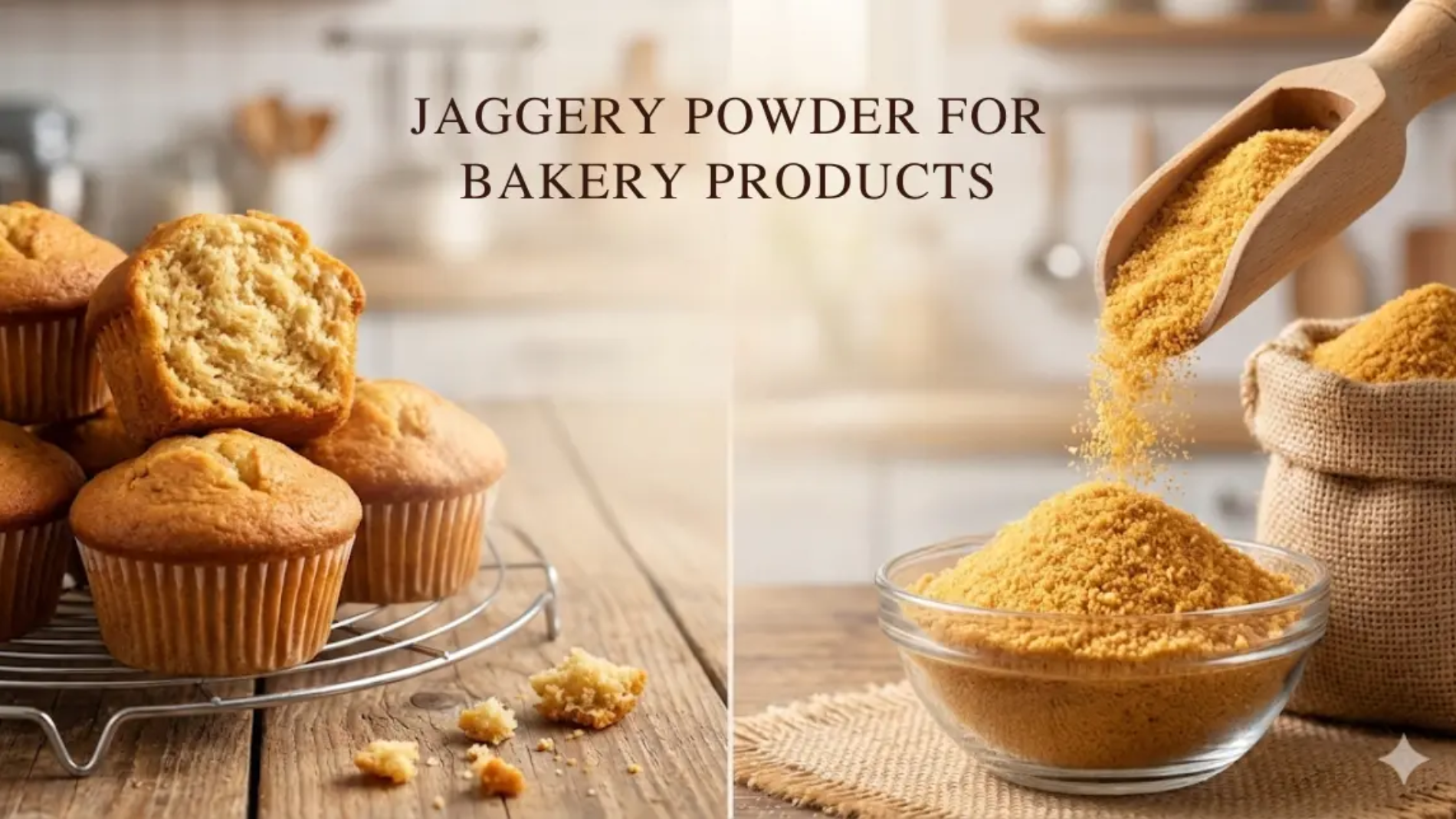
Love the flavour and jaggery health benefits but can’t be bothered with the work? You are not alone. This is exactly why jaggery powder has become the preferred choice for modern kitchens and food manufacturers.

Jaggery powder is simply the same authentic, unrefined jaggery, dried and granulated into a free-flowing powder. It solves every single problem associated with blocks:

  • No Breaking: It’s ready to use right out of the bag.

  • Easy, Precise Measurement: You can use a standard measuring spoon. It’s a perfect 1:1 substitute for white sugar in most baking recipes.

  • Instant Solubility: It dissolves instantly in both hot and cold liquids. This makes it perfect for sweetening iced tea, lemonade, smoothies, yogurt, or a quick bowl of oatmeal—something a block simply cannot do.

  • Simple Storage: It’s far less prone to clumping (when high-quality) and is easier to store in a simple airtight container.

You get 100% of the authentic taste and nutrients with 0% of the hassle.

Spice Up Your Business with Authentic Indian Flavors

Import and Export Excellence from India!

Whether you are a purist who loves the tradition of Indian Jaggery Blocks or someone who values the convenience of modern jaggery powder, the key is to choose a high-quality product. Look for a deep, natural colour and avoid any jaggery that looks unnaturally pale or yellow, as it may have been treated with chemical clarificants.

By understanding how to handle the traditional block—and knowing you have a convenient alternative—you can enjoy this wholesome, natural sweetener any way you choose.

Frequently Asked Questions (FAQs)

1. What’s the easiest way to break a hard jaggery block?

The fastest and safest way is to microwave it in a bowl for 10-15 seconds on low. This will soften it just enough to be easily cut or scooped with a spoon.

2. How do I stop my jaggery block from getting sticky?

You must store it in a completely airtight container in a cool, dry place. Jaggery absorbs moisture from the air, which is what makes it sticky. Never leave it exposed.

3. Is jaggery powder just crushed jaggery blocks?

High-quality jaggery powder is more than that. It is processed to a specific low moisture level to ensure it is free-flowing and resists clumping, making it far more stable and easy to use than simply crushing a block at home.

4. Are the health benefits of jaggery powder the same as the blocks?

Yes. As long as you are comparing pure, chemical-free jaggery, the powder and blocks have the exact same nutritional profile and jaggery health benefits, including minerals like iron and magnesium.

5. Can I use jaggery blocks in my coffee or tea?

Absolutely. Dropping a small chunk into a hot beverage is a traditional use. It will melt slowly and sweeten the drink. For iced coffee or tea, jaggery powder is the only practical option as it dissolves instantly.

6. Is jaggery healthier than white sugar?

Yes. Jaggery is an unrefined sugar, meaning it retains the molasses and minerals from the sugarcane. White sugar is highly processed and stripped of all nutrients, making it “empty calories.”

7. Why is my jaggery block so dark?

The colour of jaggery (from golden to dark brown) depends on the sugarcane variety, the length of boiling, and the harvest. A darker colour is perfectly normal and often indicates a richer, more robust molasses-like flavour.

8. How can I measure jaggery blocks for a recipe?

This is a major challenge. The best way is to grate the block and then pack the shavings tightly into a measuring cup. This is a key reason why jaggery powder is superior for baking, as it can be measured precisely just like sugar.

About us

We bridge the gap between local producers and global markets, ensuring seamless trade facilitation with exceptional quality and reliability. We provide quick delivery services with customized packaging with all approval of International Certificates (Spices board India, MSME, IEC, fssai, FIEO, APEDA, EU certification, FDA and Many More)

Contact us

Shop No. 3, Ganesh Prestige Sr. No. 2/15, Near Laxmi Jewellers, Dhanakawadi, Pune – 411043, Maharashtra INDIA.

Call On

+91 9545205050

+91 9822422584
Email

sales@aquaconnectexim.com

aquaconnectexim@gmail.com

Indian Organic Green Tea Powder

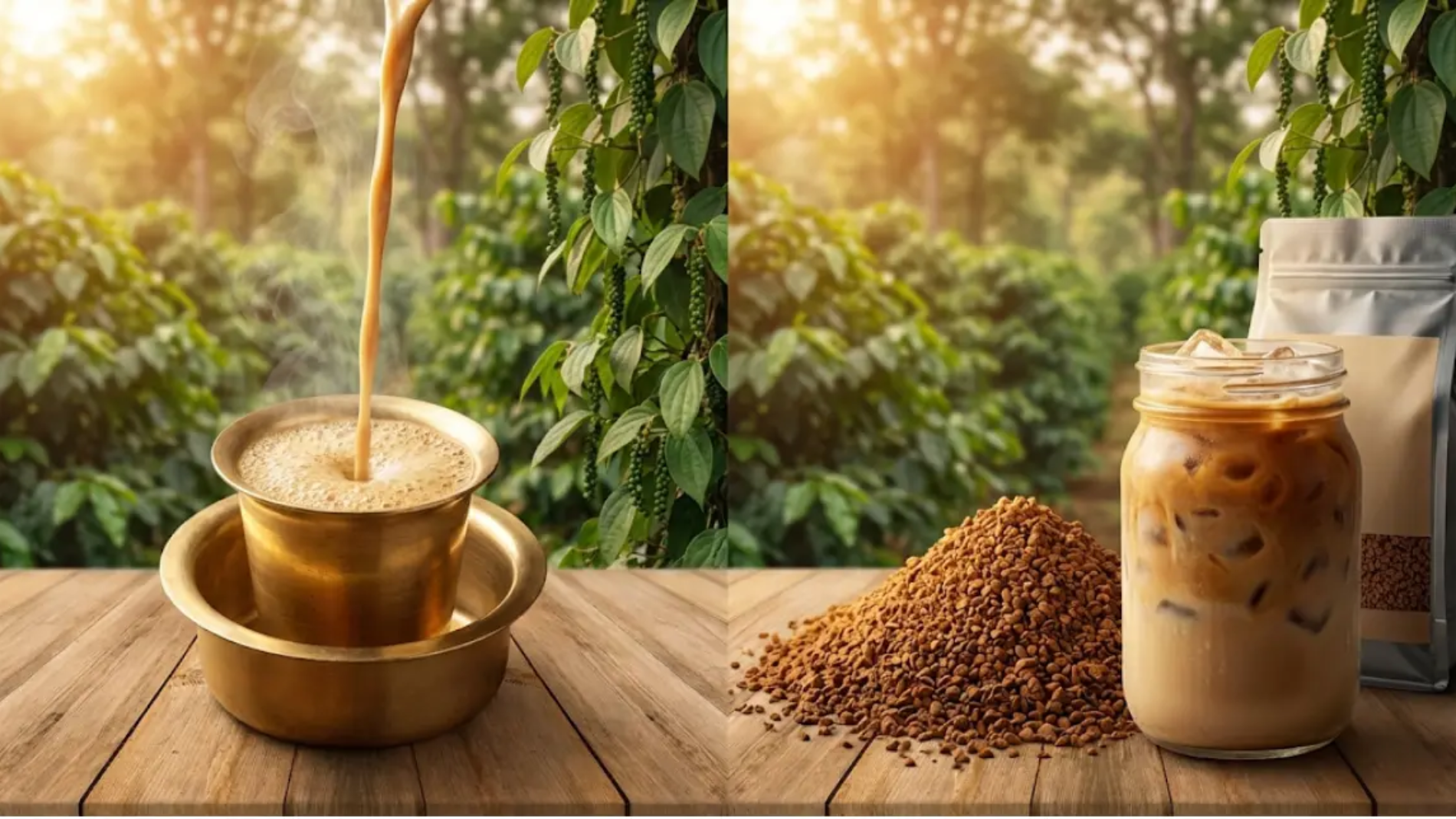
Why the “Clean Beauty” Industry is Sourcing Indian Organic Green Tea Powder

The global beauty landscape has undergone a seismic shift. Consumers are no longer just buying products; they are buying transparency, ethics, and, above all, purity. This is the core of the “clean beauty” movement, and it has sent formulators and brands on a quest for ingredients that are not only effective but also natural, understandable, and verifiably safe.

In this search, one ancient ingredient has emerged as a modern superstar: Indian Organic Green Tea Powder.

While it has been a staple of wellness from the inside out for centuries, its potent benefits for the skin are now being leveraged by some of the most innovative cosmetic brands in the world. As an exporter of premium botanical ingredients, we’ve seen this demand skyrocket. Here’s a deep dive into why Indian Organic Green Tea Powder is becoming an essential clean beauty ingredient.

1. A Potent Antioxidant Powerhouse (EGCG)

The primary driver for using green tea for skin is its incredible antioxidant profile. Green tea is packed with polyphenols, particularly a catechin known as EGCG (Epigallocatechin Gallate).

EGCG is a powerful antioxidant that helps protect the skin by neutralizing free radicals. These damaging molecules—caused by pollution, UV rays, and other environmental stressors—are a primary cause of premature aging, fine lines, and hyperpigmentation.

By including a high-quality green tea powder in a skincare formulation, brands can create products that:

  • Protect the skin from environmental damage.

  • Support a more youthful, radiant complexion.

  • Offer a compelling, science-backed story for their antioxidant skincare line.

2. The "Organic" Guarantee: The Ultimate Mark of Purity

For the clean beauty industry, “organic” is not just a buzzword; it’s a non-negotiable standard. The skin is the body’s largest organ and can absorb a portion of what is applied to it. This makes the purity of a topical ingredient just as important as the purity of a food ingredient.

Sourcing Indian Organic Green Tea Powder provides a verifiable guarantee that the product is:

  • Pesticide-Free: Grown without the use of synthetic pesticides, herbicides, or fungicides that could irritate the skin or build up in the body.

  • Non-GMO: Free from genetically modified organisms.

  • Traceable: Sourced from certified farms that adhere to strict international standards (like NPOP, USDA Organic, or EU Organic).

This certification allows a brand to confidently market its product as truly “clean” and “safe,” which is a key purchasing driver for discerning consumers.

Spice Up Your Business with Authentic Indian Flavors

Import and Export Excellence from India!

3. Powerful Soothing & Anti-inflammatory Properties

Beyond its anti-aging benefits, green tea is a celebrated anti-inflammatory agent. This makes it incredibly versatile for a wide range of cosmetic products. The same catechins that provide antioxidant protection also work to soothe and calm the skin.

This makes Indian Organic Green Tea Powder a perfect ingredient for formulations targeting:

  • Acne and Blemishes: It can help reduce the redness and irritation associated with breakouts.

  • Sensitive Skin: Its gentle, calming nature makes it ideal for products that soothe and balance reactive skin.

  • Rosacea and Redness: It can help to visibly calm and reduce facial redness.

4. The L-Theanine & Caffeine Advantage

Green tea contains two other beneficial compounds: caffeine and L-Theanine.

  • Caffeine: When applied topically, caffeine is a well-known vasoconstrictor. This means it can help temporarily shrink blood vessels, making it a star ingredient for “de-puffing” eye creams and reducing the appearance of dark circles.

  • L-Theanine: This unique amino acid is known for its “calm-alertness” effect when consumed, but on the skin, it contributes to the tea’s overall soothing and hydrating properties.

5. Versatility in Skincare Formulation

Indian Organic Green Tea Powder is not a one-trick pony. Its fine particle size and stability allow it to be incorporated into a wide array of cosmetic products, making it a highly versatile raw material for a brand’s entire portfolio.

Its most popular uses include:

  • Face Masks: As the primary active ingredient in detoxifying and antioxidant-rich clay masks.

  • Cleansers & Scrubs: As a gentle exfoliant and soothing agent.

  • Serums & Essences: Where its EGCG-rich extract can be delivered in a concentrated form.

  • Lotions & Creams: To provide all-day antioxidant protection and calming benefits.

Spice Up Your Business with Authentic Indian Flavors

Import and Export Excellence from India!

Sourcing the Right "Cosmetic-Grade" Powder

For a beauty brand, the quality of the raw material is paramount. A cosmetic-grade green tea powder must meet standards that are often even stricter than food-grade. When sourcing, it is essential to partner with an Indian tea supplier who understands these requirements and can provide:

  • A vibrant, fresh green color: A brown or yellowish powder is a sign of oxidation and depleted antioxidants.

  • A fine particle size (mesh): This ensures a smooth, non-gritty texture in the final formulation.

  • A comprehensive Certificate of Analysis (COA): This must verify the powder is free from heavy metals, microbes, and pesticides.

In conclusion, Indian Organic Green Tea Powder is the perfect ingredient for the clean beauty movement. It is natural, effective, sustainable, and backed by both ancient wisdom and modern science.

Frequently Asked Questions (FAQs)

1. What are the main benefits of organic green tea powder for skin?

The main benefits are its powerful antioxidant properties (from EGCG), which protect against aging, and its anti-inflammatory properties, which help to soothe redness, irritation, and acne.

2. Is the caffeine in green tea powder good for all skin types?

Topical caffeine is generally well-tolerated and is excellent for reducing puffiness, especially around the eyes. However, as with any active ingredient, those with extremely sensitive skin should patch-test.

3. What’s the difference between cosmetic-grade and food-grade green tea powder?

The primary differences are purity and particle size. Cosmetic-grade powder must pass stricter microbiological and heavy metal tests and is milled to an ultra-fine particle size for a smooth, luxurious texture in creams and serums.

4. Will the green powder stain my skin?

No. At the concentrations used in skincare formulation, the natural green color will not stain the skin. It imparts a pleasant, natural color to products like face masks that washes away easily.

5. Can I use this in an oil-based product like a facial oil?

Green tea powder itself is not oil-soluble, but its extracts are. The powder is best used in water-based formulas (serums, creams) or in suspension (like a clay mask).

6. What does EGCG stand for?

EGCG stands for Epigallocatechin Gallate. It is the most abundant and most powerful antioxidant catechin found in green tea, and it is the primary compound responsible for its skin-protective benefits.

7. Why is “Indian” organic green tea specified?

India, with its world-renowned tea-growing regions like Assam and Darjeeling, has a long history of producing high-quality, potent teas. Sourcing from a reputable Indian tea supplier ensures access to this expertise and quality.

8. How can I be sure the powder is truly organic?

Always ask your supplier for their valid organic certifications, such as NPOP (for India), USDA Organic, or EU Organic. A trustworthy supplier will provide these documents and a batch-specific COA.

About us

We bridge the gap between local producers and global markets, ensuring seamless trade facilitation with exceptional quality and reliability. We provide quick delivery services with customized packaging with all approval of International Certificates (Spices board India, MSME, IEC, fssai, FIEO, APEDA, EU certification, FDA and Many More)

Contact us

Shop No. 3, Ganesh Prestige Sr. No. 2/15, Near Laxmi Jewellers, Dhanakawadi, Pune – 411043, Maharashtra INDIA.

Call On

+91 9545205050

+91 9822422584
Email

sales@aquaconnectexim.com

aquaconnectexim@gmail.com

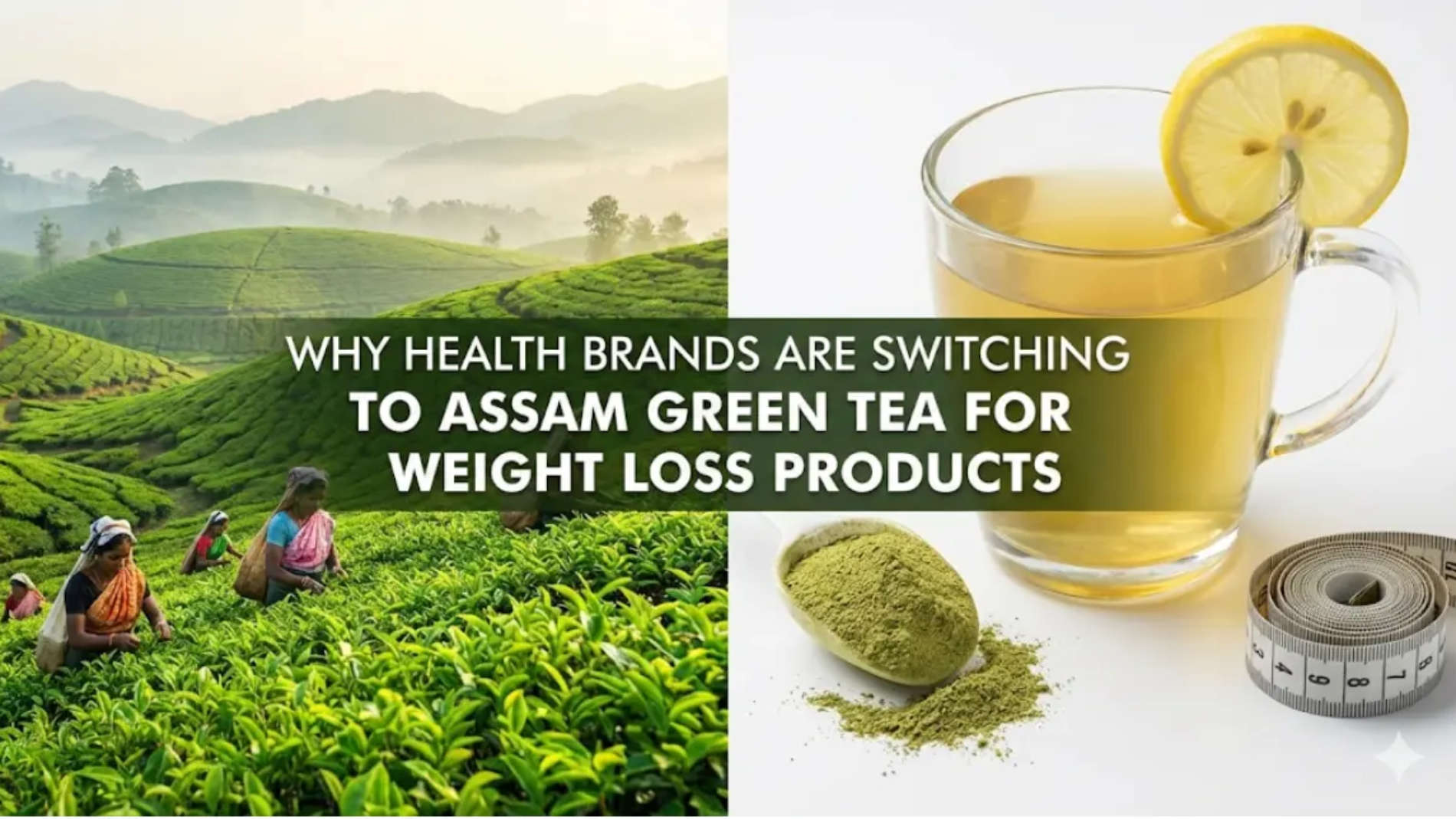
Indian Nilgiri Black Tea Powder

What is Nilgiri Black Tea Powder? A Guide to South India’s Fragrant Treasure

When international tea buyers think of India, their minds often jump to two legendary names: the bold, malty power of Assam and the delicate, muscatel “Champagne” of Darjeeling. But nestled in the pristine southern hills lies the third, and perhaps most versatile, star of the Indian tea world: Nilgiri.

Indian Nilgiri Black Tea Powder is a fragrant treasure, prized by discerning blenders and beverage manufacturers for a unique set of characteristics that its northern counterparts cannot match. As an experienced Indian tea exporter with deep roots in the nation’s tea trade, we’ll explore what makes this specific variety a strategic and high-value ingredient for the global market.

The Origin: A Gift from the "Blue Mountains

The story of Nilgiri tea is inseparable from its origin. The name “Nilgiri” literally translates to “Blue Mountains”—a stunning, high-altitude mountain range in the state of Tamil Nadu, South India. This unique terroir is the secret to its special nature.

Unlike the defined seasonal “flushes” of Assam and Darjeeling, the cool, misty, and stable high-altitude climate of the Nilgiris allows for tea to be harvested year-round. This provides a significant advantage for importers and manufacturers: a consistent, reliable, and stable supply chain. The tea bushes, grown at elevations up to 2,500 meters, produce leaves that are bright, clean, and bursting with fragrant oils.

The Signature Profile: Aroma Over Astringency

The primary differentiator for Indian Nilgiri Black Tea Powder is its exceptional flavour profile. While Assam is defined by strength and Darjeeling by delicacy, Nilgiri is defined by its fragrance.

A high-quality Nilgiri brew is incredibly aromatic, with bright floral notes and a crisp, fruity finish. But its most important characteristic for a B2B buyer is its naturally low tannin content.

Tannins are the compounds that cause the bitter, astringent, and “puckering” sensation in many black teas. Because Nilgiri is a low tannin tea, it has a wonderfully smooth, mellow, and “forgiving” taste. It lacks the harsh bitterness that can be a challenge in other teas, making it exceptionally easy to work with in blends and formulations.

Spice Up Your Business with Authentic Indian Flavors

Import and Export Excellence from India!

The "Iced Tea" King: A Critical B2B Application

For the global beverage industry, Nilgiri’s low tannin profile is not just a bonus; it’s a game-changing technical advantage.

Have you ever made a batch of iced tea that turned cloudy, murky, or “creamed down” as it cooled? That cloudiness is caused by the tannins and other compounds binding together at cold temperatures.

Indian Nilgiri Black Tea Powder does not cloud when chilled.

Its low tannin content allows it to remain perfectly clear, bright, and visually appealing, even when ice-cold. This makes it the undisputed #1 choice for beverage manufacturing, especially for:

  • Ready-to-Drink (RTD) Iced Teas: It provides a crystal-clear base that is visually appealing on a retail shelf.

  • Iced Tea Concentrates: Used by food service and cafes, it guarantees a clear, consistent product.

  • Cold Water Soluble (CWS) Powders: It is the ideal raw material for instant tea powders that dissolve easily in cold water.

The Blender's Dream Ingredient

For tea blenders and product developers, Nilgiri’s profile is a versatile canvas. Its subtle, non-overpowering flavour and high aroma make it the perfect base for value-added tea products.

Because it doesn’t have the malty dominance of Assam, it beautifully complements other, more delicate flavours. It is the ideal foundation for creating:

  • Fruit-Flavored Teas: (e.g., Peach, Lemon, Raspberry)

  • Floral Blends: (e.g., Rose, Jasmine)

  • Spiced Teas: Where a lighter, more aromatic base is desired.

Its fragrant lift enhances other ingredients without competing with them, making it a true blender’s dream.

Sourcing Premium Nilgiri Black Tea Powder

When sourcing Indian Nilgiri Black Tea Powder for export, quality is key. As a finest black tea powder supplier, we know that quality is defined by more than just origin.

For a B2B buyer, the powder format offers immense advantages in solubility, consistency, and ease of use over whole leaves. When evaluating a supplier, you must look for:

  • A Certificate of Analysis (COA): This is your guarantee of quality, verifying specifications like moisture content, particle size (mesh), and microbiological safety.

  • Vibrant Colour & Aroma: The dry powder should be bright and intensely fragrant. A dull, dusty-smelling powder is a sign of old or low-grade material.

  • Traceability: A good supplier should be able to provide traceability back to the Nilgiri region, ensuring you are sourcing an authentic product.

While it may be the third of India’s great teas, Nilgiri is second to none in its unique applications. It is a fragrant, versatile, and technically superior ingredient for the modern beverage market.

Spice Up Your Business with Authentic Indian Flavors

Import and Export Excellence from India!

Frequently Asked Questions (FAQs)

1. How does Nilgiri’s flavour differ from Assam and Darjeeling?

Assam is strong, bold, and malty (great with milk). Darjeeling is delicate, floral, and has a “muscatel” (grape-like) note (best on its own). Nilgiri is highly aromatic, fragrant, and fruity, with a smooth, non-bitter finish.

2. What are tannins in tea?

Tannins are a natural group of polyphenols in tea. They are responsible for the astringent, mouth-drying, and sometimes bitter qualities of a brew. They are also the compounds that cause tea to cloud when chilled.

3. Is Nilgiri tea always black tea?

While most famous for its black tea, the Nilgiri region also produces excellent oolong and green teas, which share the same characteristic aromatic and floral notes.

4. Can I use Nilgiri black tea powder for a milk tea or chai?

You can, but it’s not its strength. Its delicate, fragrant notes tend to get lost in milk and heavy spices. A robust Assam CTC tea is the industry standard for a strong milk tea or masala chai.

5. Is Nilgiri tea harvested year-round?

Yes. Unlike the seasonal “flushes” in Darjeeling and Assam, the high-altitude, equatorial climate of the Nilgiris allows for tea to be plucked all 12 months of the year, ensuring a stable and consistent supply.

6. What does “RTD” stand for?

RTD stands for “Ready-to-Drink,” which refers to packaged beverages, like bottled or canned iced teas, that are sold for immediate consumption.

7. Is Nilgiri tea powder the same as instant tea?

High-quality Nilgiri black tea powder is often processed as an “instant tea,” meaning it is fully soluble in hot or cold water. This is what makes it a key ingredient for beverage manufacturing.

8. How do I find a reliable Indian tea supplier for Nilgiri tea?

Look for an experienced Indian tea exporter who understands the nuances of the different tea regions. They should be able to provide samples, a detailed Certificate of Analysis (COA), and clear information on the tea’s grade and intended application.

About us

We bridge the gap between local producers and global markets, ensuring seamless trade facilitation with exceptional quality and reliability. We provide quick delivery services with customized packaging with all approval of International Certificates (Spices board India, MSME, IEC, fssai, FIEO, APEDA, EU certification, FDA and Many More)

Contact us

Shop No. 3, Ganesh Prestige Sr. No. 2/15, Near Laxmi Jewellers, Dhanakawadi, Pune – 411043, Maharashtra INDIA.

Call On

+91 9545205050

+91 9822422584
Email

sales@aquaconnectexim.com

aquaconnectexim@gmail.com

cumin for cosmetic use

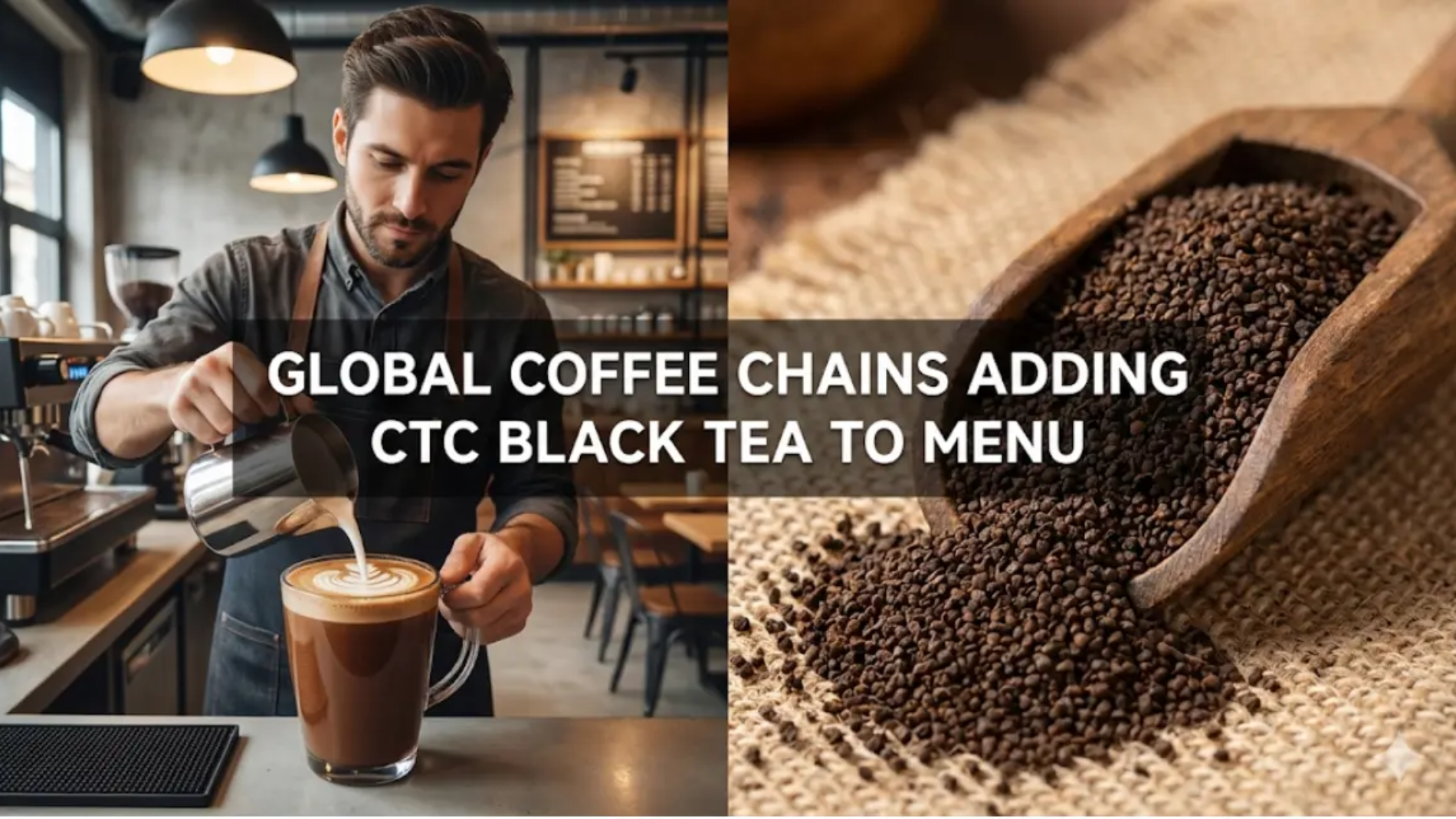
What to Look for When Sourcing Cumin for Cosmetic Use

The “clean beauty” revolution has fundamentally reshaped the cosmetics industry. Consumers are no longer just interested in results; they are demanding transparency, natural origins, and ingredients they can trust. This “kitchen-to-clinic” trend has led formulators to rediscover the potent benefits of ancient botanicals, and one of the most exciting emerging ingredients is cumin.

While it’s a staple in every spice rack, cumin for cosmetic use is gaining serious traction for its powerful skin-benefiting properties. But sourcing this spice for a face serum is not the same as sourcing it for a curry blend. For importers and cosmetic brands, understanding the specific quality markers of cosmetic-grade cumin is the key to creating a safe and effective product. This is your essential guide to sourcing the right raw material: the cumin seed itself.

Why Cumin? The Cosmetic Benefits Driving Demand

Formulators aren’t interested in the whole seed itself, but in the powerful compounds locked within it. These are typically extracted to create cumin seed oil or other extracts, which are then used in serums, creams, and masks. The B2B demand is growing for two key reasons:

  • Potent Antioxidant Properties: Cumin is a natural powerhouse of antioxidants. These compounds are the front-line defense in antioxidant skincare, helping to neutralize free radicals from pollution and UV exposure, which are the primary causes of premature aging.

  • Soothing & Anti-inflammatory: Cumin has well-documented anti-inflammatory properties, making it an excellent ingredient for calming irritated skin. This makes it a valuable addition to formulations targeting acne-prone or sensitive skin.

The Critical Pivot: Why the Whole Seed is Your Most Important Investment

Here is the single most important rule for sourcing: you cannot create a premium extract from an inferior raw material.

The quality of a finished cumin seed oil or extract is 100% dependent on the quality of the whole Indian cumin seed it was extracted from. Old, low-grade seeds with depleted active compounds will only produce a weak, ineffective oil. Therefore, your sourcing process must focus on securing the highest quality whole seed to serve as your foundation.

Spice Up Your Business with Authentic Indian Flavors

Import and Export Excellence from India!

A 5-Point Checklist for Sourcing Cosmetic-Grade Cumin Seeds

When sourcing cumin for cosmetic use, your specification sheet must be different from a food-grade-only spec. Here is what you must look for.

1. High and Verifiable Volatile Oil Content

For culinary use, flavour is key. For cosmetic use, potency is key. The aromatic and active compounds (like antioxidants) are found in the seed’s volatile oil. A higher volatile oil content in the seed translates directly to a more potent and effective extract for your serum.

  • What to do: Do not buy cumin without a guaranteed volatile oil content percentage. A quality cumin supplier will provide this on the Certificate of Analysis (COA). For cosmetic use, you should seek the highest percentage possible.

2. Guaranteed Botanical Accuracy:Cuminum cyminum

This is a critical point of confusion that can be a costly mistake. The ingredient you are looking for is Cuminum cyminum—the common, brownish-yellow cumin.

  • The Trap: Do not confuse this with “Black Cumin Seed”Nigella sativa, which is often used in cosmetics but is a completely different plant with a different chemical profile (its main active is Thymoquinone, not cumin-specific aldehydes).

  • What to do: Ensure your purchase order and your supplier’s documentation explicitly state the botanical name Cuminum cyminum to guarantee you are sourcing the correct ingredient.

3. Extreme Purity & Cleanliness (Purity Grades)

For a product that will be applied to the skin, purity is a non-negotiable safety and quality issue. The product must be free of all contaminants.

  • What to look for: A purity grade of 99.5% (or “Europe Grade”) is the recommended standard. This is achieved through advanced Sortex cleaning, which removes not just dust and pebbles, but also discoloured and damaged seeds.

  • What to demand: Your COA must verify that the product is free from pesticides, heavy metals, and aflatoxins, all of which are critical for a safe clean beauty ingredient.

4. Strict Microbiological Control

This is a key difference between food-grade and cosmetic-grade. While a certain level of bacteria is acceptable for food that will be cooked, a cosmetic product applied to the skin must be exceptionally clean.

  • What to do: Your supplier’s COA must include a full microbiological panel. This should show that the Total Plate Count, Yeast, and Mould are all below the strict limits required for the cosmetics industry. Sourcing sterile or “low-bacteria” cumin is a major advantage.

5. Freshness, Origin, and the COA

As mentioned, the active compounds in cumin degrade over time. Freshness is paramount.

  • The Origin: Indian cumin seed from the Unjha market is the global benchmark for quality. Sourcing from a supplier connected to the new harvest (which begins around February-March) ensures you receive seeds with the highest possible volatile oil content.

  • The COA: This document is your final proof. A reliable cumin supplier will provide a batch-specific Certificate of Analysis (COA) that verifies every spec listed above. If a supplier cannot provide this, do not buy from them.

Spice Up Your Business with Authentic Indian Flavors

Import and Export Excellence from India!

Sourcing cumin for cosmetic use is a smart, forward-thinking move that aligns with the “clean beauty” trend. But to create a product that is safe and effective, you must look beyond the spice aisle. It requires sourcing a high-potency, high-purity, and botanically accurate raw material.

It all starts with a premium, export-quality whole cumin seed.

Frequently Asked Questions (FAQs)

1. Why is cumin good for the skin?

Cumin is rich in antioxidants, which help protect the skin from free radical damage and aging. It also has natural anti-inflammatory properties that can help soothe redness and irritation, making it beneficial for acne-prone skin.

2. Is cumin seed oil the same as black cumin seed oil?

No, they are completely different. True cumin seed oil (cuminum cyminum) is what this article refers to. Black cumin seed oil (Nigella sativa) or Kalonji) is a different product with a different set of properties and is a very common point of confusion.

3. What is a good volatile oil content for cosmetic-grade cumin?

For a high-potency extract, you should look for a volatile oil content of 2.5% or higher. A premium Indian cumin seed can often exceed this, but you must verify the specification with your supplier.

4. Can’t I just use food-grade cumin for my cosmetic formula?

It is not recommended. Food-grade standards for microbiological counts (like yeast and mould) are often much looser than what is safe for a cosmetic product. You risk creating an unstable or unsafe formula.

5. Why is a COA with microbiological data so important?

A cosmetic product, especially a cream or lotion, creates an environment where bacteria, yeast, and mould can grow. Starting with a “clean” (low-microbe) raw material is the first and most critical step in ensuring your final product’s stability and safety.

6. Why should I buy whole cumin seeds instead of pre-made oil?

Buying the whole seeds gives you complete control over the extraction process. You can choose your extraction method (e.g., CO2 extraction, steam distillation) and guarantee the oil’s freshness. The oil is also more stable for longer when left inside the whole seed.

7. Is Indian cumin seed a good choice for cosmetic use?

Yes, Indian cumin seed from the Unjha region is the global benchmark for quality. A professional cumin supplier from India will be highly experienced in meeting the stringent purity and documentation requirements for export.

8. Does cumin help with acne?

Its natural anti-inflammatory and antiseptic properties make it a very popular ingredient in formulations designed to calm and clarify acne-prone skin.

About us

We bridge the gap between local producers and global markets, ensuring seamless trade facilitation with exceptional quality and reliability. We provide quick delivery services with customized packaging with all approval of International Certificates (Spices board India, MSME, IEC, fssai, FIEO, APEDA, EU certification, FDA and Many More)

Contact us

Shop No. 3, Ganesh Prestige Sr. No. 2/15, Near Laxmi Jewellers, Dhanakawadi, Pune – 411043, Maharashtra INDIA.

Call On

+91 9545205050

+91 9822422584
Email

sales@aquaconnectexim.com

aquaconnectexim@gmail.com

bulk Byadgi Chili Powder

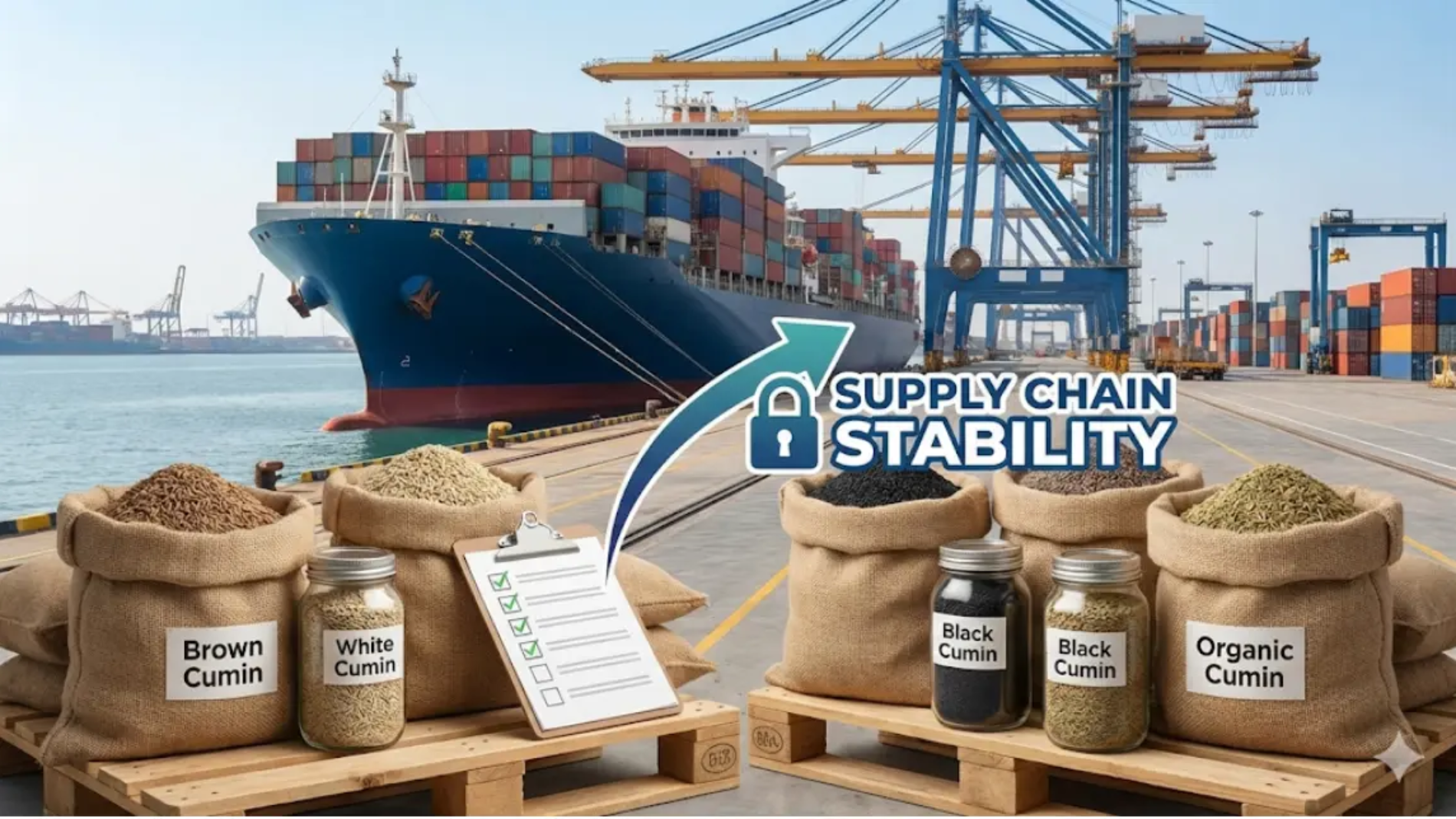
All Colour, No Fire: The B2B Case for Sourcing Bulk Byadgi Chili Powder

The global food manufacturing industry is in the grip of a powerful consumer trend: the clean label revolution. Shoppers are scanning ingredient lists, actively rejecting artificial additives, synthetic dyes (like Red 40), and anything they can’t pronounce. For brands that rely on a vibrant, appealing red or orange hue for their products—from snack seasonings and sauces to processed meats—this presents a massive challenge.

How do you achieve that perfect, eye-catching colour in a 100% natural way?

The answer for many of the world’s most innovative brands is found in a specific spice from India: Bulk Byadgi Chili Powder.

This unique chili, primarily grown in the state of Karnataka, is prized not for its “fire” but for its brilliant colour. It is a high-performance, natural ingredient that solves one of the biggest challenges for modern food formulators. Here’s the B2B case for why this Indian chili powder should be on your next sourcing list.

1. The Ultimate "Clean Label" Natural Colourant

For a food manufacturer, Byadgi chili powder is, first and foremost, a potent and natural food colourant. Its ability to replace synthetic dyes is its single greatest B2B advantage.

  • Consumer Trust: On an ingredient label, “Spice” or “Chili Powder” is trusted and understood. “FD&C Red 40” is not. Using Byadgi allows your brand to build a “clean label” product that aligns with modern consumer values.

  • Marketing Power: This switch allows for powerful marketing claims like “No Artificial Colours,” “Coloured Naturally with Spices,” or “All-Natural Ingredients,” which can be a key differentiator in a crowded marketplace.

2. The Technical Secret: High ASTA, Low SHU

The “magic” of Byadgi lies in its two primary technical specifications, which are in perfect opposition.

  • High ASTA Value: ASTA (American Spice Trade Association) units measure the extractable colour. Byadgi is world-famous for its incredibly high ASTA value, often ranging from 150 to 200. This makes it one of the most potent natural red colourants available, delivering a deep, rich, and stable red hue.

  • Low SHU (Scoville Heat Units): This is the “no fire” part. Byadgi is a very low heat chili, typically with a Scoville rating of just 15,000-25,000 SHU (for comparison, a Guntur chili can be 3-4 times hotter).

This combination is a formulator’s dream. It means you can add a significant amount of the powder to achieve a brilliant red colour without making the product unpleasantly spicy. It gives you complete control over the final flavour profile.

Spice Up Your Business with Authentic Indian Flavors

Import and Export Excellence from India!

3. Cost-Effectiveness Through Potency

While the per-kilo price of premium bulk Byadgi chili powder may be higher than a generic, hotter chili, its “cost-in-use” is often lower. Because the ASTA value is so high, a manufacturer needs to use a much smaller quantity of it to achieve the desired colour.

Furthermore, it’s a two-in-one ingredient, providing both colour and a subtle, smoky flavour. When compared to the cost of using a separate base spice plus an expensive natural colourant like cochineal or beet powder, Byadgi is often the more economical and simpler solution.

4. Versatility in Key Industrial Applications

The unique properties of Byadgi make it a staple ingredient across numerous food sectors. Leading food manufacturers rely on it for:

  • Snack Food Seasonings: It’s the secret to the appealing red-orange coating on chips, extruded snacks, and nuts.

  • Spice Blends (Masalas): It provides the foundational red colour for blends like Tandoori masala and many curry powders, where authentic appearance is key.

  • Sauces and Marinades: It gives a rich, natural colour to BBQ sauces, ketchups, hot sauces (where it’s blended with hotter chilies), and prepared marinades.

  • Processed Meats: It’s used in sausages, pepperoni, and other cured meats to create a robust, healthy-looking colour.

5. Sourcing for Purity and Consistency

For a B2B buyer, securing a reliable supply of authentic Byadgi is crucial. Sourcing bulk Byadgi chili powder from a trusted chili from Karnataka exporter is key. A professional supplier will provide:

  • A Certificate of Analysis (COA): This is non-negotiable. It must verify the ASTA value, SHU level, and microbiological safety.

  • Purity Guarantee: Assurance that the powder is not adulterated with cheaper, hotter chilies or, worse, synthetic dyes.

  • Consistent Grind: A uniform particle size (mesh) that is appropriate for your application.

This is where partnering with an exporter who understands the technical specs of pure red chili powder becomes a critical part of your supply chain.

In conclusion, bulk Byadgi chili powder is far more than just a spice. It is a strategic, high-performance clean label ingredient that solves the industry’s need for natural, vibrant colour.

Spice Up Your Business with Authentic Indian Flavors

Import and Export Excellence from India!

Frequently Asked Questions (FAQs)

1. What is the main difference between Byadgi and Kashmiri chili powder?

Both are prized for their high colour (high ASTA) and mild heat (low SHU). They are often used interchangeably. Byadgi, particularly the Dabbi variety, is famous for its wrinkled pod and is the workhorse for the food industry. Kashmiri is a similar, premium mild chili. The choice often comes down to supplier availability and specific flavour nuances.

2. Is Byadgi chili powder spicy at all?

It has a very mild, gentle warmth but is not considered “spicy” in the way a Guntur or Teja chili is. Its flavour is more subtle and smoky.

3. What does “ASTA” actually mean?

ASTA stands for the American Spice Trade Association. The ASTA colour value is a scientific, laboratory test that measures the extractable colour of a spice, determining its potency as a colourant. A higher number means a deeper colour.

4. How stable is the colour from Byadgi chili powder during cooking?

The natural carotenoid pigments in Byadgi chili are quite stable, especially compared to other natural colours like beet powder. The colour holds up well during standard food processing and cooking.

5. How can I verify the quality of a bulk Byadgi shipment?

Always request a Certificate of Analysis (COA) from your supplier. This lab report is your proof of quality and should confirm the ASTA value, SHU level, and microbiological safety. You should also evaluate a pre-shipment sample for its colour, aroma, and flavour.

6. Why is it more expensive than generic chili powder?

Its price is based on its high value as a colourant. The specific chili cultivar is grown for its high ASTA properties, not for high-yield tonnage, making it a premium agricultural product.

7. Is Byadgi chili powder the same as paprika?

They are similar in function (colour with mild heat) but are made from different cultivars of Capsicum annuum grown in different regions. Byadgi is the premium Indian variety, while paprika is typically associated with Spain, Hungary, and the Americas.

8. What is the best way to store bulk Byadgi chili powder?

To protect its potent colour and aroma, it must be stored in a cool, dark, and dry place in airtight, opaque containers to prevent degradation from light, heat, and moisture.

About us

We bridge the gap between local producers and global markets, ensuring seamless trade facilitation with exceptional quality and reliability. We provide quick delivery services with customized packaging with all approval of International Certificates (Spices board India, MSME, IEC, fssai, FIEO, APEDA, EU certification, FDA and Many More)

Contact us

Shop No. 3, Ganesh Prestige Sr. No. 2/15, Near Laxmi Jewellers, Dhanakawadi, Pune – 411043, Maharashtra INDIA.

Call On

+91 9545205050

+91 9822422584
Email

sales@aquaconnectexim.com

aquaconnectexim@gmail.com

Onion Kibbled

Why Rehydration Ratio is a Key Metric for Quality Onion Kibbled

For food manufacturers and importers sourcing dehydrated vegetables, the specification sheet is a critical document. It’s filled with essential data points like moisture content, particle size, and purity. However, there is one metric, particularly for products like Onion Kibbled, that is often overlooked but holds the key to product performance and profitability: the rehydration ratio.

While price per kilo and visual appearance are important, the rehydration ratio is a true measure of an ingredient’s quality and value. As an experienced onion supplier in India, we know that savvy buyers understand this metric is a direct indicator of processing quality and final product yield. This guide explains what the rehydration ratio is and why it’s a key metric you cannot afford to ignore.

What is Rehydration Ratio?

Simply put, the rehydration ratio measures how much weight the dehydrated product gains when it absorbs water. It is expressed as a ratio, such as 1:5. This means that for every 1 gram of dry Onion Kibbled, you will get 5 grams of rehydrated onion after soaking it in water for a specified time.

This metric is the ultimate test of how well the dehydrated onion was processed and how effectively it can return to a state resembling fresh, cooked onion.

1. A Direct Indicator of Superior Processing Quality

A high rehydration ratio is a sign of a gentle and sophisticated dehydration process. When onions are dried slowly and at controlled temperatures, their cellular structure remains largely intact. These undamaged cells can effectively absorb water again, allowing the kibbled pieces to swell, become tender, and regain a texture similar to freshly chopped onion.

Conversely, a low rehydration ratio is a red flag. It indicates an aggressive, high-heat drying process that has damaged or collapsed the onion’s cell walls. These damaged cells cannot properly absorb water, resulting in a product that remains tough, chewy, or leathery even after soaking.

Spice Up Your Business with Authentic Indian Flavors

Import and Export Excellence from India!

2. The Key to Better Yield and Cost-Effectiveness

For food manufacturers, this is where the rehydration ratio has a direct impact on the bottom line. It’s a simple calculation of yield.

Imagine you are sourcing 100 kg of Onion Kibbled for a large batch of soup.

  • Supplier A offers a premium product with a 1:5 rehydration ratio. Your 100 kg of dry kibbled yields 500 kg of rehydrated onion for your recipe.

  • Supplier B offers a cheaper product with a 1:3 rehydration ratio. Your 100 kg of dry kibbled yields only 300 kg of rehydrated onion.

In this scenario, the “cheaper” product from Supplier B is actually far more expensive in terms of its functional value and final yield. A higher rehydration ratio means you are getting more usable product for your money.

3. Superior Texture, Mouthfeel, and Flavor Release

The goal of using Onion Kibbled in products like stews, canned goods, and dry soup mixes is to provide a pleasant, soft texture that mimics real onion pieces.

A high rehydration ratio ensures this. The kibbled pieces become tender and succulent, enhancing the overall mouthfeel of the final product. A poorly rehydrated onion, on the other hand, will be tough and fibrous, creating an unpleasant eating experience for the consumer. Furthermore, proper rehydration allows the onion’s natural, pungent flavor compounds to be released more effectively into the surrounding broth or sauce, resulting in a more flavourful dish.

How to Verify the Rehydration Ratio

You don’t have to take a supplier’s word for it. Verification is straightforward.

  • Ask the Supplier: A professional dehydrated onion supplier will have the rehydration ratio clearly stated on their technical specification sheet.

  • Request a Sample Test: The best way to verify is to test it yourself. Take a precise weight of the dry kibbled onion (e.g., 10 grams), soak it in warm water for 30-60 minutes, drain the excess water thoroughly, and then weigh the rehydrated product. This simple test will give you the real-world ratio and confirm the supplier’s quality claims.

Spice Up Your Business with Authentic Indian Flavors

Import and Export Excellence from India!

The Right Format for the Right Application

While a high rehydration ratio is critical for Onion Kibbled, it’s also important to know when a different format is needed. For applications that require a completely smooth texture and instant flavour dispersion—such as creamy dressings, fine marinades, or snack food coatings—rehydration isn’t the goal. In these cases, a fine onion powder is the superior choice, as it dissolves and integrates immediately.

By understanding the rehydration ratio, importers can make smarter, more profitable sourcing decisions, ensuring the Onion Kibbled they purchase delivers not just on price, but on performance.

Frequently Asked Questions (FAQs)

1. What is a good rehydration ratio for export-quality onion kibbled?

For high-quality Onion Kibbled, you should look for a rehydration ratio of at least 1:4 to 1:5. Anything lower may indicate inferior processing.

2. Does the rehydration ratio affect the onion’s flavor?

Yes, indirectly. A better rehydration means the onion cells are healthier and can release their natural flavour compounds more effectively into the dish, resulting in a more potent and authentic taste.

3. Will a higher ratio product cost more?

Initially, a product with a guaranteed high rehydration ratio may have a higher price per kilo. However, as it provides a greater final yield, its “cost-in-use” is often significantly lower, making it more economical for manufacturers.

4. How is the rehydration ratio tested in a lab?

It is tested under controlled conditions, where a specific weight of the product is soaked in water at a specific temperature for a set amount of time before being drained and re-weighed.

5. Does particle size (kibbled vs. minced) affect the rehydration ratio?

Generally, different particle sizes from the same quality raw material will have similar rehydration ratios, as it’s a measure of cellular integrity. However, smaller particles like minced onion may rehydrate slightly faster than larger kibbled pieces.

6. Is this metric also important for other dehydrated vegetables?

Absolutely. The rehydration ratio is a key quality metric for many dehydrated vegetables, including garlic, carrots, and bell peppers, for the same reasons: it indicates quality, yield, and final texture.

7. Does the color of the onion kibbled relate to its rehydration ability?

A good, uniform off-white color is a sign of a well-controlled, gentle drying process. A scorched or brown color indicates high-heat drying, which is the same process that damages cell walls and leads to a poor rehydration ratio.

8. For which products is the rehydration ratio NOT important?

The ratio is not relevant for onion powder, as its function is to dissolve or disperse for flavour, not to provide texture. For granules used in dry rubs, flowability is more important than their ability to rehydrate.

About us

We bridge the gap between local producers and global markets, ensuring seamless trade facilitation with exceptional quality and reliability. We provide quick delivery services with customized packaging with all approval of International Certificates (Spices board India, MSME, IEC, fssai, FIEO, APEDA, EU certification, FDA and Many More)

Contact us

Shop No. 3, Ganesh Prestige Sr. No. 2/15, Near Laxmi Jewellers, Dhanakawadi, Pune – 411043, Maharashtra INDIA.

Call On

+91 9545205050

+91 9822422584

Email

sales@aquaconnectexim.com

aquaconnectexim@gmail.com