
types of cumin seeds

Supply Chain Stability: Which Types of Cumin Seeds Are Best for Bulk Import?

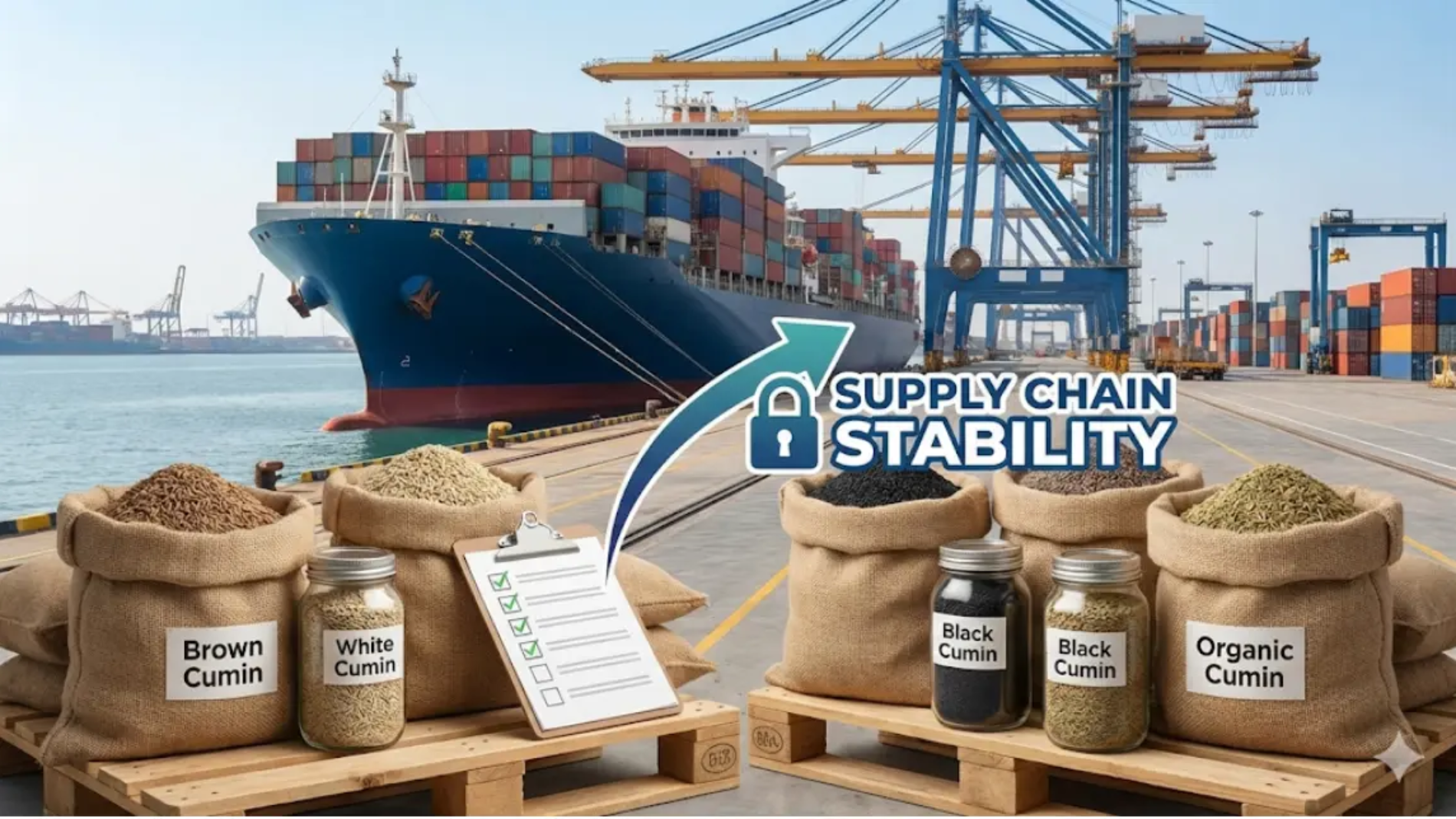
In the volatile world of international agri-commodities, supply chain stability is the bedrock of a successful business. For food manufacturers, spice blenders, and wholesalers, a disruption in the supply of key ingredients can halt production lines and erode profit margins. Cumin, the second most popular spice in the world after pepper, is a staple in global cuisines. However, not all types of cumin seeds offer the same reliability when it comes to bulk sourcing.

Geopolitical tensions, climate change, and fluctuating harvest yields in major producing countries like Syria and Turkey have made sourcing challenging. In this landscape, India has emerged as the most reliable global supplier. But even within Indian exports, understanding the nuances between the different types of cumin seeds—Brown, White, Black, and Organic—is crucial for securing a consistent, year-round supply.

Here is a breakdown of the major types of cumin seeds and processed forms, analyzed through the lens of supply chain stability for importers.

1. Brown Cumin Seeds: The Industrial Standard

When the world talks about “cumin,” they are almost always referring to Brown Cumin Seeds (Cuminum cyminum). This is the workhorse of the spice industry.

  • Supply Chain Verdict: Highly Stable. As the most widely cultivated variety, particularly in the Indian states of Gujarat and Rajasthan, brown cumin offers the highest liquidity in the market. There is ample volume available year-round, minimizing the risk of stockouts.

  • Best For: Large-scale curry powder manufacturers, oleoresin extraction, and essential oil distillers.

  • Importer Note: Because this is a high-volume commodity, prices are transparent. Importers can hedge against volatility by locking in contracts during the peak harvest season (February to April).

2. White Cumin Seeds: The Premium Grade

There is often confusion among buyers regarding White Cumin Seeds. In the botanical sense, standard cumin is often called “Safed Jeera” (White Cumin) in India to distinguish it from the unrelated Black Cumin. However, in the export trade, “White Cumin” often refers to premium, machine-cleaned, or Sortex-graded seeds that have a lighter, brighter color compared to the standard unpolished brown seeds.

  • Supply Chain Verdict: Stable but Price-Sensitive. Since these are essentially high-quality processed versions of brown cumin, the supply is stable. However, the extra processing (Sortex cleaning) adds a layer of cost.

  • Best For: Retail packing, grocery chains, and visible applications (like bakery toppings) where visual purity is paramount.

  • Importer Note: “Singapore Quality” (99% pure) and “Europe Quality” (99.5% pure) are the benchmarks here. Europe Quality is the most stable choice for Western markets due to strict pesticide residue compliance.

Spice Up Your Business with Authentic Indian Flavors

Import and Export Excellence from India!

3. Black Cumin Seeds: The Niche Specialty

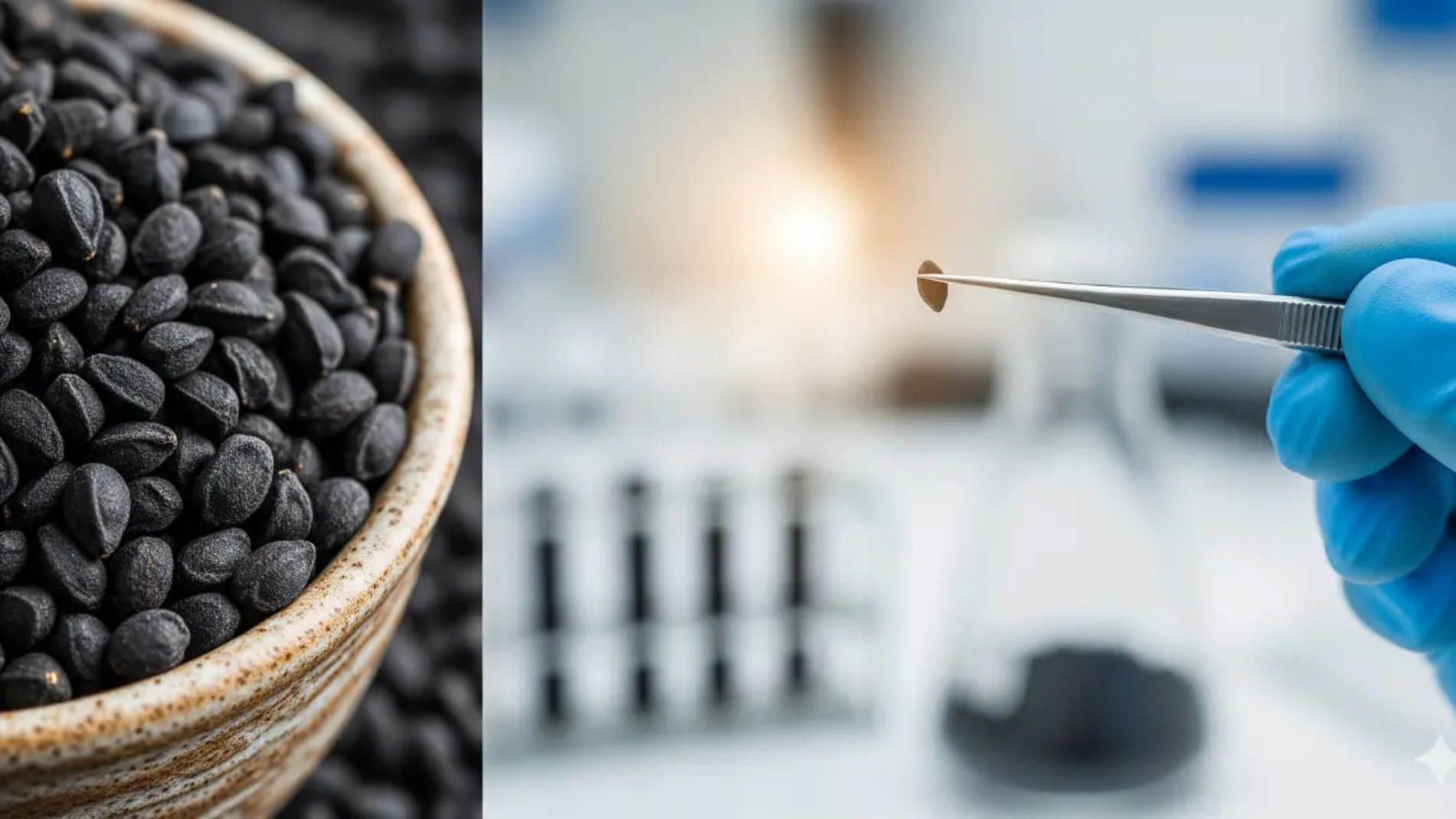
Black Cumin Seeds are distinct from the standard variety. Depending on the region, this term can refer to Nigella sativa (Kalonji) or Bunium bulbocastanum (Kala Jeera/Shah Jeera). In the context of premium spice blends (like Garam Masala), it usually refers to the latter—a smaller, darker, sweeter seed.

  • Supply Chain Verdict: Volatile. Unlike the massive cultivation of brown/white cumin, Black Cumin Seeds are grown in much smaller quantities, often in specific mountainous or wild regions (like the Himalayas or parts of Iran/Pakistan/India).

  • Best For: Gourmet spice blends, authentic Mughlai cuisine, and medicinal herbal products.

  • Importer Note: Due to lower production volumes, this type is susceptible to price spikes if a single harvest fails. It is not recommended to build a high-volume, low-margin product line solely around this variety without securing a dedicated supplier first.

4. Organic Cumin Seeds: The Growing Demand

With the “Clean Label” movement gaining momentum, the demand for Organic Cumin Seeds is outstripping supply. These are grown without synthetic fertilizers or pesticides and come with certifications (USDA, EU Organic, NPOP).

  • Supply Chain Verdict: Moderate to Tight. While India is increasing its organic acreage, the conversion process for farmland takes three years. This creates a supply lag.

  • Best For: Health food brands, baby food manufacturers, and premium organic retailers.

  • Importer Note: Stability here depends entirely on the supplier’s certifications. Verify traceability. Buying organic cumin seeds on the spot market is risky; long-term contracts with certified exporters are essential to ensure you don’t face shortages.

5. Cumin Powder: The Convenience vs. Shelf-Life Trade-off

While not a “seed” strictly speaking, Cumin Powder is a major export category. Many importers debate whether to import the raw seed or the finished powder.

  • Supply Chain Verdict: Stable, but Logistically Demanding. The supply of powder is as stable as the brown seeds it is ground from. However, the stability challenge here is shelf life. Powder oxidizes faster than whole seeds.

  • Best For: Instant spice mixes, ready-to-eat (RTE) meals, and sauce manufacturing.

  • Importer Note: Importing powder saves on local processing costs but requires high-barrier packaging to preserve volatile oils. For long-distance shipping (e.g., India to South America), importing whole types of cumin seeds and grinding locally is often the safer strategy for freshness.

Spice Up Your Business with Authentic Indian Flavors

Import and Export Excellence from India!

Making the Right Choice

For bulk importers, the “best” type of cumin depends on your risk tolerance and end application.

  • For maximum stability and lowest cost: Choose Brown Cumin Seeds.

  • For retail and visual appeal: Choose White Cumin Seeds (Europe Grade).

  • For specialty niches: Source Black Cumin, but keep inventory buffers high.

  • For high-value markets: Secure contracts for Organic Cumin Seeds.

By understanding the production dynamics of these different types of cumin seeds, you can build a resilient supply chain that withstands market fluctuations.

Frequently Asked Questions (FAQs)

1. What is the difference between Brown and White Cumin Seeds?

Botanically, they are usually the same plant (Cuminum cyminum). In the trade, “Brown” refers to the standard unpolished crop, while “White” often refers to higher quality, polished, or Sortex-cleaned seeds that appear lighter and brighter.

2. Is Black Cumin the same as Nigella (Kalonji)?

This is a common confusion. In Indian cooking, Nigella sativa is often called “Kalonji” or Onion Seed, but sometimes marketed as Black Cumin. True Black Cumin (Bunium bulbocastanum or Shah Jeera) is a different, thinner, curved seed used in biryanis. Always clarify the botanical name with your supplier.

3. Which type of cumin seed has the highest oil content?

Generally, standard Brown/White cumin seeds grown in India have a volatile oil content between 2.5% to 4%. This is ideal for flavor. Specific regions (like Gujarat) are known for high-oil seeds suitable for extraction.

4. Why is Organic Cumin more expensive? Organic farming is labor-intensive and has lower yields per acre compared to conventional farming. Additionally, the cost of certification and strict separation during processing adds to the premium price.

5. Can I store Cumin Powder as long as Cumin Seeds?

No. Whole types of cumin seeds can retain their flavor for up to 2 years if stored correctly. Cumin powder loses its potency much faster (6-12 months) because the surface area is exposed to air, leading to oxidation of essential oils.

6. What is “Europe Quality” cumin?

“Europe Quality” refers to cumin seeds that have been processed to 99.5% purity (free from stems/stones) and tested to meet strict European Union regulations regarding pesticide residues (IPM Cumin).

7. Is it better to import whole seeds or powder?

For supply chain stability and quality control, importing whole cumin seeds is usually better. It allows you to grind on demand, ensuring freshness for your customers. Powder is better only if you lack grinding infrastructure.

8. Which country is the most stable supplier of cumin?

India produces over 70% of the world’s cumin and consumes a large portion of it, meaning the market infrastructure is massive and robust. Compared to Syria or Turkey, India offers the most stable supply of all types of cumin seeds.

About us

We bridge the gap between local producers and global markets, ensuring seamless trade facilitation with exceptional quality and reliability. We provide quick delivery services with customized packaging with all approval of International Certificates (Spices board India, MSME, IEC, fssai, FIEO, APEDA, EU certification, FDA and Many More)

Contact us

Shop No. 3, Ganesh Prestige Sr. No. 2/15, Near Laxmi Jewellers, Dhanakawadi, Pune – 411043, Maharashtra INDIA.

Call On

+91 9545205050

+91 9822422584
Email

sales@aquaconnectexim.com

aquaconnectexim@gmail.com

cumin spice

Why the Best Spice Blends Start with Whole Cumin Spice, Not Powder

In the world of food manufacturing, no product is more fundamental to flavor than the spice blend. A signature curry powder, a taco seasoning, or a complex ras el hanout is the heart of a brand, and its consistency is its bond of trust with the consumer. To create these premium blends, R&D teams and professional spice blenders must make a critical choice: do they use pre-ground cumin powder or start with whole cumin seeds?

While pre-ground powder offers convenience, the world’s best food manufacturers and spice artisans know a non-negotiable secret: the most vibrant, potent, and stable spice blends always start with the whole cumin spice.

As a leading cumin exporter in India, we understand the technical and sensory advantages behind this decision. Here is the B2B case for why sourcing whole cumin seeds is the superior choice for your product line.

1. The Flavor Lock: Protecting Volatile Oils

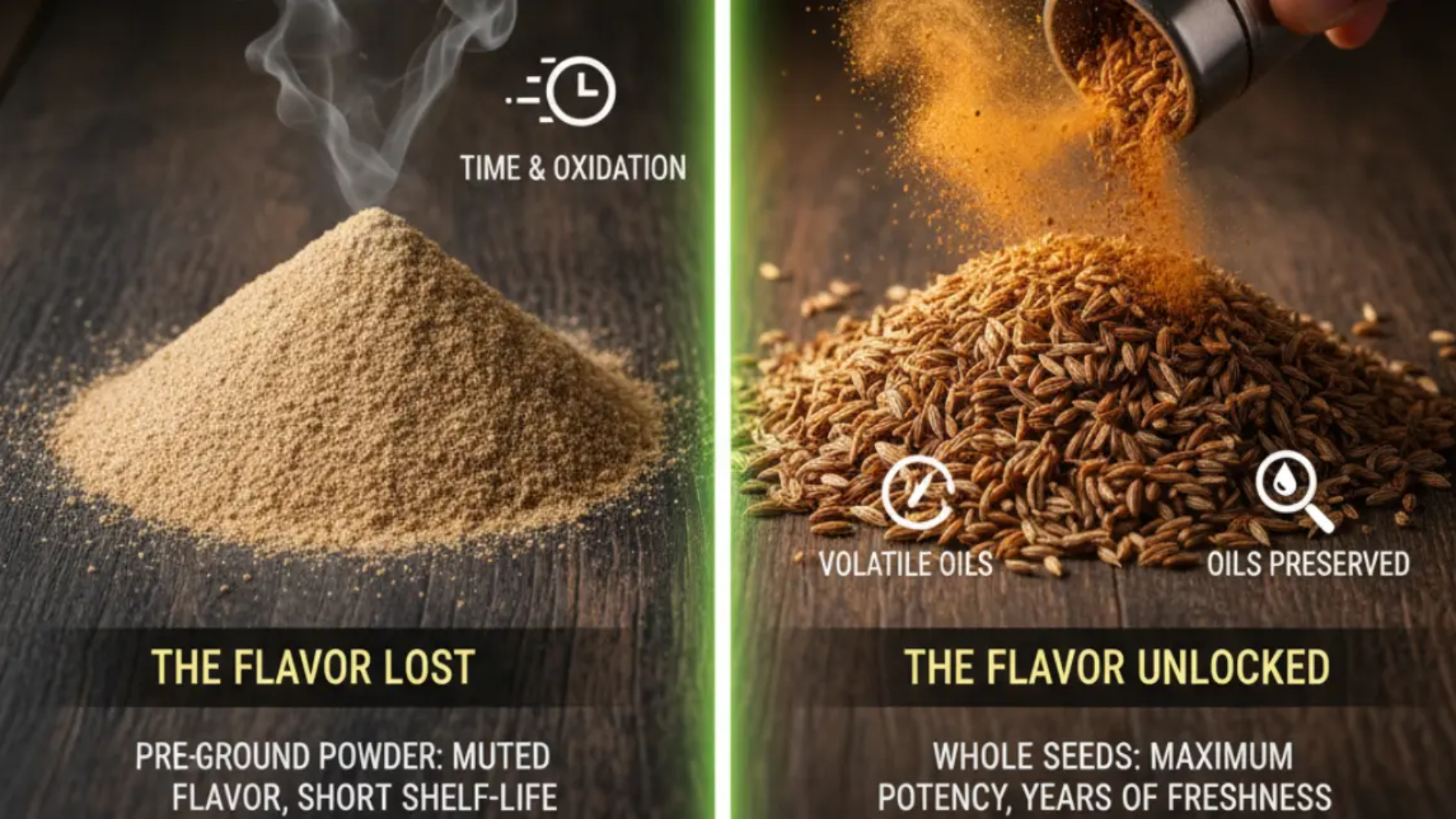
The “flavor” of any spice is a direct result of its volatile oils. These delicate aromatic compounds are the very essence of the spice. A whole cumin seed is a perfect, natural, airtight container, designed by nature to protect these oils from oxidation and evaporation.

The moment a cumin seed is ground into ground cumin or jeera powder, its surface area increases exponentially. This exposes those precious oils to air and light, and they immediately begin to degrade. A pre-ground powder that has been processed, packaged, shipped, and stored for months will have lost a significant portion of its aromatic potency.

For a spice blender, this is the most important factor. Grinding whole seeds in-house, just before blending, shatters the seed and releases a “burst” of potent, fresh flavor that pre-ground powder simply cannot match. This results in a final product that is far more fragrant and impactful.

2. The Shelf-Life Advantage: A Smarter Investment

For an importer or food manufacturer, inventory is an investment. Shelf life is profit.

  • Whole Cumin Seeds: When stored correctly in a cool, dark place, whole seeds can retain their peak quality and volatile oil content for several years. They are robust, stable, and a low-risk inventory item.

  • Cumin Powder: Pre-ground powder’s shelf life is measured in months, not years. Its flavor and aroma degrade rapidly.

By sourcing whole cumin seeds, a manufacturer is making a more stable financial investment. They reduce the risk of product spoilage, ensure their inventory remains potent for longer, and guarantee that the last bag of their spice blend tastes just as fresh as the first.

Spice Up Your Business with Authentic Indian Flavors

Import and Export Excellence from India!

3. Absolute Control Over Purity and Adulteration

Purity is a non-negotiable in the B2B food world. The pre-ground powder market is notoriously susceptible to adulteration—the practice of adding “fillers” like rice flour, starches, or even sawdust to bulk up the product and cut costs.

It is extremely difficult to detect these fillers in a fine powder without laboratory testing.

Whole Indian cumin seed, on the other hand, is transparent. A buyer can visually inspect the seeds for quality, consistency, and the absence of foreign matter. By sourcing whole seeds from a trusted supplier in a major hub like the Unjha market, a manufacturer can:

  • Visually confirm the quality of the raw material.

  • Guarantee 100% purity in their product.

  • Protect their brand from the disastrous consequences of adulteration.

4. Total Control Over Texture and Formulation

A spice blend is not just about flavor; it’s also about texture. Different products require different grinds.

  • A fine, silky jeera powder is perfect for a smooth curry paste or sauce.

  • A medium, rustic grind is ideal for a steak rub or a “rustic” seasoning blend.

  • A coarse-cracked seed is used for pickling spices or as a “topper.”

When a manufacturer buys pre-ground powder, they are locked into one particle size. By sourcing whole cumin seeds, the R&D team and food formulators have complete control. They can customize the grind to perfectly match the specific textural and sensory requirements of their new product, giving them a level of precision that is essential for innovation.

Why "Whole" is the Professional's Choice

While cumin powder has its place, it is a product of convenience. For businesses where quality, potency, and consistency are the cornerstones of their brand, the choice is clear.

The best spice blends start with whole cumin spice because it provides unparalleled flavor, a vastly superior shelf life, a guarantee of purity, and complete control over the final product. The foundation of any great blend is a high-quality, high-purity raw material. To ensure your products start with the best, you need a reliable partner who can deliver that quality, every single time.

Frequently Asked Questions (FAQs)

1. What is the real flavor difference between fresh-ground and pre-ground cumin?

Freshly ground cumin has a much stronger, brighter, and more complex aromatic flavor. Pre-ground cumin, especially if old, will taste flatter, dustier, and more muted, as its most fragrant volatile oils have evaporated.

2. Is it more cost-effective to buy whole cumin seeds?

While the initial purchase price may be similar, it is often more cost-effective in the long run. You get a more potent product (so you may be able to use less), you have zero waste from spoilage due to its long shelf life, and you are protected from the financial risk of adulteration.

3. What is “jeera powder”?

“Jeera” is the Hindi name for cumin. “Jeera powder” is the exact same thing as ground cumin or cumin powder.

4. How can I tell if whole cumin seeds are high-quality?

Look for seeds that are uniform in color (a light brownish-yellow), plump, and relatively free of sticks, stems, and broken seeds. The most important test is the aroma: crush a few seeds between your fingers. They should release a strong, warm, and pungent fragrance.

5. What is the difference between brown cumin and black cumin?

This is a critical distinction. Brown cumin (Cuminum cyminum) is the common “jeera” this article discusses. Black Cumin (Nigella sativa, or Kalonji) is a completely different spice with a pungent, peppery, and slightly bitter taste. They are not interchangeable.

6. Why is Indian cumin seed considered a global benchmark?

Indian cumin seed, particularly from the Unjha market in Gujarat, is the global benchmark for quality and trade. India is the world’s largest producer, offering a consistent, aromatic product with a high volatile oil content that is prized by spice blenders worldwide.

7. What is the best way to grind whole cumin seeds?

For commercial production, a water-cooled or cryogenic spice grinder is used to prevent heat from destroying the volatile oils. For smaller test batches, a burr grinder is ideal.

8. What’s the best way to store bulk cumin seeds?

Store them in a cool, dark, and dry place in airtight, food-grade containers. Keep them away from heat, light, and moisture to protect the volatile oils and ensure a multi-year shelf life.

About us

We bridge the gap between local producers and global markets, ensuring seamless trade facilitation with exceptional quality and reliability. We provide quick delivery services with customized packaging with all approval of International Certificates (Spices board India, MSME, IEC, fssai, FIEO, APEDA, EU certification, FDA and Many More)

Contact us

Shop No. 3, Ganesh Prestige Sr. No. 2/15, Near Laxmi Jewellers, Dhanakawadi, Pune – 411043, Maharashtra INDIA.

Call On

+91 9545205050

+91 9822422584
Email

sales@aquaconnectexim.com

aquaconnectexim@gmail.com

cumin powder

What is Cumin Powder? A Guide to Its Grades, Uses, and Origins

Walk through any spice market in the world, and you will be greeted by a familiar, unmistakable aroma—warm, earthy, and slightly pungent. More often than not, that signature scent belongs to Cumin Powder. An indispensable ingredient in cuisines from Mexico to the Middle East and South Asia, this humble powder is a true global staple.

But for a food manufacturer, an importer, or a serious chef, understanding this food ingredient goes beyond its taste. What defines its quality? Where does the best cumin come from? And what are the critical differences between buying pre-ground powder and whole seeds? This guide will walk you through the essential details every professional buyer should know.

What is Cumin Powder? The Basics

Simply put, Cumin Powder, known widely as jeera powder in India, is the result of finely grinding dried cumin seeds. These seeds are the fruit of the Cuminum cyminum plant, a member of the parsley family. The grinding process releases the seed’s volatile oils, creating the intense, aromatic powder that is so prized in the culinary world.

The Origins: The Heart of Flavour in India

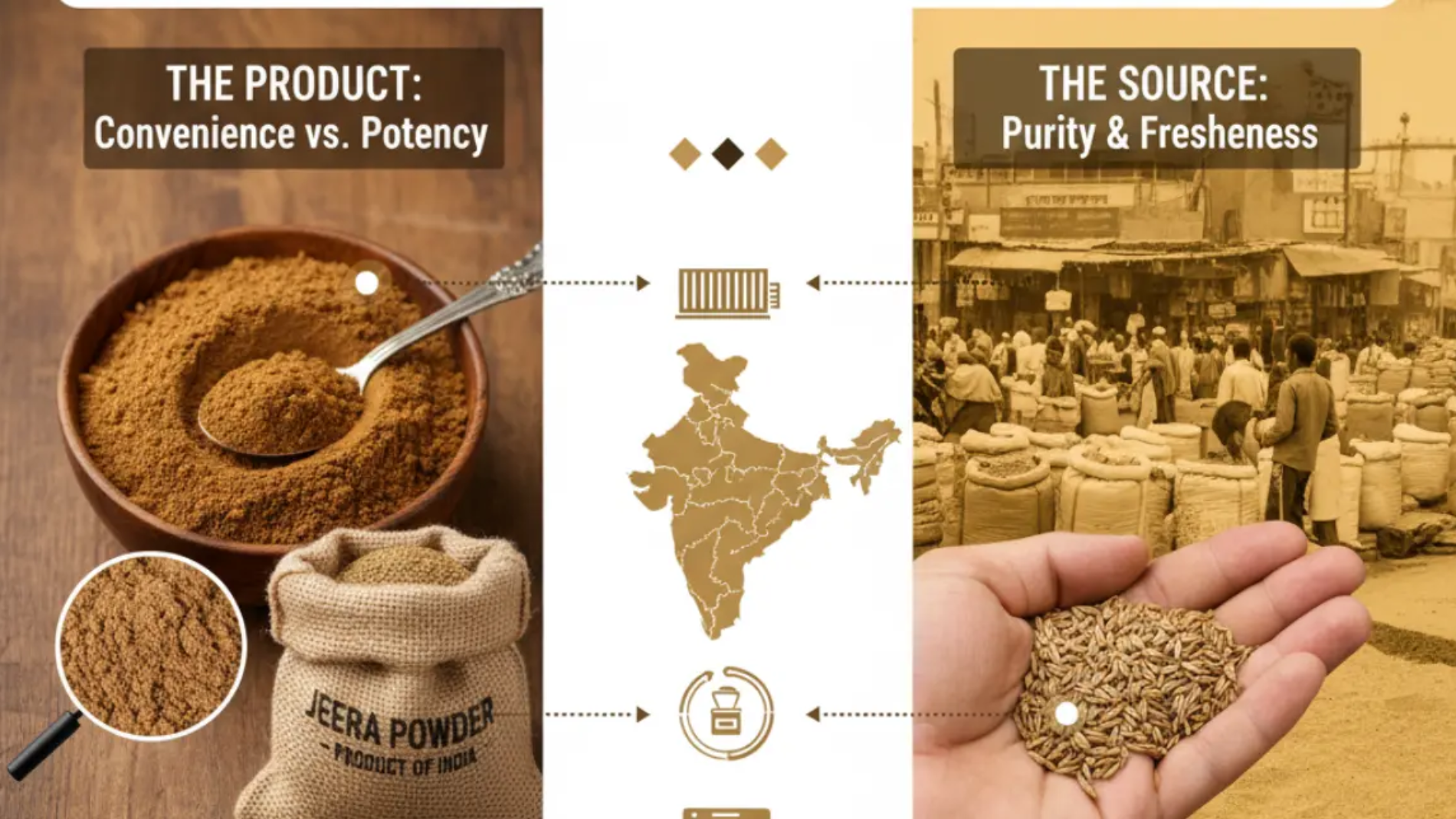
While cumin is used globally, its production is heavily concentrated. India stands as the world’s largest producer and exporter, and the quality of Indian cumin is the global benchmark. The primary growing regions are the arid, sunny states of Gujarat and Rajasthan.

At the heart of this trade is the bustling Unjha market in Gujarat, the world’s largest trading hub for cumin. The vast quantities and expertise concentrated here allow for the standardization of quality and grading, making it the epicenter for cumin exporters and international buyers.

Understanding the Grades: A Mark of Quality

Not all cumin is the same. For B2B buyers, specifying the grade is essential for ensuring consistency. While there are many local grades, the international market primarily focuses on purity:

  • Singapore Grade (99% Purity): This is the standard grade for many global markets, allowing for a maximum of 1% impurities.

  • Europe Grade (99.5% Purity): This is a premium grade with stricter requirements, often achieved through advanced Sortex cleaning, resulting in a cleaner, more uniform product.

A higher purity grade is a clear indicator of a more professional and quality-focused supply chain.

Spice Up Your Business with Authentic Indian Flavors

Import and Export Excellence from India!

The Indispensable Role of Cumin Powder in Food Production

Cumin Powder is a foundational component in countless commercial food products. Its ability to provide a consistent, savory depth of flavour makes it a staple in:

  • Spice Blends: It is a key ingredient in curry powder, garam masala, taco seasoning, and chili powder.

  • Savory Foods: It is used extensively in soups, stews, sauces, and marinades.

  • Ready-to-Eat Meals: It provides an authentic, earthy base note in packaged meals across many cuisines.

  • Snack Foods: It is used in seasonings for chips, crackers, and other savory snacks.

Powder vs. Seed: A Critical Consideration for Importers

While pre-ground Cumin Powder offers undeniable convenience, professional buyers must weigh this against the significant advantages of sourcing whole cumin seeds.

1. The Flavour Potency: The moment a cumin seed is ground, its volatile oils begin to dissipate into the air. This means that pre-ground powder, over time, loses its aromatic potency. Freshly ground cumin, made from whole seeds just before use, delivers a dramatically richer, more complex, and more powerful flavour.

2. The Shelf Life Advantage: Think of a whole cumin seed as a tiny, perfectly sealed natural container for its flavour. Whole seeds have a significantly longer shelf life, retaining their freshness for years if stored correctly. Powder, with its vastly increased surface area, is more susceptible to oxidation and moisture, and its quality degrades much faster. For an importer managing bulk inventory, the stability of whole seeds is a massive financial and quality advantage.

3. The Purity Guarantee: It is much easier to visually inspect and verify the quality of whole cumin seeds. While reputable suppliers provide pure powder, the powder format can, in lower-quality markets, be a vehicle for undeclared fillers. Sourcing whole seeds gives the buyer ultimate control over the purity of the final ground product.

Making the Smart Choice

Cumin Powder is an essential global spice. However, for food manufacturers and importers who prioritize maximum flavour, the longest possible shelf life, and absolute control over purity, the strategic choice is clear. While convenience has its place, the unparalleled quality that comes from freshly grinding whole seeds is the mark of a truly premium product. Sourcing high-grade Indian cumin seeds provides the foundation for this quality.

Frequently Asked Questions (FAQs)

1. What is the difference between cumin and jeera?

There is no difference. “Jeera” is the Hindi name for cumin. The terms are used interchangeably, with jeera powder being the same as Cumin Powder.

2. How can I tell if Cumin Powder is high quality?

High-quality powder will have a strong, warm, and earthy aroma. Its colour should be a uniform brownish-yellow. If it smells dusty or weak, it is likely old. The ultimate guarantee is a Certificate of Analysis (COA) from your supplier.

3. Why do many chefs and spice blenders prefer to buy whole cumin seeds?

They buy whole seeds and grind them in small batches to ensure maximum freshness and potency. The flavour and aroma of freshly ground cumin are significantly more intense than pre-ground powder that has been sitting on a shelf.

4. What are volatile oils in cumin?

Volatile oils are the natural aromatic compounds within the seed that are responsible for its distinct smell and taste. Grinding releases these oils, which is why freshly ground cumin is so fragrant.

5. Why is Indian cumin so popular?

Indian cumin is prized for its strong, consistent, and aromatic flavour profile. Furthermore, the massive scale of production in India ensures a reliable, year-round supply for the global market.

6. How long does Cumin Powder last compared to whole seeds?

Properly stored, whole cumin seeds can remain fresh for up to 3-4 years. Cumin Powder, on the other hand, starts losing its potency much faster and is best used within 6-12 months for optimal flavour.

7. What’s the difference between cumin powder and coriander powder?

They are two different spices. Cumin is earthy, warm, and pungent. Coriander is lighter, brighter, and has citrusy notes. They are often used together in spice blends but are not interchangeable.

8. Can I substitute whole seeds for powder in a recipe?

Yes. A general rule of thumb is that 1 teaspoon of whole cumin seeds is equivalent to about ¾ teaspoon of cumin powder, as the powder is more concentrated by volume. The seeds should be toasted and ground for best results.

About us

We bridge the gap between local producers and global markets, ensuring seamless trade facilitation with exceptional quality and reliability. We provide quick delivery services with customized packaging with all approval of International Certificates (Spices board India, MSME, IEC, fssai, FIEO, APEDA, EU certification, FDA and Many More)

Contact us

Shop No. 3, Ganesh Prestige Sr. No. 2/15, Near Laxmi Jewellers, Dhanakawadi, Pune – 411043, Maharashtra INDIA.

Call On

+91 9545205050

+91 9822422584
Email

sales@aquaconnectexim.com

aquaconnectexim@gmail.com

Organic Cumin Seeds

The Organic Advantage: Why Adding Organic Cumin Seeds to Your Product Line is a Smart Move

In today’s marketplace, the most successful food brands understand a fundamental truth: modern consumers are buying more than just a product; they are buying a set of values. They are actively choosing brands that represent health, transparency, and sustainability. In this conscious consumer landscape, the “organic” certification has evolved from a niche category into a powerful, mainstream driver of purchasing decisions.

For importers, food manufacturers, and private label brands, this represents a significant opportunity. Adding Organic Cumin Seeds to a product line is no longer just an ethical consideration—it’s a smart, strategic, and profitable business move. As a leading supplier with deep roots in India’s agricultural heartland, we’ve seen this trend accelerate. Here are the key advantages of making the switch to organic.

1. Tap into the Exploding Organic Food Market

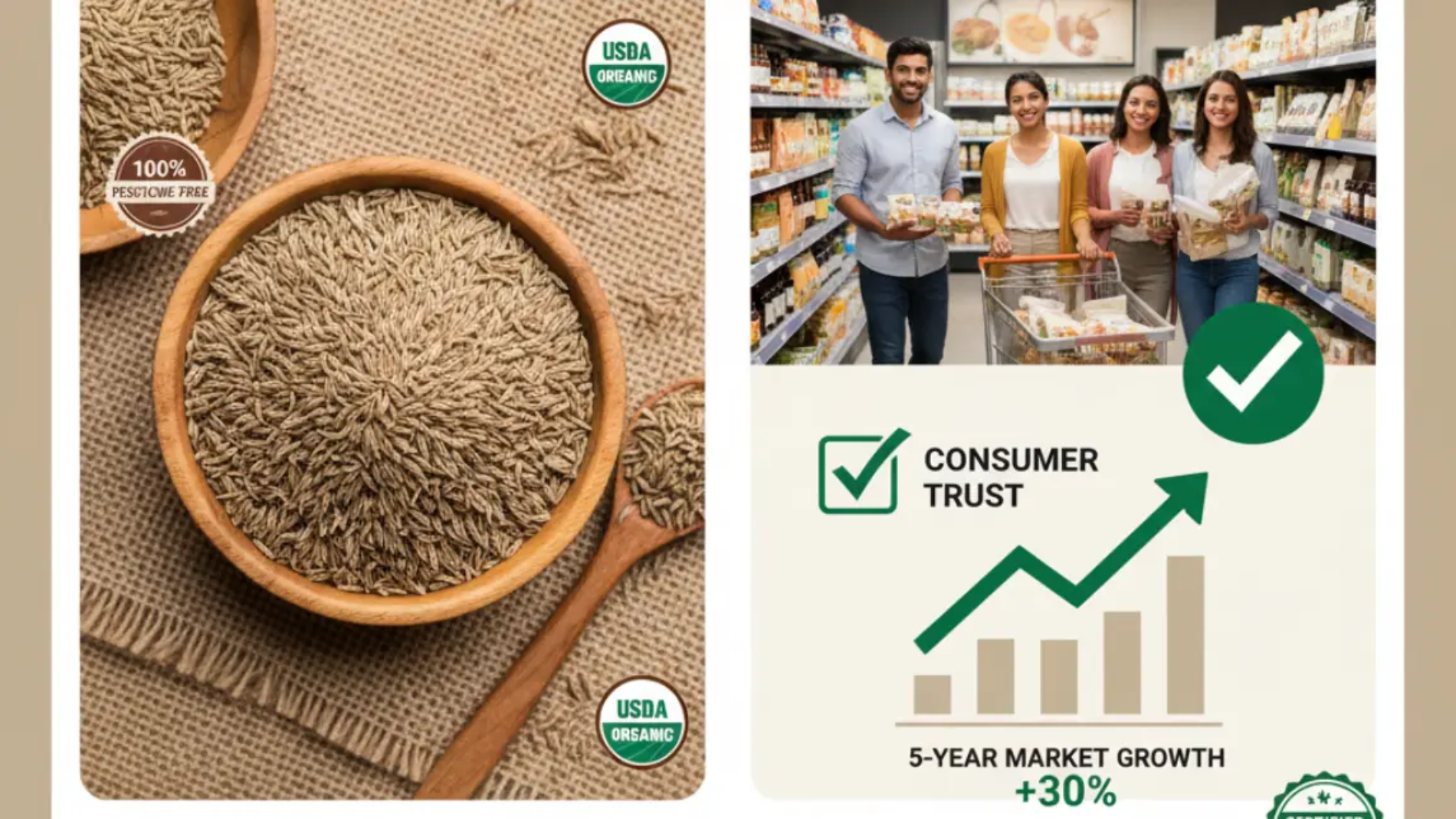
The global organic food market is not just growing; it’s exploding. Year after year, the sector shows robust, double-digit growth with no signs of slowing down. Consumers are actively seeking out the organic-certified seal and are willing to pay a premium for it.

By incorporating Organic Cumin Seeds into your products, you immediately gain access to this lucrative and expanding customer base. Your product is no longer competing solely in the conventional space but can now also be positioned on the rapidly growing organic shelf. This isn’t a fleeting trend; it is a long-term, fundamental shift in consumer behavior.

2. The Power of a "Clean Label" Ingredient

Modern consumers are label-readers. An ingredient list that is long, complex, or filled with chemical-sounding names is a major red flag. The “clean label” movement—the demand for simple, recognizable ingredients—is a dominant force in the food industry.

Organic Cumin Seeds are a perfect clean label ingredient. On an ingredient deck, it’s a powerful and simple statement. It communicates purity, quality, and a commitment to natural sourcing. It builds instant trust and answers the consumer’s silent question: “Is this good for me?” A product that is free from synthetic pesticides and GMOs has a clear and compelling story to tell.

Spice Up Your Business with Authentic Indian Flavors

Import and Export Excellence from India!

3. Command a Premium Price and Higher Margins

Organic products carry a higher perceived value, and consumers have been conditioned to understand that this quality comes at a premium price. This presents a direct financial advantage for your business.

The investment in sourcing certified organic ingredients is often returned through significantly healthier profit margins. Whether you are a brand owner or an importer supplying to retailers, products made with Organic Cumin Seeds can be priced at a premium, reflecting their superior quality and purity. This move elevates your product from a simple commodity to a high-value specialty item.

4. Gain Access to Exclusive and High-Growth Retail Channels

Many of the world’s most desirable retail channels—from high-end grocery chains like Whole Foods to specialized health food stores and premium online marketplaces—have stringent standards for the products they carry. Often, organic certification is a prerequisite for getting a foot in the door.

By formulating with Organic Cumin Seeds, your product line becomes eligible for placement in these exclusive and rapidly growing retail environments. This can unlock new revenue streams and put your brand in front of a highly motivated, health-conscious audience that is inaccessible to conventional products.

5. The Perfect Ingredient for Private Label Success

For importers and distributors, the private label market offers a huge opportunity to build brand equity. Organic Cumin Seeds are an ideal product for this venture.

The marketing story is already built-in: authentic, pure, and sustainably sourced. It’s an easy product to brand and sell under your own name. Partnering with a trusted cumin supplier in India who is an expert in organic certification and export—and can provide verifiable USDA Organic or EU Organic documentation—makes this a seamless, low-risk operation.

In conclusion, adding Organic Cumin Seeds to your product line is a strategic investment in your brand’s future. It’s a clear signal to the market that you are committed to quality, transparency, and the values of the modern consumer.

Frequently Asked Questions (FAQs)

1. Is there a noticeable taste difference in organic cumin seeds?

Many chefs and connoisseurs report that Organic Cumin Seeds, grown in healthier soil, often have a more robust, complex, and aromatic flavour profile compared to their conventional counterparts.

2. What is the typical cost difference between organic and conventional cumin?

Organic cumin is a premium product due to the more intensive farming practices and certification costs, so it is priced higher than conventional cumin. However, this cost is typically offset by the higher retail price and margins the final product can command.

3. What specific organic certifications should I look for from a supplier?

For export, look for suppliers who are certified under internationally recognized standards. The most common are USDA Organic (for the US market), EU Organic (for the European market), and India Organic (NPOP), which has equivalence agreements with the US and EU.

4. How can I verify a supplier’s organic certification?

A reputable supplier will readily provide you with a copy of their valid organic scope certificate from an accredited certification body. You can often verify the certificate’s validity on the certifier’s website.

5. Does “organic” also mean “non-GMO”?

Yes. The use of genetically modified organisms (GMOs) is strictly prohibited in certified organic farming and processing. The organic seal is also your guarantee that the product is non-GMO.

6. How do I market the benefits of organic cumin on my packaging?

You can use the official organic seal (like the USDA logo) on your packaging. You can also use phrases like “Made with Certified Organic Cumin,” “Pesticide-Free,” and “Non-GMO” to communicate the benefits clearly to consumers.

7. Is the supply of organic cumin as reliable as conventional?

While the total volume is smaller than conventional, India has a mature and robust organic farming ecosystem. Partnering with an established cumin supplier in India who has strong relationships with organic farmer groups can ensure a stable and reliable supply.

8. Can I use organic cumin to create a certified organic spice blend?

Yes, but to label the final product as “Certified Organic,” every ingredient in the blend must also be certified organic, and the blending facility must be certified as well. Using Organic Cumin Seeds is the essential first step in that process.

About us

We bridge the gap between local producers and global markets, ensuring seamless trade facilitation with exceptional quality and reliability. We provide quick delivery services with customized packaging with all approval of International Certificates (Spices board India, MSME, IEC, fssai, FIEO, APEDA, EU certification, FDA and Many More)

Contact us

Shop No. 3, Ganesh Prestige Sr. No. 2/15, Near Laxmi Jewellers, Dhanakawadi, Pune – 411043, Maharashtra INDIA.

Call On

+91 9545205050

+91 9822422584
Email

sales@aquaconnectexim.com

aquaconnectexim@gmail.com

Dehydrated White Onion Granules

A Sourcing Guide for Importers: What to Look for in Quality Onion Granules

In the global food ingredient industry, precision is paramount. For spice importers and food manufacturers, sourcing the right ingredient goes beyond just flavour—it’s about getting the exact particle size, texture, and functionality your product requires. In the world of dehydrated vegetables, Dehydrated White Onion Granules are a versatile workhorse, but procuring a high-quality, consistent supply requires a keen eye for detail.

This guide is designed for importers and bulk buyers. As an experienced exporter sourcing from India, we’ll walk you through the critical quality markers you must look for to ensure every shipment meets the highest international standards.

1. Particle Size (Mesh): The Defining Characteristic

The first and most important specification is the particle size. The key difference between onion powder, granules, and minced onion lies in how finely the dehydrated white onion is ground.

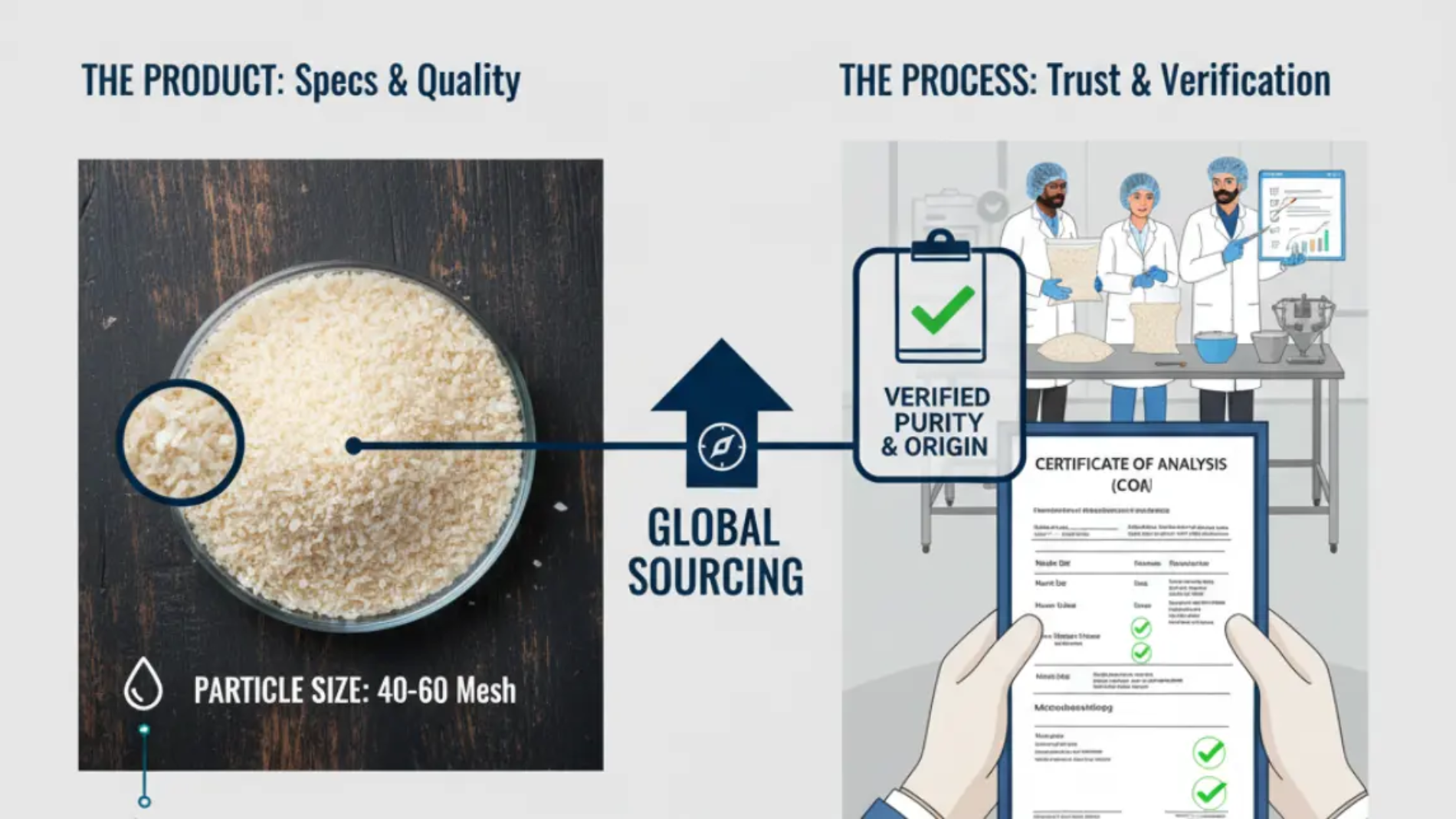
Dehydrated White Onion Granules typically fall within a specific mesh size range, most commonly 40-60 mesh. This is coarser than powder but finer than minced onion. Why does this matter?

  • For Spice Blends: This particle size is ideal for dry rubs and seasoning blends. It mixes evenly with other ground spices of a similar size (like black pepper or garlic powder), ensuring a homogenous blend without the risk of clumping that a fine powder might present.

  • For Texture: It provides a slight, pleasant texture in dressings and sauces without being chunky.

2. Colour and Appearance: A Visual Sign of Quality

Before you even test the flavour, the appearance of the granules provides crucial clues about its quality. Export-quality onion granules should be a uniform, creamy to off-white colour.

What to look for:

  • Consistency: The colour should be even throughout the batch.

  • Minimal Specks: While a few dark specks are normal, a high number can indicate impurities or the use of lower-grade raw onions.

What to avoid:

  • Browning or Yellowing: This is a sign of scorching or caramelization during the dehydration process, which can impart a burnt or overly sweet taste.

  • Greyish Tints: This can indicate poor quality raw material or improper storage.

Spice Up Your Business with Authentic Indian Flavors

Import and Export Excellence from India!

3. Moisture Content: The Key to Flowability and Shelf Life

For any dehydrated product, moisture is the enemy. It is the primary cause of caking, clumping, and microbial spoilage. For bulk onion granules, low moisture content is essential for two key industrial functions:

  • Shelf Life: A moisture content of below 6% is the standard for export-grade product, guaranteeing a stable shelf life of 18-24 months.

  • Flowability: This low moisture ensures the granules remain “free-flowing,” a critical property for automated dosing and packaging machinery in a factory setting.

4. Purity and Origin: Sourcing with Confidence

The highest quality product contains only one ingredient: 100% pure white onion. When sourcing, especially for “clean label” applications, ensure the product is free from fillers, salt, or undeclared anti-caking agents.

The origin of the raw material is also a key quality indicator. Sourcing from India, particularly from the Nashik region, provides access to some of the world’s most pungent and flavourful white onions, which translates directly into a more potent and aromatic final product. A trustworthy onion granules supplier will be transparent about the origin and purity of their product.

5. The Right Tool for the Job: Granules vs. Powder

Understanding when to use granules versus powder is key to perfect product formulation. They are two essential but different tools.

  • Choose Onion Granules when: Your application requires some texture, you are creating a dry seasoning blend that needs to resist clumping, or you want a slower, more controlled flavour release. They are perfect for rubs, dressings, and general-purpose seasoning shakers.

  • Choose Onion Powder when: Your application demands a completely smooth texture and instant flavour dispersion. Onion powder is the ideal choice for creamy sauces, liquid marinades, smooth gravies, and instant soup broths.

Often, manufacturers use both—powder to create the foundational flavour base and granules to add a layer of texture and visual appeal.

Spice Up Your Business with Authentic Indian Flavors

Import and Export Excellence from India!

6. The Final Check: The Certificate of Analysis (COA)

Never commit to a bulk order without the guarantee of a batch-specific Certificate of Analysis (COA). This is the importer’s ultimate document of proof. A comprehensive COA from a reputable supplier will verify all the critical dehydrated onion specifications, including:

  • Exact Particle Size (Mesh Analysis)

  • Precise Moisture Percentage

  • Microbiological Safety Data (confirming it’s free from pathogens)

  • Purity Confirmation

By using this checklist, importers can move beyond simple price comparisons and make informed decisions based on quality, functionality, and safety.

Frequently Asked Questions (FAQs)

1. What does “40-60 mesh” actually mean for onion granules?

“Mesh” refers to the number of openings per linear inch of a screen. A 40-60 mesh means the particles will pass through a screen with 40 openings per inch but will be retained by a screen with 60 openings per inch. This controls the particle size to a specific range.

2. Is there a taste difference between onion granules and powder?

The base flavour is the same, but the perception can be different. Powder provides an immediate, intense flavour release due to its large surface area. Granules release their flavour a bit more slowly and can provide a subtle “burst” of flavour when the particle is hydrated.

3. How can I test the flowability of a sample?

A simple test is to pour the granules from one container to another. They should flow smoothly and evenly, like sand, without sticking together or forming large clumps.

4. Should I avoid onion granules with anti-caking agents?

Not necessarily. A small, declared amount of a food-grade anti-caking agent (like Silicon Dioxide) is common and acceptable in the industry to ensure flowability. The key is transparency from your supplier. However, the best granules achieve this primarily through low moisture content.

5. How do granules hold up in a liquid application like a salad dressing?

They perform excellently. They will partially rehydrate, becoming soft specks that add visual appeal and a pleasant texture, but they won’t fully dissolve or make the dressing cloudy like a powder might.

6. What is the rehydration ratio for onion granules?

Generally, 1 part of dehydrated onion granules will rehydrate to about 4 parts of fresh onion by weight.

7. Is there a colour difference between granules made from white vs. yellow onions?

Yes. Dehydrated White Onion Granules have a clean, off-white colour. Granules from yellow onions will have a more yellowish or toasted appearance and a slightly sweeter flavour profile.

8. Why is sourcing from an Indian onion granules supplier a good choice?

India is a world leader in onion production, particularly the pungent varieties ideal for dehydration. Experienced suppliers in India have sophisticated manufacturing processes and a deep understanding of the quality standards required for the global market.

About us

We bridge the gap between local producers and global markets, ensuring seamless trade facilitation with exceptional quality and reliability. We provide quick delivery services with customized packaging with all approval of International Certificates (Spices board India, MSME, IEC, fssai, FIEO, APEDA, EU certification, FDA and Many More)

Contact us

Shop No. 3, Ganesh Prestige Sr. No. 2/15, Near Laxmi Jewellers, Dhanakawadi, Pune – 411043, Maharashtra INDIA.

Call On

+91 9545205050

+91 9822422584
Email

sales@aquaconnectexim.com

aquaconnectexim@gmail.com

black cumin seeds

An Importer’s Guide to Sourcing High-Quality Black Cumin Seeds (Kalonji)

The global demand for functional spices—ingredients that offer both unique flavour and profound health benefits—is surging. At the forefront of this trend is a powerful, ancient spice with a rich history: Black Cumin Seeds (Nigella sativa), known throughout India and the Middle East as Kalonji.

From its use in traditional medicine to its modern applications in the nutraceutical and gourmet food industries, the market for this potent “black seed” is expanding rapidly. However, for spice importers and manufacturers, sourcing high-quality Kalonji requires a specific set of knowledge. It’s a product where purity, potency, and botanical accuracy are paramount. This guide provides an essential checklist for procuring authentic, high-grade Black Cumin Seeds for the international market.

1. Botanical Clarity: It's Nigella sativa, Not Cumin

The first and most critical step in sourcing is to ensure you are buying the correct spice. There is widespread confusion between Black Cumin (Nigella sativa) and regular cumin (Cuminum cyminum).

  • Black Cumin (Nigella sativa): These are the small, matte, jet-black, teardrop-shaped seeds in question. Their flavour is pungent, slightly bitter, and peppery, with notes of oregano. This is Kalonji.

  • Regular Cumin (Cuminum cyminum): These are the familiar brownish-yellow, boat-shaped seeds known as Jeera. Their flavour is warm, earthy, and aromatic.

These two are not interchangeable. A knowledgeable supplier will always be clear about the botanical name to avoid any confusion in your supply chain.

2. The Power of Thymoquinone: The Key Quality Marker

The primary reason for the booming interest in Black Cumin Seeds is their rich concentration of bioactive compounds, chief among them being Thymoquinone. This powerful compound is the subject of extensive scientific research and is credited with most of the seed’s antioxidant, anti-inflammatory, and therapeutic properties.

For importers, especially those supplying to the nutraceutical, supplement, or wellness industries, the Thymoquinone content is a critical quality marker. Just as curcumin is the key to turmeric’s value, Thymoquinone is the key to Kalonji’s. Sourcing from regions and suppliers known for high-potency seeds is essential for creating an effective end-product.

Spice Up Your Business with Authentic Indian Flavors

Import and Export Excellence from India!

3. Key Visual and Sensory Specifications

Before committing to a bulk order, a physical sample must be evaluated against key quality benchmarks.

  • Appearance: The seeds should be uniformly jet black with a matte finish. A greyish or dull appearance can indicate age or improper storage. The seeds should be whole, not broken.

  • Aroma: When rubbed between your fingers, the seeds should release a strong, pungent, and slightly medicinal or peppery aroma. A weak or non-existent smell is a red flag for old stock with depleted volatile oils.

  • Purity: Premium Kalonji for export should be exceptionally clean. Look for a purity level of 99% or higher, achieved through advanced methods like Sortex cleaning, which removes dust, stems, and other foreign matter.

4. Sourcing from India: A Hub of Quality Kalonji

India is one of the world’s primary producers and exporters of high-quality Nigella sativa. The country has an ideal climate for cultivation and a deep-rooted history of using the spice, meaning there is a well-established ecosystem of experienced farmers and processors.

When sourcing from India, importers gain access to this expertise. Reliable black cumin suppliers here understand the stringent quality parameters required by international markets, from purity levels to food safety standards.

5. The Importance of the Certificate of Analysis (COA)

For any B2B transaction, a Certificate of Analysis is non-negotiable. This document is your scientific guarantee of quality for the specific batch you are purchasing. A comprehensive COA for Black Cumin Seeds should verify:

  • Purity Percentage: Confirming the absence of foreign matter.

  • Moisture Content: A low moisture level (typically below 8-9%) is crucial for ensuring a long and stable shelf life.

  • Volatile Oil Content: A key indicator of the seed’s aromatic potency.

  • Microbiological Safety: Confirmation that the product is free from harmful bacteria like Salmonella and E. coli.

  • Thymoquinone Level (Optional but Recommended): For nutraceutical-grade products, this should be explicitly tested and stated.

Sourcing Black Cumin Seeds is about more than just finding a culinary spice; it’s about procuring a high-value functional ingredient. By focusing on these five key areas, importers can ensure they are investing in a pure, potent, and authentic product that will meet the highest standards of their customers.

Spice Up Your Business with Authentic Indian Flavors

Import and Export Excellence from India!

Frequently Asked Questions (FAQs)

1. What is the expected shelf life of bulk Black Cumin Seeds?

When stored in a cool, dark, and dry place in airtight packaging, high-quality Kalonji can maintain its potency and freshness for up to two years.

2. Is there a difference between Black Cumin and Black Sesame seeds?

Yes, they are completely different. Black Cumin (Nigella sativa) is a small, matte black, teardrop-shaped seed with a pungent flavour. Black Sesame (Sesamum indicum) is a flatter, shinier black seed with a nutty flavour.

3. Can I get a COA that specifies the Thymoquinone percentage?

Yes, many high-end suppliers who cater to the nutraceutical industry can provide testing and a COA that includes the Thymoquinone percentage. It’s a key specification to ask for if this is important for your end product.

4. What is the best way to store Kalonji to preserve its potency?

Store it in an airtight container away from direct sunlight, heat, and moisture. This protects the volatile oils and the delicate bioactive compounds from degrading.

5. What are the main culinary uses of Black Cumin Seeds?

Kalonji is famously sprinkled on top of naan bread. It’s also used in pickles (achar), some curries, and lentil dishes (dals). Its pungent flavour is a staple in Bengali and Middle Eastern cuisines.

6. Are these the same seeds used to make “black seed oil”?

Yes, the highly popular “black seed oil” is extracted from these exact seeds, Nigella sativa. The quality and potency of the oil are directly dependent on the quality of the seeds used.

7. How do I know if the seeds are fresh?

The best indicators are a strong, pungent aroma when crushed and a deep, uniform jet-black colour. Old seeds will look duller and have a much weaker smell.

8. Why is sourcing from a reputable Indian supplier a good choice?

Reputable suppliers in India have direct access to the major growing regions, employ modern cleaning technologies like Sortex, and have extensive experience in meeting the stringent documentation and quality requirements for international export.

About us

We bridge the gap between local producers and global markets, ensuring seamless trade facilitation with exceptional quality and reliability. We provide quick delivery services with customized packaging with all approval of International Certificates (Spices board India, MSME, IEC, fssai, FIEO, APEDA, EU certification, FDA and Many More)

Contact us

Shop No. 3, Ganesh Prestige Sr. No. 2/15, Near Laxmi Jewellers, Dhanakawadi, Pune – 411043, Maharashtra INDIA.

Call On

+91 9545205050

+91 9822422584
Email

sales@aquaconnectexim.com

aquaconnectexim@gmail.com

brown cumin seeds

Why Food Manufacturers Specify Indian Brown Cumin Seeds for Their Blends

In the world of commercial food production, creating a successful seasoning or spice blend is a science. The goal is to deliver an authentic, vibrant, and, above all, consistent flavor experience that consumers can trust, time and time again. To achieve this, food manufacturers cannot leave their ingredients to chance. They rely on precise specifications, and when it comes to the foundational flavor of countless global products, one ingredient is consistently specified: Indian Brown Cumin Seeds.

This isn’t a casual choice; it’s a strategic decision rooted in quality, reliability, and an unmatched flavor profile. While cumin is used worldwide, the term “Indian Brown” in a specification sheet is a deliberate choice made by knowledgeable brands. As a leading exporter based in Pune, we understand the critical factors behind this decision. Here’s why Brown Cumin Seeds from India are a non-negotiable for high-quality spice blends.

1. The Unmistakable and Consistent Flavor Profile

The primary reason is, of course, the taste. Indian cumin is globally renowned for its robust, warm, and earthy flavor with a distinct aromatic pungency. This strong character provides the perfect “backbone” for a blend. It’s a dependable flavor base that doesn’t get lost when combined with other spices, ensuring the final product has depth and authenticity.

Crucially, reputable suppliers can provide cumin with a guaranteed volatile oil content. This is the scientific measure of the spice’s aromatic potency, allowing a manufacturer to ensure the flavor intensity is the same in every single batch.

2. Unmatched Consistency from a Centralized Hub

For a food manufacturer, consistency is king. This is where India’s unique market structure provides a massive advantage. The town of Unjha in Gujarat is the world’s cumin epicenter, a centralized trading hub that standardizes the entire industry.

This means manufacturers can source Brown Cumin Seeds based on clear, internationally recognized grades of purity, such as:

  • Europe Grade (99.5% Purity)

  • Singapore Grade (99% Purity)

A brand can specify “Europe Grade, Sortex Cleaned” and receive the exact same quality of product year after year. This level of standardization, facilitated by the Unjha market, is simply unavailable in most other producing regions and is essential for replicating a signature flavor profile on an industrial scale.

Spice Up Your Business with Authentic Indian Flavors

Import and Export Excellence from India!

3. Verifiable Purity and Global Safety Standards

Today’s consumers demand clean and safe food. For a brand, a product recall due to contamination can be catastrophic. Reputable cumin exporters in India understand this and have invested heavily in modern cleaning and processing technology.

The specification for “Sortex Cleaned” cumin, for example, means the seeds have passed through advanced optical sorting machines that remove impurities and foreign matter with incredible precision. Furthermore, every shipment is accompanied by a Certificate of Analysis (COA), which verifies its purity and confirms it meets stringent global food safety standards for factors like moisture content and microbial counts.

4. The "Brown Cumin" Specification: Ensuring the Right Spice

Why is the word “Brown” so important in a specification? It is a crucial technical clarifier used by savvy buyers to ensure they are sourcing the correct botanical product. “Brown Cumin Seed” refers to true cumin, or jeera (Cuminum cyminum).

This explicitly distinguishes it from “Black Cumin” (Nigella sativa), a completely different spice with a sharp, peppery flavor. Accidentally using the wrong ingredient would be a disaster for a product’s flavor profile. Specifying “Brown Cumin” eliminates this risk and signals a knowledgeable and precise sourcing process.

5. A Reliable and Scalable Supply Chain

A food brand cannot build its flagship product on an ingredient with an unstable supply. India is the world’s largest producer of cumin, accounting for over 70% of the global supply.

This unmatched scale provides food manufacturers with two critical advantages:

  • Security of Supply: There is a low risk of the kind of widespread shortages that can halt production lines.

  • Scalability: As a brand grows and its demand for cumin increases, the Indian market has the capacity to meet that growth.

In conclusion, the decision to specify Indian Brown Cumin Seeds is a calculated one. It’s a choice for an authentic flavor profile, guaranteed consistency, verifiable purity, botanical accuracy, and a secure supply chain. It’s how the world’s leading food brands turn the art of spice blending into a science.

Spice Up Your Business with Authentic Indian Flavors

Import and Export Excellence from India!

Frequently Asked Questions (FAQs)

1. What is a good volatile oil percentage to look for in brown cumin seeds?

For a high-quality, aromatic cumin, manufacturers typically look for a volatile oil content of 2.5% to 4%. This should be specified on the Certificate of Analysis (COA).

2. What’s the difference between Europe Grade and Singapore Grade cumin?

The primary difference is purity. Europe Grade guarantees a higher purity level of 99.5%, meaning it has less than 0.5% foreign matter. Singapore Grade is typically 99% pure. Premium brands often specify Europe Grade.

3. How does Sortex cleaning work?

Sortex cleaning uses optical sorters with high-resolution cameras that scan each seed. Any seed that doesn’t match the pre-set colour and size profile (indicating it’s an impurity or a damaged seed) is instantly removed with a puff of air.

4. Why is Indian cumin preferred over cumin from other regions for blending?

Indian cumin is preferred for its potent and consistent aromatic profile (high volatile oil), the standardized grading system available through the Unjha market, and the sheer scale of production, which ensures a reliable supply.

5. What is the flavour difference between brown cumin and black cumin?

They are completely different. Brown Cumin Seeds ( jeera) are warm, earthy, and aromatic. Black Cumin (Nigella sativa or kalonji) is pungent, slightly bitter, and has a peppery, oregano-like flavour. They are not interchangeable.

6. Does the harvest time affect the quality of the cumin?

Yes. Cumin harvested at the optimal time and dried correctly will have a higher volatile oil content and a better flavour profile. Experienced cumin exporters in India work with farmers to ensure best practices are followed.

7. Can I get a Certificate of Analysis (COA) with my bulk order?

Absolutely. Any reputable supplier must provide a COA for each batch, detailing key cumin specifications like purity, moisture content, and microbial counts.

8. Is all brown cumin from India the same?

No. Quality can vary based on the grade, the cleaning method, and the specific growing region. This is why it’s crucial for food manufacturers to be precise in their specifications and partner with a trusted supplier.

cumin seeds

Cumin Seeds Export from India: Quality, Purity, and Flavor

Cumin seeds are among the most widely used spices in the world, known for their earthy aroma, warm flavor, and numerous health benefits. From spice blends to traditional cuisines and processed foods, cumin plays a central role in global kitchens. India, as the world’s largest producer and exporter of cumin, stands at the forefront of the cumin export market, offering unmatched quality, purity, and flavor.

India’s Dominance in the Global Cumin Market

India produces over 70% of the world’s cumin, particularly in the states of Gujarat and Rajasthan. Its favorable climate, fertile soil, and experienced farmers ensure a steady and high-quality supply of bulk cumin seeds year-round. Indian cumin is renowned for its bold flavor, uniform grain size, and natural richness, making it the preferred choice for international buyers.

Quality Assurance in Indian Cumin Seeds

What makes Indian cumin seeds exporters stand out is their commitment to quality. Reputed exporters follow strict grading, sorting, and cleaning processes to ensure foreign particle removal and consistent seed size. Many exporters are certified with ISO, HACCP, and other global standards, ensuring food safety and hygiene compliance for international markets.

Flavor and Aroma: What Global Buyers Seek

The strength of Indian cumin lies in its robust aroma and pungent taste. The essential oil content in cumin seeds enhances the flavor of dishes, making it indispensable for spice blends, sauces, bakery mixes, and meat seasonings. For food manufacturers, choosing quality cumin seeds means enhancing product flavor without compromising on health or authenticity.

Bulk Supply and Export Efficiency

Bulk cumin seeds supply from India is well-organized, with exporters offering custom packaging (5kg to 50kg), container loading, and moisture-controlled shipments. Whether it’s raw whole cumin, mechanically cleaned, or sortex-cleaned varieties, India meets the demands of B2B buyers globally—on time and in full quantity.

Top Markets for Indian Cumin Seeds Export

Indian cumin exporters supply to over 100 countries, including the USA, UK, UAE, Malaysia, Bangladesh, Germany, and South Africa. As global demand for ethnic flavors and natural ingredients grows, Indian cumin continues to dominate international spice trade routes.

Spice Up Your Business with Authentic Indian Flavors

Import and Export Excellence from India!

Versatility Across Industries

Cumin seeds are not just a kitchen essential. They are used across:

  • Food Manufacturing – spice blends, seasoning, sauces

  • Ayurvedic & Herbal Products – detox teas, digestive tonics

  • Cosmetic Industry – essential oil extraction

  • Nutraceuticals – supplements and health powders

Indian exporters cater to all these industries with precision and adaptability.

Partnering with Trusted Cumin Seeds Exporters

When sourcing cumin from India, it’s crucial to partner with reliable cumin seeds exporters who understand international logistics, documentation, and quality standards. Whether you need small quantities for niche markets or bulk cumin seeds for large-scale distribution, a trusted supplier ensures consistency, transparency, and timely delivery.

The world’s trust in Indian cumin is built on centuries of spice cultivation and trade excellence. With a perfect blend of quality, purity, and flavor, India continues to lead in the cumin seeds export industry. Importers looking for reliable sourcing can count on Indian exporters to deliver premium-grade cumin that meets both culinary and commercial expectations.

Frequently Asked Questions (FAQ's)

Q1. Why is Indian cumin preferred in global markets?
Because of its strong aroma, high oil content, and consistent quality, Indian cumin is ideal for food processing and spice blending.

Q2. Can I buy cumin seed in bulk for export?
Yes, Indian exporters specialize in bulk cumin seeds supply with customizable packaging.

Q3. Are Indian cumin seed organic and chemical-free?
Many exporters offer both conventional and certified organic cumin seed based on buyer preferences.

Q4. What is the typical shelf life of cumin seed for export?
With proper packaging and storage, cumin seeds have a shelf life of 12–18 months.

Q5. Do cumin seeds exporters offer documentation support?
Yes, most exporters provide complete export documentation including phytosanitary certificates, fumigation, and origin certificates.

Q6. Which country imports the most cumin from India?
Countries like the USA, UAE, Bangladesh, and the UK are among the largest importers of Indian cumin seeds.

About us

We bridge the gap between local producers and global markets, ensuring seamless trade facilitation with exceptional quality and reliability. We provide quick delivery services with customized packaging with all approval of International Certificates (Spices board India, MSME, IEC, fssai, FIEO, APEDA, EU certification, FDA and Many More)

Contact us

Shop No. 3, Ganesh Prestige Sr. No. 2/15, Near Laxmi Jewellers, Dhanakawadi, Pune – 411043, Maharashtra INDIA.

Call On

+91 9545205050

+91 9822422584
Email

sales@aquaconnectexim.com

aquaconnectexim@gmail.com

Cumin Seed Spice

Cumin Seed Spice: Uses & Health Benefits You Need to Know!

Cumin seed spice is commonly used in any kitchen around the world, particularly because of the earthy and warm flavor as well as tremendous health benefits it brings. As an avid home cook or for natural remedies, cumin seeds are a complete game-changer in your pantry. Let us now explore some of the varied ways cumin seed spice can be used, which makes it definitely worth using in your everyday routine.

Different Culinary Applications of Cumin Seed Spice

Cumin seeds are very fundamental to many cuisines. They add complexity and character to your dish. Here’s how they are mostly used:

  1. Spice Blends & Seasoning

Cumin seed spice is an essential component to blends like garam masala, taco seasoning, curry powder. It can enhance the flavor of meat, vegetables, and sauces.

  1. Soups & Stews

A teaspoon of cumin will add a pinch of richness to the soups, stews, or lentil dishes.

  1. Rice & Grains

It is said that cumin tastes quinoa, rice, and couscous pretty well paired with a nutty flavor of comfort food.

                            “The best quality cumin seeds, obtained from the best farms and processed with care”

Spice Up Your Business with Authentic Indian Flavors

Import and Export Excellence from India!
  1. Pickles & Marinades

The preservation and marinades utilization of cumin increased the taste of various food products, meat, or grilled dishes.

  1. Bread & Snacks

Cumin sprinkled on flatbreads, crackers, and roasted nuts for the added flavors.

Health benefits of cumin seed spice

Add cumin seed spice to your diet since it offers a long list of health benefits.

  1. Improves digestion

It causes the production of digestive enzymes that enhance the digestion, bloating, and gas.

  1. Supports Weight Loss

Researchers indicate that the inclusion of cumin in your diet will raise your metabolism as well as result in the fat loss when balanced with the proper diet.

  1. Rich in Antioxidants

Cumin is laden with antioxidants; they fight radicals, and those chronic diseases result. It prohibits the body to get premature.

  1. Heart Health Improvement

Cumin lowers the cholesterol levels in the blood and maintains blood pressure at a healthy level, which ensures overall cardiovascular wellness.

             “Our cumin seeds are meticulously cleaned, sorted, and packaged to ensure premium quality.

Spice Up Your Business with Authentic Indian Flavors

Import and Export Excellence from India!
  1. Enhances Immunity

Antibacterial and anti-inflammatory properties of cumin help to boost the immunity and remove infection from the body.

  1. Helps Regulate Blood Sugar

Cumin seed spice helps regulate blood sugar, thus aiding people with diabetes.

  1. Healthy for Skin & Hair

Its antimicrobial activity benefits the health of skin, hence acne and inflammation would decrease and it will further promote hair growth and scalp health.

How to Use Cumin in Your Diet

  • Cumin Tea: Boil cumin seeds in water for a refreshing digestive tea.
  • Cumin Water: Soak cumin seeds overnight and drink the infused water in the morning.
  • Seasoning: Sprinkle ground cumin seed spice on salads, soups, and roasted vegetables.
  • Cooking Oil Infusion: Heat cumin seeds in oil to extract their aroma before cooking.

About us

We bridge the gap between local producers and global markets, ensuring seamless trade facilitation with exceptional quality and reliability. We provide quick delivery services with customized packaging with all approval of International Certificates (Spices board India, MSME, IEC, fssai, FIEO, APEDA, EU certification, FDA and Many More)

Vision

To cover all countries in the world by providing high-quality, reliable, and trusted Indian products. We are dedicated to expanding our global footprint, ensuring that our products reach international markets, and building lasting relationships based on integrity, excellence, and mutual growth.

Contact us

Shop No. 3, Ganesh Prestige Sr. No. 2/15, Near Laxmi Jewellers, Dhanakawadi, Pune – 411043, Maharashtra INDIA.

Call On

+91 9545205050

+91 9822422584

Email

sales@aquaconnectexim.com

aquaconnectexim@gmail.com

Why Aquaconnect Exim is your go-to choice for high-quality cumin seeds

The best quality cumin seeds, obtained from the best farms and processed with care so that its natural flavor and nutrition are preserved, are available in Aquaconnect Exim.

Sustainable Sourcing: We deal directly with reputable farmers to support sustainable and ethical farming.

Commitment to Freshness: The streamlined supply chain ensures that each batch of cumin seeds reaches the customers fresh and aromatic.

Global Reach: With strong export capabilities, we deliver our best cumin seeds to customers around the world.