
In the global spice trade of 2026, cumin remains one of the most traded and essential spices worldwide. With India producing over 70% of the world’s supply, the competition among suppliers is fierce. For international B2B buyers, food manufacturers, and wholesale distributors, the success of their product line depends entirely on the reliability of their Top Grade Cumin Seeds Exporter.
Sourcing quality cumin seeds is no longer just about finding the lowest price; it is about securing a supply chain that guarantees purity, aroma, and safety. Whether you are looking for brown cumin seeds for traditional culinary use or organic cumin seeds for a health-conscious market, identifying the right partner is critical. Here are the five essential qualities every leading exporter must possess in 2026.
1. Direct Sourcing and Origin Transparency
A reputable Top Grade Cumin Seeds Exporter does not just buy from third-party traders; they maintain direct relationships with farmers in the “Cumin Capital” regions of Gujarat and Rajasthan. Origin transparency is the only way to ensure the authenticity of indian cumin.
Direct sourcing allows an exporter to monitor the crop from the sowing stage to the harvest. This is particularly important for those who provide organic cumin seeds, where soil health and the absence of synthetic pesticides must be strictly verified. By sourcing directly from the farms of Unjha or Jodhpur, an exporter ensures that the cumin seeds possess the high volatile oil content (typically between 2.5% and 4.5%) that provides the signature earthy aroma global buyers demand.
2. Advanced Processing and Sortex Technology
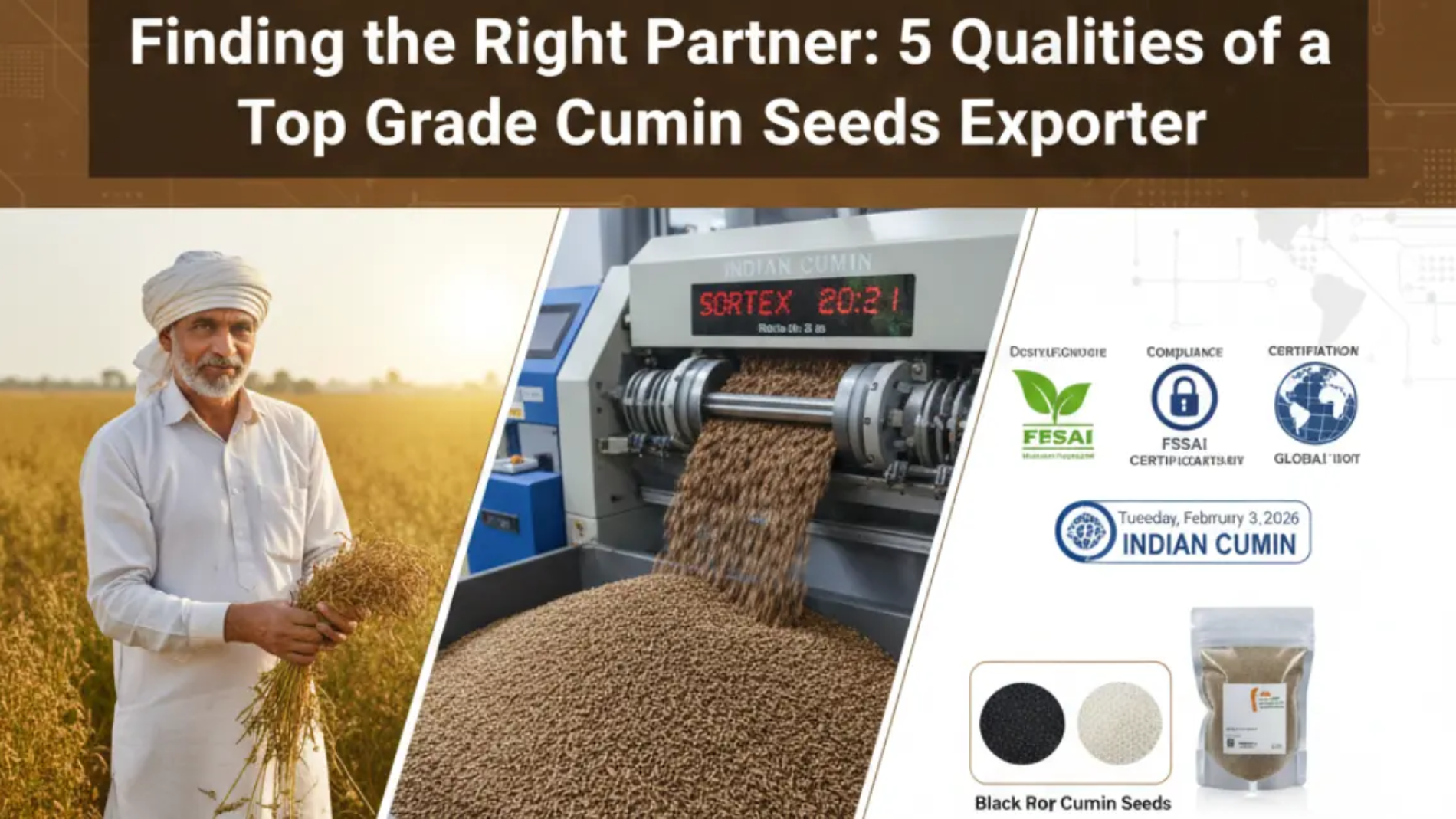
The difference between average spice and a premium product lies in the cleaning process. In 2026, a professional exporter must utilize state-of-the-art Sortex cleaning technology.
Standard machine-cleaned seeds might reach 98% or 99% purity, but for high-end markets like the EU or the USA, only 99.5% to 99.9% purity is acceptable. A top-tier exporter ensures:
Purity Levels: Meeting “Singapore Quality” (99%) or “Europe Quality” (99.5%+) standards.
Removal of Impurities: Using laser sorters to eliminate stones, dust, and discolored seeds.
Uniformity: Ensuring that the brown cumin seeds or white cumin seeds are consistent in size and color, which is vital for consistent roasting and grinding into cumin powder.
3. Global Compliance and Specialized Certifications
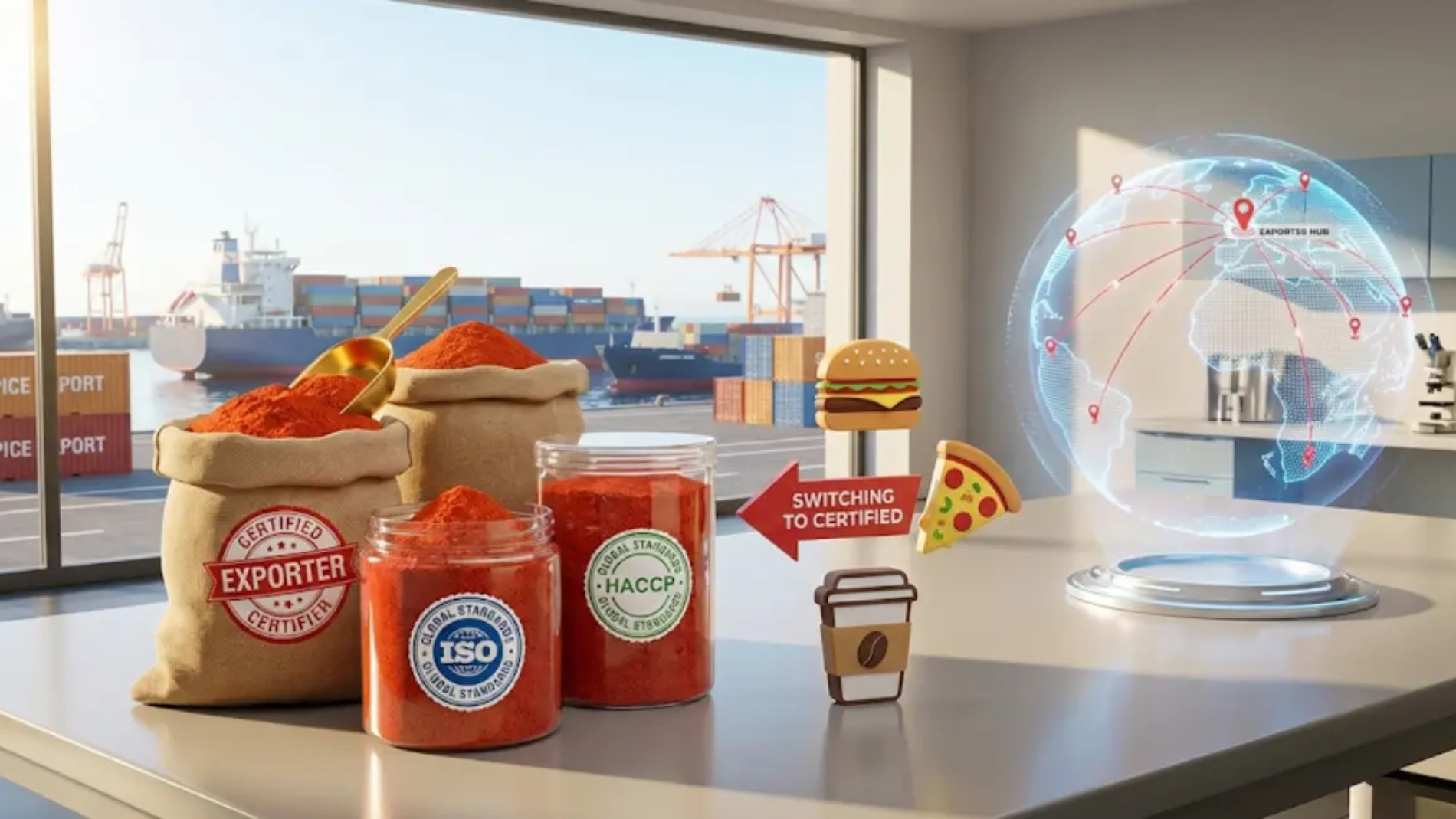
International trade in 2026 is governed by stringent food safety regulations. A reliable Top Grade Cumin Seeds Exporter stays ahead of the curve by maintaining a robust portfolio of certifications.
When you evaluate a partner, ensure they comply with FSSAI, APEDA, and the Spices Board of India. For exporters shipping to Europe or North America, Integrated Pest Management (IPM) and lab testing for Aflatoxins and pesticide residues are non-negotiable. Furthermore, if your business focuses on the wellness sector, your exporter must provide certified organic cumin seeds that meet NOP/NPOP or EU organic standards, ensuring the cumin spices are 100% natural and chemical-free.
4. A Versatile and Expert Product Portfolio
A true leader in the industry understands that “one size does not fit all.” Different regions and industries require different varieties of cumin spices. A high-quality exporter should offer:
Brown Cumin Seeds: The versatile standard for most spice blends and culinary applications.
Black Cumin Seeds (Shahi Jeera): Prized for their intense, sweeter aroma in premium gourmet recipes.
White Cumin Seeds: Often preferred in specific Middle Eastern and Asian cuisines for their aesthetic and flavor profile.
Cumin Powder: Freshly milled from the same high-quality seeds to ensure the volatile oils are trapped in the grind.
An exporter with deep product knowledge can advise you on which grade is best suited for your specific application, whether it is for meat seasoning, bakery products, or pharmaceutical extraction.
5. Logistical Integrity and Transparent Communication
The final hallmark of a Top Grade Cumin Seeds Exporter is their ability to deliver the goods in peak condition. Spices are sensitive to moisture; therefore, packaging is a science in itself.
The best partners use food-grade, moisture-proof packaging-such as multi-layer PP bags, jute bags with liners, or vacuum-sealed pouches—to prevent mold growth and “container sweat” during long sea voyages. Beyond the physical product, they provide transparent communication, offering real-time tracking, accurate lead times, and all necessary documentation, including Phytosanitary Certificates and Certificates of Origin.
Frequently Asked Questions (FAQs)
1. What is the difference between Singapore Quality and Europe Quality?
Singapore Quality usually refers to 98-99% purity, while Europe Quality is a higher benchmark, requiring 99.5% purity and strict adherence to low microbial and pesticide residue limits.
2. Why is Sortex cleaning so important for cumin?
Sortex cleaning uses optical sensors to remove discolored seeds, stones, and foreign matter that traditional machines might miss, ensuring the highest visual and food-safety standards.
3. What are the benefits of sourcing organic cumin seeds?
Organic cumin seeds are grown without synthetic fertilizers or pesticides, making them ideal for the health-conscious market and ensuring compliance with strict organic certification labels globally.
4. How is the quality of indian cumin measured?
Quality is measured by its volatile oil content (aroma), purity percentage, moisture level (ideally below 10%), and the absence of extraneous matter or “seeds of other varieties.”
5. Can I source black cumin seeds from the same exporter?
Yes, most top grade cumin seeds exporters offer a variety of seeds, including black cumin seeds (Shahi Jeera), which have a different botanical profile and a more intense aroma.
6. Is cumin powder as healthy as whole seeds?
As long as it is milled from high-quality seeds and stored correctly, cumin powder retains the same antioxidant and digestive benefits, though whole seeds tend to have a longer shelf life.
7. What is the standard MOQ for bulk cumin export?
Typically, a 20-foot container is the standard for bulk sea freight, which holds approximately 13 to 14 metric tons of quality cumin seeds.
8. How do I verify if an exporter is genuine?
Always check for mandatory registrations like the Spice Board of India (CRES certificate), APEDA, and FSSAI, and ask for a recent Certificate of Analysis (CoA) from an accredited lab.
About us
We bridge the gap between local producers and global markets, ensuring seamless trade facilitation with exceptional quality and reliability. We provide quick delivery services with customized packaging with all approval of International Certificates (Spices board India, MSME, IEC, fssai, FIEO, APEDA, EU certification, FDA and Many More)
Contact us
Shop No. 3, Ganesh Prestige Sr. No. 2/15, Near Laxmi Jewellers, Dhanakawadi, Pune – 411043, Maharashtra INDIA.
Call On
+91 9545205050
+91 9822422584