

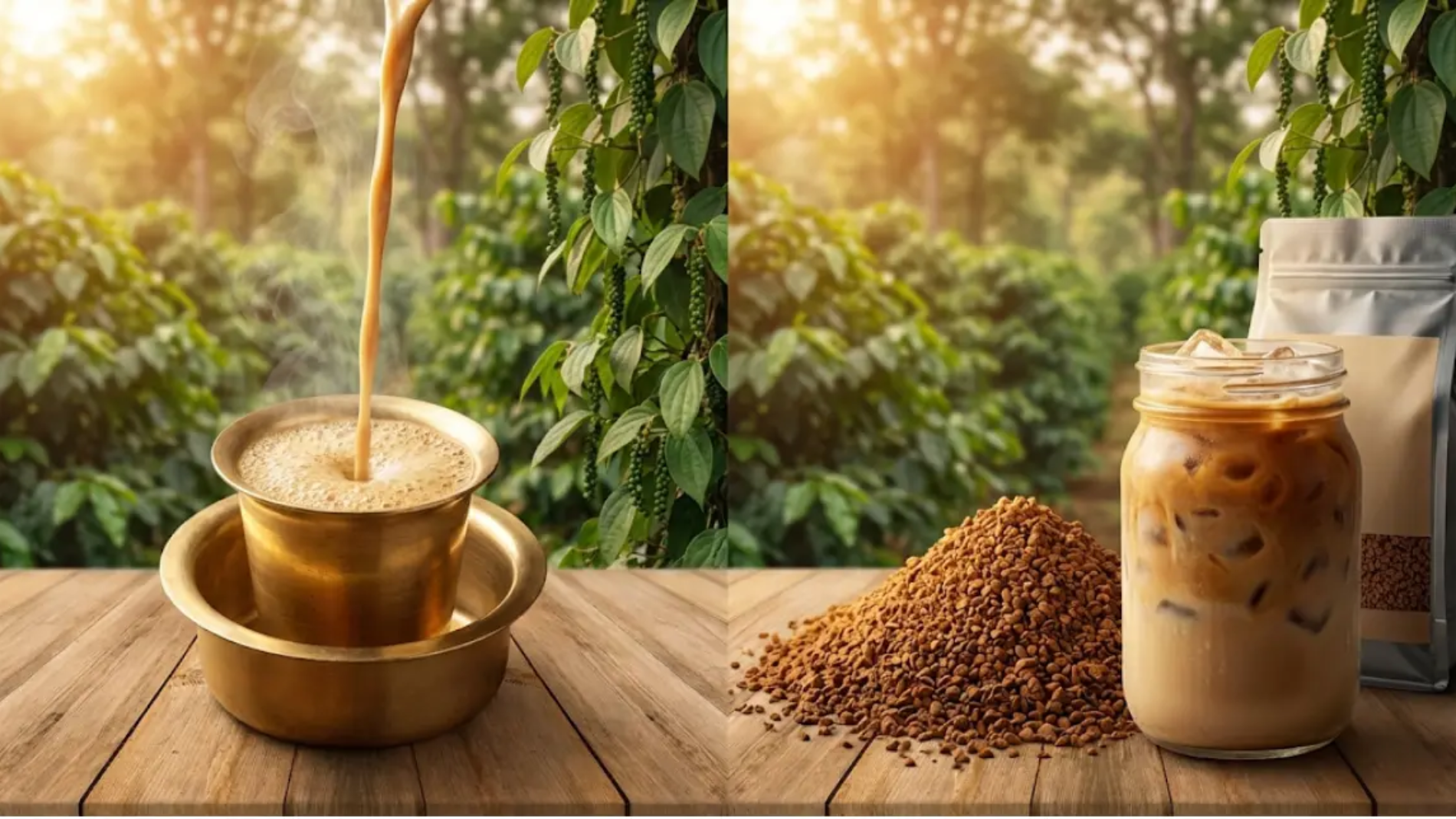
For decades, nations like Brazil and Vietnam have dominated the global coffee conversation. However, as we approach 2026, a significant shift is occurring in the beverage industry. Importers, roasters, and private-label brands are increasingly turning their gaze toward the lush plantations of Karnataka, Kerala, and Tamil Nadu. The demand for Indian coffee powder is surging, driven by a unique combination of changing consumer tastes, sustainability demands, and industrial innovation.
Unlike other regions that practice aggressive mono-cropping, Indian coffee is largely shade-grown, co-existing with spices like cardamom and pepper. This unique biodiversity gives the final product a distinct flavor profile—low acidity, high body, and spicy notes—that the modern market craves. Whether it is for premium instant mixes or authentic filter blends, here are the top trends driving the export explosion of Indian coffee powder in 2026.
1. The Global Renaissance of Robusta
For a long time, Arabica was the undisputed king of the coffee world. However, climate change and rising prices have pushed manufacturers to look for sustainable alternatives. This has triggered a “Robusta Renaissance,” and India is perfectly positioned to lead it.
India produces some of the finest washed Robusta in the world (often called “Royal Robusta”). Unlike the harsh, rubbery taste of inferior grades, Indian Robusta is smooth, chocolatey, and bold. This makes Indian coffee powder derived from Robusta beans the ideal base for the booming instant coffee market.
Spray-Dried Perfection: The high soluble solid content of Indian Robusta makes it efficient for creating spray-dried coffee powder.
Cost-Effective Blends: Global brands are using Indian Robusta powder to add “body” and “crema” to their blends without sacrificing flavor, driving massive bulk exports.
Spice Up Your Business with Authentic Indian Flavors
Import and Export Excellence from India!
2. The "South Indian Filter Coffee" Trend Goes Global
What was once a domestic staple in Chennai and Bengaluru is now finding its way into trendy cafes in London, Dubai, and New York. The unique brewing style known as “South Indian Filter Coffee” is gaining cult status as a stronger, frothier alternative to the Americano.
The secret to this brew lies in the specific formulation of Indian coffee powder mixed with chicory. The traditional 80:20 or 70:30 blends (Coffee to Chicory ratio) create a thick, viscous decoction that holds up beautifully against milk. As global interest in regional, authentic beverages grows, international distributors are sourcing authentic filter coffee powder blends to cater to the diaspora and curious coffee lovers alike.
3. The Demand for Shade-Grown and Biodiversity-Friendly Coffee
European and North American consumers are reading labels more closely than ever. They don’t just want caffeine; they want a clear conscience. “Sustainability” is no longer a buzzword; it is a procurement requirement.
India is practically the only country where coffee is grown almost entirely under the shade of natural forest canopies. This traditional farming method supports bird populations and soil health. For export marketers, this is gold. Indian coffee powder is now being marketed with claims of being “Shade-Grown,” “Bird-Friendly,” and “Eco-Conscious.” This narrative allows premium positioning in Western markets, where buyers are willing to pay extra for environmentally responsible agricultural products.
4. Private Labeling and RTD (Ready-to-Drink) Expansion
The Ready-to-Drink (RTD) coffee market—think canned cold brews and bottled frappuccinos—is exploding. To produce these beverages at scale, manufacturers need reliable, high-quality soluble coffee.
Indian coffee powder is becoming the preferred ingredient for these private-label RTD brands. Its low acidity means it doesn’t curdle milk easily, and its strong flavor profile ensures the coffee taste isn’t lost when mixed with sugar, cream, or flavors. Consequently, export houses in India are seeing increased orders for bulk agglomerated coffee and freeze-dried powders specifically customized for the beverage industry.
5. Clean Label and Specialty Instant Coffee
Gone are the days when “instant coffee” meant low quality. A new wave of “Specialty Instant Coffee” is emerging, targeting busy professionals who want the convenience of powder with the taste of a pour-over.
Indian exporters are responding by upgrading their processing technology. By using better beans and gentler dehydration methods, they are producing pure coffee powder that retains the delicate volatile oils of the bean. This trend is driving demand for 100% Arabica plantation powder from India, which offers distinct notes of fruit and spice, challenging the perception that instant coffee is only for the budget-conscious.
Spice Up Your Business with Authentic Indian Flavors
Import and Export Excellence from India!
6. Diversification into Food and Confectionery
It is not just beverage companies buying Indian coffee powder. The bakery, confectionery, and dairy industries are major drivers of demand. From coffee-flavored ice creams to tiramisu cakes and protein bars, the need for concentrated coffee flavor is high.
Indian powder is prized here for its consistency. A bulk coffee supplier from India can provide specific roast profiles and granule sizes that dissolve easily in cake batters or ice cream bases. As the global palate for coffee-flavored treats expands, so does the order volume for industrial-grade coffee powder.
The year 2026 promises to be a landmark year for Indian exports. The convergence of the Robusta revival, the clean-label movement, and the global discovery of South Indian brewing traditions has created a perfect storm of opportunity.
For importers and wholesalers, Indian coffee powder offers a unique value proposition: it is the bridge between the premium world of shade-grown beans and the commercial necessity of cost-effective processing. Securing a reliable supply line now, before the market tightens further, is the strategic move for any serious player in the global coffee game.
Frequently Asked Questions (FAQs)
1. What makes Indian coffee powder different from Brazilian or Vietnamese?
The key difference is the “shade-grown” cultivation. Indian coffee powder tends to have lower acidity and a fuller, spicy-chocolate body compared to the more acidic Brazilian varieties or the harsher Vietnamese Robusta.
2. Why is chicory added to some Indian coffee powders?
Chicory is a woody plant root that is roasted and ground. It is added to coffee to increase the “mouthfeel,” thickness, and color of the brew. It also lowers the caffeine content slightly and adds a malty sweetness, essential for traditional South Indian Filter Coffee.
3. Is Indian coffee powder suitable for making espresso?
Yes, especially pure Robusta or Arabica-Robusta blends. The high crema production of Indian Robusta makes it a favorite component in espresso blends globally to create that thick, golden foam layer.
4. What is “Monsoon Malabar” coffee powder?
This is a specialty Indian coffee where beans are exposed to monsoon rains and winds, causing them to swell and lose acidity. Powder made from these beans is extremely mellow, pH-neutral, and has a unique earthy, musty flavor profile prized in Europe.
5. Can I use Indian coffee powder for cold brew?
Absolutely. Coarse-ground Indian coffee powder (specifically 100% Arabica or Plantation A grades) works beautifully for cold brew, as the low acidity of Indian beans results in a very smooth, naturally sweet cold drink.
6. What is the shelf life of bulk Indian coffee powder?
When packed in proper moisture-barrier packaging (like foil-lined bags), spray-dried or agglomerated powder can last 18-24 months. Roast and ground powder typically has a shorter shelf life of 6-12 months due to oxidation risks.
7. Is Indian coffee powder organic?
Not all of it, but India is a large producer of organic coffee. You can source certified organic Indian coffee powder from suppliers who hold NPOP or USDA Organic certifications, usually sourced from tribal belts in regions like Araku Valley or Kerala.
8. Which grade is best for instant coffee manufacturing?
For cost-effective, mass-market instant coffee, Indian Cherry Robusta (unwashed) is often used. For premium freeze-dried instant coffee, Plantation Arabica or Parchment Robusta is preferred for its superior aromatic qualities.
About us
We bridge the gap between local producers and global markets, ensuring seamless trade facilitation with exceptional quality and reliability. We provide quick delivery services with customized packaging with all approval of International Certificates (Spices board India, MSME, IEC, fssai, FIEO, APEDA, EU certification, FDA and Many More)
Contact us
Shop No. 3, Ganesh Prestige Sr. No. 2/15, Near Laxmi Jewellers, Dhanakawadi, Pune – 411043, Maharashtra INDIA.
Call On
+91 9545205050
+91 9822422584
Leave A Comment