

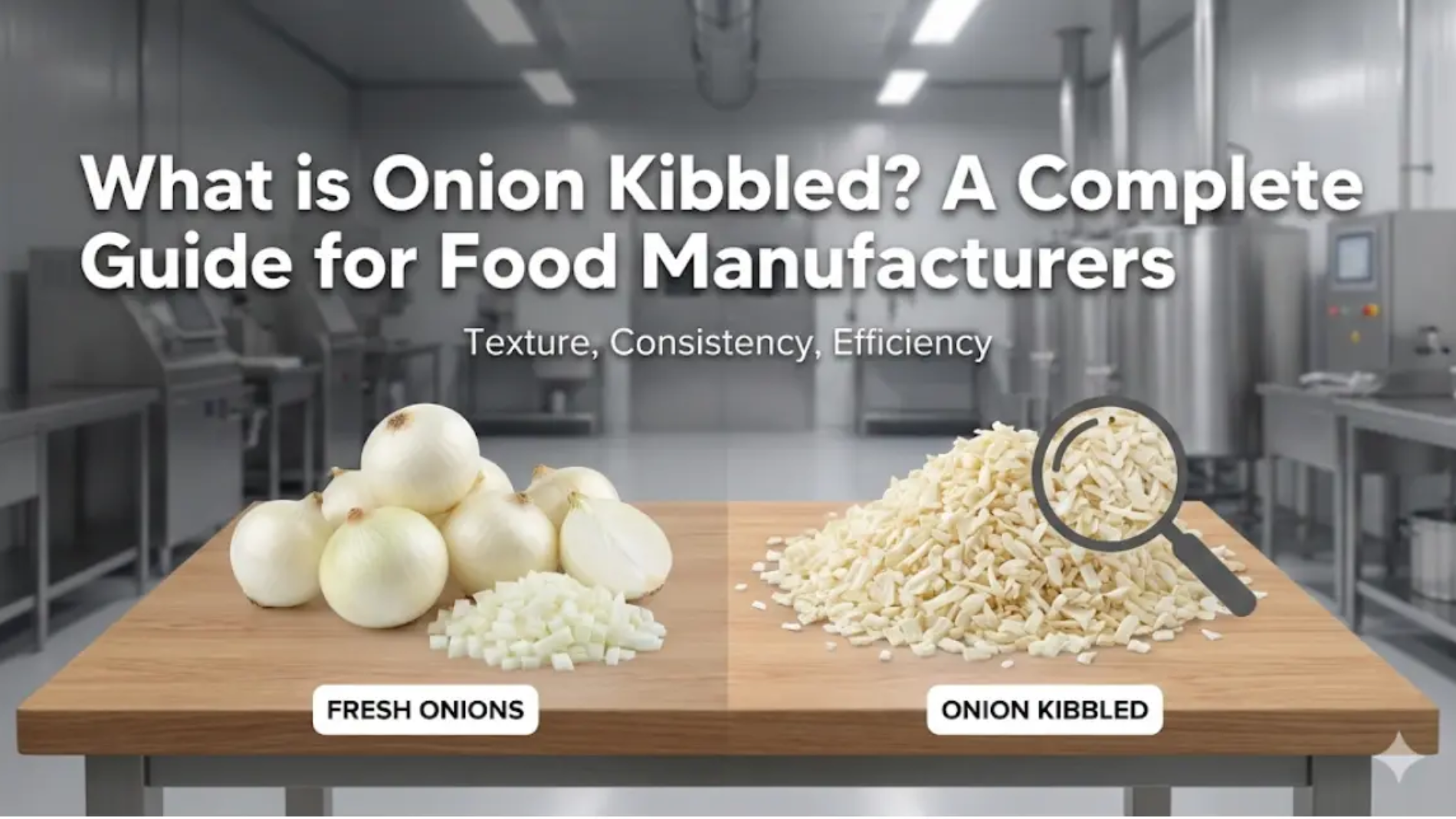
In the high-stakes world of food manufacturing, consistency is currency. Every batch of soup, every packet of instant noodles, and every bottle of sauce must taste exactly the same, whether it is produced in January or July. Achieving this consistency with fresh agricultural produce is a logistical nightmare. Enter Onion Kibbled–the industrial hero that solves the volatility of fresh produce while delivering authentic flavor and texture.
For procurement managers and R&D teams, understanding the nuances of dehydrated onion products is essential. While onion powder is ubiquitous, Onion Kibbled occupies a specific, high-value niche in the food processing industry. But what exactly is it, and why are global manufacturers switching to it in bulk?
Defining Onion Kibbled: Texture and Size
The term “kibbled” refers to the specific cut and size of the dehydrated vegetable. Unlike onion powder, which is ground to a fine dust, or onion flakes, which are often flat and leaf-like, Onion Kibbled consists of chopped, irregular pieces.
Typically ranging in size from 8mm to 25mm, these are essentially dehydrated cubes or slices of onion. They are produced by peeling, washing, and slicing fresh onions—usually high-solid white varieties—and then dehydrating them at controlled temperatures. The result is a shelf-stable ingredient that, upon rehydration, regains the texture, crunch, and appearance of freshly chopped onions.
The Manufacturing Advantage: Why Switch from Fresh?
For a food factory processing tons of product daily, fresh onions present massive challenges: spoilage, bacterial load, price volatility, and the sheer volume of waste (skins and roots). Onion Kibbled eliminates these headaches.
Zero Waste & Logistics: One kilogram of dehydrated onion kibbled is roughly equivalent to 8-10 kilograms of fresh onions. This massive reduction in volume slashes transport and storage costs. You aren’t paying to ship water or skins.
Microbiological Safety: Reputable bulk onion suppliers process kibbled onions using sterilization methods that significantly lower the microbial load compared to raw produce, making them safer for Ready-to-Eat (RTE) applications.
Standardized Flavor: Fresh onions vary in pungency depending on the season. Dehydrated white onion kibbled offers a standardized flavor profile, ensuring your BBQ sauce has the same “kick” all year round.
Spice Up Your Business with Authentic Indian Flavors
Import and Export Excellence from India!
Key Applications in the Food Industry
Because Onion Kibbled retains physical structure, it is used where visual appeal and “bite” are required. It is not just a background flavor; it is a visible ingredient.
Instant Noodles & Soups: Open a packet of instant vegetable noodles, and the small, dried vegetable pieces you see are likely kibbled onions. They rehydrate quickly in hot water, providing a pleasant chewiness.
Wet Sauces & Gravies: In bottling plants for salsa, pasta sauces, or curry pastes, kibbled onions add the necessary chunkiness that consumers associate with a “homestyle” recipe.
Meat Products: Manufacturers of burger patties, sausages, and meatballs use kibbled onions to absorb moisture and add savory bulk to the meat matrix without introducing excess water.
Pizza & Bakery: Rehydrated kibbled onions serve as excellent toppings for frozen pizzas and focaccia breads, as they don’t burn as quickly as fresh onions during the high-heat baking process.
Red vs. White: Choosing the Right Variety
When sourcing dehydrated onion, color matters.
White Onion Kibbled: This is the industry standard. White onions generally have a higher solid content and a sharper, more distinct pungency. They also have a neutral color that blends well into light-colored soups and dairy-based dips without bleeding pigment.
Red Onion Kibbled: Used where visual contrast is desired, such as in salad mixes or specialized spice blends. However, they are less common in general processing than the white variety.
Sourcing Quality: What to Look For
Not all dehydrated onions are created equal. When sourcing Onion Kibbled for export or manufacturing, pay close attention to the Certificate of Analysis (COA).
Moisture Content: Should typically be below 6% to ensure a long shelf life and prevent clumping or mold.
Origin: India is a global leader in dehydrated onions due to the pungent varieties grown in regions like Gujarat and Maharashtra. Sourcing from a reliable Indian exporter ensures high potency.
Foreign Matter: The product should be free from skins, root ends, and scorched particles. Top-tier suppliers use optical sorting machines to guarantee purity.
Spice Up Your Business with Authentic Indian Flavors
Import and Export Excellence from India!
Onion Kibbled is more than just dried vegetables; it is a strategic ingredient that offers the flavor of the farm with the efficiency of the factory. By switching to high-quality kibbled onions, manufacturers can streamline operations, reduce waste, and deliver a consistently delicious product to consumers worldwide. Whether you are formulating a new soup mix or optimizing a burger patty, this versatile ingredient is the texture solution you’ve been looking for.
Frequently Asked Questions (FAQs)
1. What is the difference between onion flakes and onion kibbled?
The main difference is shape and intended use. Onion Flakes are usually flat slices, ideal for garnishing. Onion Kibbled pieces are chopped and thicker (cubes/chunks), designed to mimic the texture of chopped onions in cooked dishes like soups and curries.
2. How do you rehydrate Onion Kibbled?
Simply soak the kibbled onions in warm water for 15-20 minutes. They will absorb the liquid, swell up to near their original size, and regain a tender-crisp texture. In soups or sauces, they can be added directly without pre-soaking.
3. What is the shelf life of bulk Onion Kibbled?
When stored in a cool, dry place in air-tight packaging (like moisture-proof poly bags inside cartons), Onion Kibbled typically has a shelf life of 12 to 24 months.
4. Is Onion Kibbled stronger than fresh onion?
Yes, the flavor is concentrated. The dehydration process removes water but leaves the flavor compounds intact. Generally, use a 1:8 or 1:10 ratio—meaning 100g of kibbled onion replaces about 1kg of fresh onion.
5. Can I use Onion Kibbled in dry spice rubs?
You can, but onion granules or powder might be better for even distribution in a dry rub. Kibbled is best used where you want visible pieces of onion, like in a coarse steak rub or marinade.
6. Is white or red onion kibbled better for processing?
White onion kibbled is generally preferred for food processing because it has a sharper flavor and doesn’t discolor the food product (red onions can sometimes turn dishes a greyish-purple).
7. Is your Onion Kibbled gluten-free?
Yes, pure dehydrated Onion Kibbled is a single-ingredient product made 100% from onions, making it naturally gluten-free and vegan.
8. Why do instant noodle companies use Onion Kibbled?
It is lightweight, shelf-stable, and rehydrates perfectly in the 3 minutes it takes to cook the noodles, providing instant texture and savory flavor.
About us
We bridge the gap between local producers and global markets, ensuring seamless trade facilitation with exceptional quality and reliability. We provide quick delivery services with customized packaging with all approval of International Certificates (Spices board India, MSME, IEC, fssai, FIEO, APEDA, EU certification, FDA and Many More)
Contact us
Shop No. 3, Ganesh Prestige Sr. No. 2/15, Near Laxmi Jewellers, Dhanakawadi, Pune – 411043, Maharashtra INDIA.
Call On
+91 9545205050
+91 9822422584
Leave A Comment