

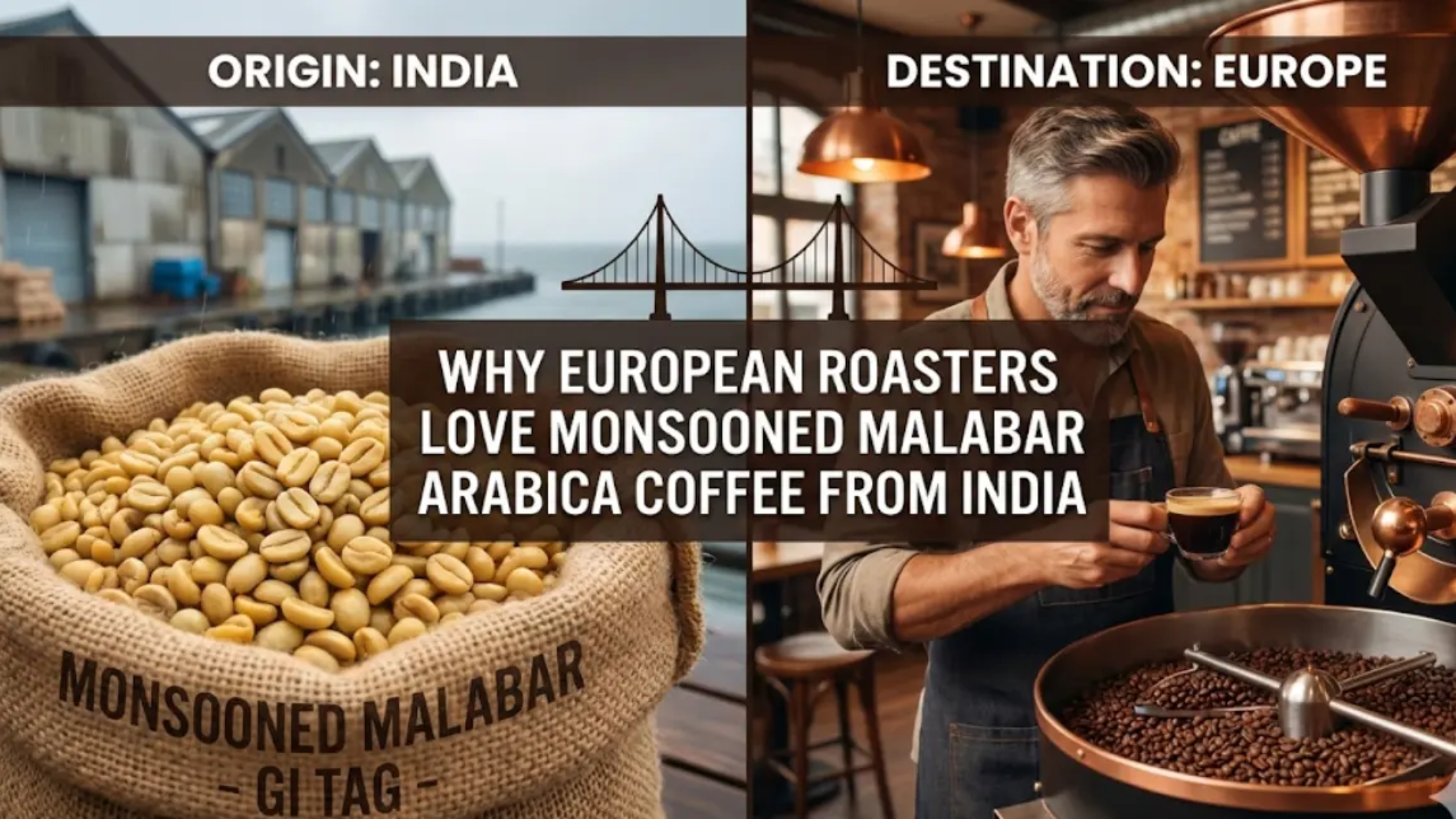
In the bustling cafes of Rome, Paris, and Hamburg, a quiet revolution is brewing inside the espresso hopper. While single-origin African beans and Latin American milds have their place, European master roasters have a long-standing love affair with a unique Indian specialty: Monsooned Malabar Arabica Coffee.
This isn’t just another coffee bean; it is a piece of history, a geographical wonder, and a technical marvel all rolled into one golden seed. For importers and coffee connoisseurs, understanding the allure of Monsooned Malabar Arabica Coffee is key to unlocking a flavor profile that is impossible to replicate anywhere else on Earth.
A Happy Accident: The Historical Connection
The European preference for this unique coffee isn’t a modern trend; it is a taste acquired over centuries. During the British Raj, coffee was shipped from India to Europe in wooden sailing vessels. The journey took up to six months, navigating around the Cape of Good Hope.
During this voyage, the raw green beans stored in the humid hold were exposed to the sea air and the moisture of the monsoon winds. By the time the coffee arrived in London or Marseilles, the beans had transformed. They had swollen in size, turned a pale golden-yellow, and lost their sharp acidity. The Europeans grew to love this mellow, aged flavor.
When steamships shortened the journey, the coffee arrived “fresh” (green and acidic), and the consumers complained. To replicate that beloved profile, Indian curers developed the “Monsooning” process along the Malabar Coast. Today, Monsooned Malabar Arabica Coffee preserves that historic heritage, offering a taste of the 19th century in a modern cup.
The Monsoon Process: Nature as the Processor
What makes this coffee truly “specialty” is the labor-intensive process behind it. You cannot simply grow Monsooned Malabar Arabica Coffee; you must craft it.
From June to September, when the Southwest Monsoon lashes the Western coast of India, the process begins. Top-grade Arabica Cherry (dry processed) beans are spread out on the concrete floors of specialized warehouses in coastal cities like Mangalore and Tellicherry.
Wind Exposure: The sides of the warehouses are opened to let the moisture-laden monsoon winds circulate through the beans.
Constant Raking: To prevent mold and ensure even moisture absorption, workers rake the beans frequently.
The Transformation: Over 12 to 16 weeks, the beans absorb moisture, rising from 11% to about 16-17%. They bloat to nearly double their original size and turn a distinct straw-gold color.
This process is exclusive to the Malabar region, earning Monsooned Malabar Arabica Coffee a coveted Geographical Indication (GI) Tag, ensuring that authentic lots can only be sourced from this specific terroir.
Spice Up Your Business with Authentic Indian Flavors
Import and Export Excellence from India!
The Flavor Profile: Mellow, Earthy, and Unique
For a European roaster, the cup profile is the primary selling point. Modern coffee trends often chase high acidity and fruity notes, but there remains a massive market for comfort. Monsooned Malabar Arabica Coffee is the antithesis of acidic coffee.
Zero Acidity: The monsooning process neutralizes the bean’s pH, resulting in a cup that is exceptionally smooth and soft on the stomach.
Flavor Notes: Expect distinct notes of dark chocolate, roasted nuts, spices (like clove and nutmeg), and a signature “earthy” or “musty” undertone that is highly prized in niche markets.
Aroma: The dry grounds smell of hay, malt, and baker’s chocolate, setting it apart from the floral scents of washed Arabicas.
The Secret Weapon for Espresso Blends
Why do Italian and French roasters buy container loads of Monsooned Malabar Arabica Coffee? The answer lies in the body and crema.
In an espresso blend, you need a base that provides texture. While Robusta is often used for this, it can add harsh bitterness. Monsooned Arabica offers the perfect middle ground. It provides the thick, syrupy body and heavy mouthfeel of a Robusta but retains the smoother, more refined flavor of an Arabica.
When blended, it acts as a “glue,” binding the floral notes of other beans with a rich, heavy base. It produces a dense, tiger-striped crema that holds sugar—a visual and sensory hallmark of a premium European espresso.
Sourcing the "Gold": What Buyers Must Know
For B2B buyers looking to import, Monsooned Malabar Arabica Coffee is graded by size and defects.
Monsooned Malabar AA: The premium grade. Large, uniform beans that roast evenly. This is the standard for specialty roasters.
Monsooned Basanally: A mixture of Peaberries and broken beans, often used for grinding into powder blends.
Because the beans are brittle and less dense than standard green coffee, they require careful handling during roasting. However, their unique golden appearance in the retail bag makes them a fantastic marketing tool for artisanal brands.
Spice Up Your Business with Authentic Indian Flavors
Import and Export Excellence from India!
Monsooned Malabar Arabica Coffee is more than just a commodity; it is a testament to the relationship between nature and agriculture. Its journey from the rain-swept coast of India to the cafes of Europe is driven by a demand for distinct character and exceptional smoothness.
For roasters looking to offer a “Low Acid” option or create a heavy-bodied espresso blend, there is no substitute. It remains one of India’s finest exports, loved globally for its golden look and mellow soul.
Frequently Asked Questions (FAQs)
1. What makes Monsooned Malabar Arabica Coffee different from regular Arabica?
The key difference is the processing. Regular Arabica is washed or sun-dried and shipped. Monsooned Malabar Arabica Coffee undergoes a 3-4 month “monsooning” process where it is exposed to humid winds, causing the bean to swell, turn yellow, and lose almost all its acidity.
2. Is Monsooned Malabar coffee good for espresso?
Yes, it is excellent for espresso. It adds a thick, syrupy body and rich crema to the shot without introducing the bitterness of Robusta. Many classic Italian espresso blends use it as a secret ingredient.
3. Does Monsooned Malabar Arabica Coffee have high caffeine?
No. It has a caffeine content similar to standard Arabica beans (approx. 1.2% to 1.5%), which is lower than Robusta. It is prized for its flavor and body, not for an extra caffeine kick.
4. Why is Monsooned Malabar called “low acid” coffee?
The exposure to moisture and air during the monsoon season causes chemical changes in the bean that neutralize its natural acids. This makes Monsooned Malabar Arabica Coffee pH-neutral and very gentle on the stomach.
5. What is the best roast level for Monsooned Malabar beans?
These beans perform best at a Medium to Medium-Dark roast. A light roast may taste too grassy or earthy, while a dark roast brings out the chocolate and spicy notes that define its character.
6. What does the GI Tag mean for Monsooned Malabar?
The Geographical Indication (GI) Tag certifies that the coffee was processed specifically along the Malabar Coast of India. It protects the authenticity of the product, ensuring buyers get genuine Monsooned Malabar Arabica Coffee and not an imitation.
7. Why do the beans look pale and swollen?
The beans absorb moisture from the humid atmosphere, rising from 11% to 16% moisture content. This expansion stretches the cell structure, making the bean physically larger and lighter (less dense) while bleaching the green color to a golden straw hue.
8. Can I drink Monsooned Malabar as a single-origin coffee?
Absolutely. While it is famous for blending, many coffee lovers enjoy it as a single-origin brew, especially in a French Press or Moka Pot, where its heavy body and earthy, spicy notes can be fully appreciated.
About us
We bridge the gap between local producers and global markets, ensuring seamless trade facilitation with exceptional quality and reliability. We provide quick delivery services with customized packaging with all approval of International Certificates (Spices board India, MSME, IEC, fssai, FIEO, APEDA, EU certification, FDA and Many More)
Contact us
Shop No. 3, Ganesh Prestige Sr. No. 2/15, Near Laxmi Jewellers, Dhanakawadi, Pune – 411043, Maharashtra INDIA.
Call On
+91 9545205050
+91 9822422584
Leave A Comment