

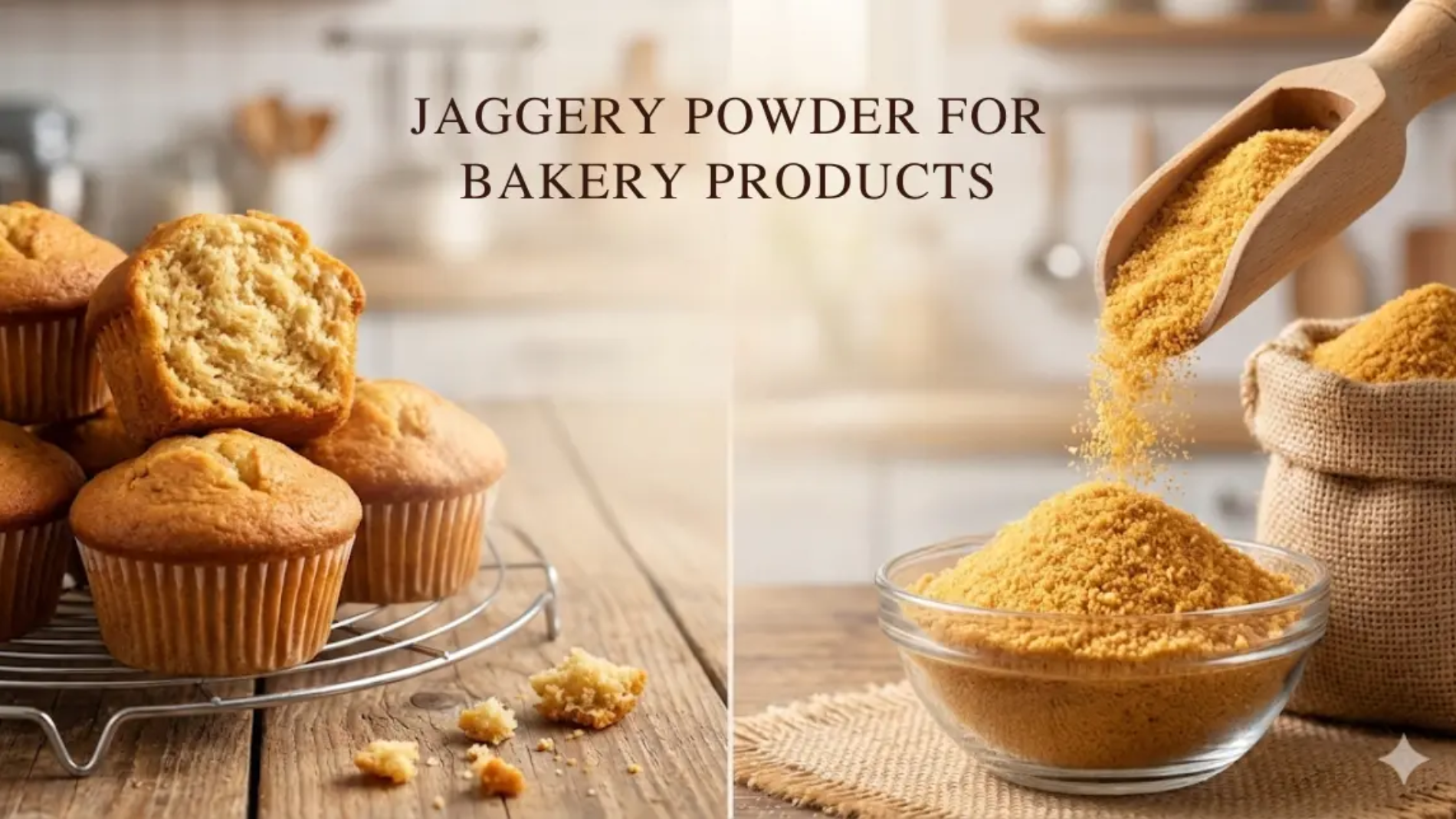
The modern bakery aisle is undergoing a massive transformation. The era of ultra-processed, white-sugar-laden treats is slowly giving way to a demand for “guilt-free indulgence.” For bakery owners and commercial manufacturers, this shift presents a golden opportunity. The secret to capturing this growing market isn’t just about reducing calories-it’s about upgrading ingredients. This is where Jaggery Powder for Bakery Products becomes a game-changer.
Replacing refined sugar with natural sweeteners is no longer a niche trend; it is a mainstream expectation. Consumers are actively scanning labels for ingredients they recognize. Bulk jaggery powder offers the perfect solution: a natural, unrefined sweetener that delivers rich flavor, superior texture, and a “Clean Label” appeal that drives sales.
Here is how incorporating Jaggery Powder for Bakery Products can revitalize your product line and boost your bottom line.
The "Clean Label" Advantage
Today’s consumer is label-savvy. They are wary of High Fructose Corn Syrup (HFCS) and artificial sweeteners. When they see “Jaggery Powder” or “Evaporated Cane Juice” on a label, it signals a premium, artisanal product.
Switching to jaggery powder for bakery products allows you to market your goods as:
Unrefined & Natural: Free from bone-char filtration and chemical bleaching.
Chemical-Free: Produced without the sulfur commonly used in white sugar processing.
Mineral-Rich: containing traces of iron and magnesium, unlike empty-calorie white sugar.
This transparency justifies a premium price point. A “Jaggery & Whole Wheat Muffin” sounds—and sells—far better than a standard “Sugar Muffin” in the health-conscious B2B and retail sectors.
Spice Up Your Business with Authentic Indian Flavors
Import and Export Excellence from India!
Texture Mechanics: The Secret to Moist Cakes
Beyond the health halo, jaggery powder offers a distinct technical advantage in the science of baking: it is highly hygroscopic.
Refined white sugar crystallizes and can sometimes lead to dry, crumbly textures if not balanced correctly. In contrast, jaggery naturally attracts and retains moisture. When you use jaggery powder for bakery products, the result is:
Softer Crumb: Cakes and sponges stay soft for longer.
Chewier Cookies: It mimics the effect of soft brown sugar, creating that desirable chewy texture in cookies and brownies.
Extended Shelf Life: Because it retains moisture effectively, baked goods resist staling for an extra 24-48 hours, which is a massive logistical benefit for commercial distribution.
Flavor Profile: Beyond Just Sweetness
White sugar provides sweetness but lacks depth. Indian jaggery powder, on the other hand, carries a complex flavor profile with notes of caramel, molasses, and even subtle traces of fruitiness.
This unique taste profile allows bakers to innovate. It pairs exceptionally well with:
Spiced Bakes: Gingerbread, carrot cake, and pumpkin bread.
Chocolate: It enhances the richness of dark chocolate ganache and brownies.
Nutty Flavors: It complements oats, almonds, and walnuts in energy bars and granola.
By using Jaggery Powder for Bakery Products, you aren’t just sweetening your product; you are adding a layer of gourmet flavor that white sugar simply cannot provide.
Technical Tips for Substitution
For commercial kitchens, consistency is key. Switching from sugar to jaggery is relatively seamless, but it requires minor adjustments.
The 1:1 Ratio: In most recipes (cookies, cakes, muffins), you can replace white sugar with jaggery powder in a 1:1 ratio by weight.
Moisture Adjustment: Since jaggery brings its own moisture, you may need to slightly reduce liquid ingredients (milk or water) by about 10-15% to maintain the perfect batter consistency.
Acidity Check: Jaggery is slightly acidic compared to neutral white sugar. If your recipe relies heavily on baking soda for lift, jaggery will activate it vigorously, leading to a great rise.
Spice Up Your Business with Authentic Indian Flavors
Import and Export Excellence from India!
Sourcing the Right Grade
Not all jaggery is created equal. For industrial baking, you cannot use the sticky, block-style jaggery found in traditional markets. It is difficult to measure and creates lumps in the batter.
You need free-flowing, granular jaggery powder.
Mesh Size: Look for a fine mesh that dissolves easily during the creaming process.
Color Consistency: Ensure your supplier provides consistent color (golden vs. dark brown) to maintain product uniformity.
Purity: Ensure the powder is free from grit and impurities, which can ruin the mouthfeel of a delicate sponge.
A Sweet Strategy for Growth
The bakery market is crowded. To stand out, you need a unique selling proposition (USP). Jaggery Powder for Bakery Products offers three USPs in one: better health perception, superior moisture retention, and a gourmet flavor profile.
By making this simple ingredient switch, you align your brand with the healthy baking revolution, attracting modern customers who are eager to pay for quality, taste, and wellness in every bite.
Frequently Asked Questions (FAQs)
1. Can I replace white sugar with jaggery powder 1:1 in baking?
Yes, in most recipes like cakes, cookies, and muffins, a 1:1 substitution by weight works perfectly. However, because jaggery is hygroscopic, you might need to reduce the liquid content (milk/water) slightly to prevent the batter from becoming too runny.
2. Will jaggery powder change the color of my bakery products?
Yes. Jaggery powder has a natural golden-brown to dark-brown color. It will give vanilla sponges a warm, caramel hue (similar to using brown sugar). This is often seen as a visual indicator of a “natural” product by consumers.
3. Does jaggery powder make cakes heavy?
Not if used correctly. In fact, it often makes cakes moister. However, because it is denser than refined sugar, ensure you cream it well with butter or oil to incorporate enough air for a light, fluffy crumb.
4. Is jaggery powder suitable for diabetics?
While jaggery is more nutritious than white sugar, it is still a sugar with a significant glycemic load. It is marketed as a “healthier alternative” due to its mineral content and lack of chemicals, but products containing it should not be labeled “diabetic-friendly” without consulting a nutritionist.
5. How does jaggery affect the shelf life of baked goods?
It typically extends it. The hygroscopic nature of jaggery powder for bakery products helps the finished goods retain moisture, delaying the drying-out process (staling) that happens with white sugar.
6. Does jaggery powder have a strong taste?
It has a distinct caramel/molasses flavor. In chocolate, coffee, or spiced baked goods, this enhances the taste. In very delicate flavors (like an angel food cake), the taste might be noticeable, so it is best used where “richness” is desired.
7. How should I store bulk jaggery powder in my bakery? Jaggery attracts moisture from the air. It must be stored in airtight containers or moisture-proof bags in a cool, dry place. If left exposed, it will clump and turn into a sticky block.
8. Is jaggery powder the same as brown sugar?
No. Brown sugar is usually refined white sugar with molasses added back in. Jaggery powder is unrefined cane sugar that retains its natural molasses and minerals from the start. Jaggery has a more complex, earthy flavor compared to standard brown sugar.
About us
We bridge the gap between local producers and global markets, ensuring seamless trade facilitation with exceptional quality and reliability. We provide quick delivery services with customized packaging with all approval of International Certificates (Spices board India, MSME, IEC, fssai, FIEO, APEDA, EU certification, FDA and Many More)
Contact us
Shop No. 3, Ganesh Prestige Sr. No. 2/15, Near Laxmi Jewellers, Dhanakawadi, Pune – 411043, Maharashtra INDIA.
Call On
+91 9545205050
+91 9822422584
Leave A Comment