

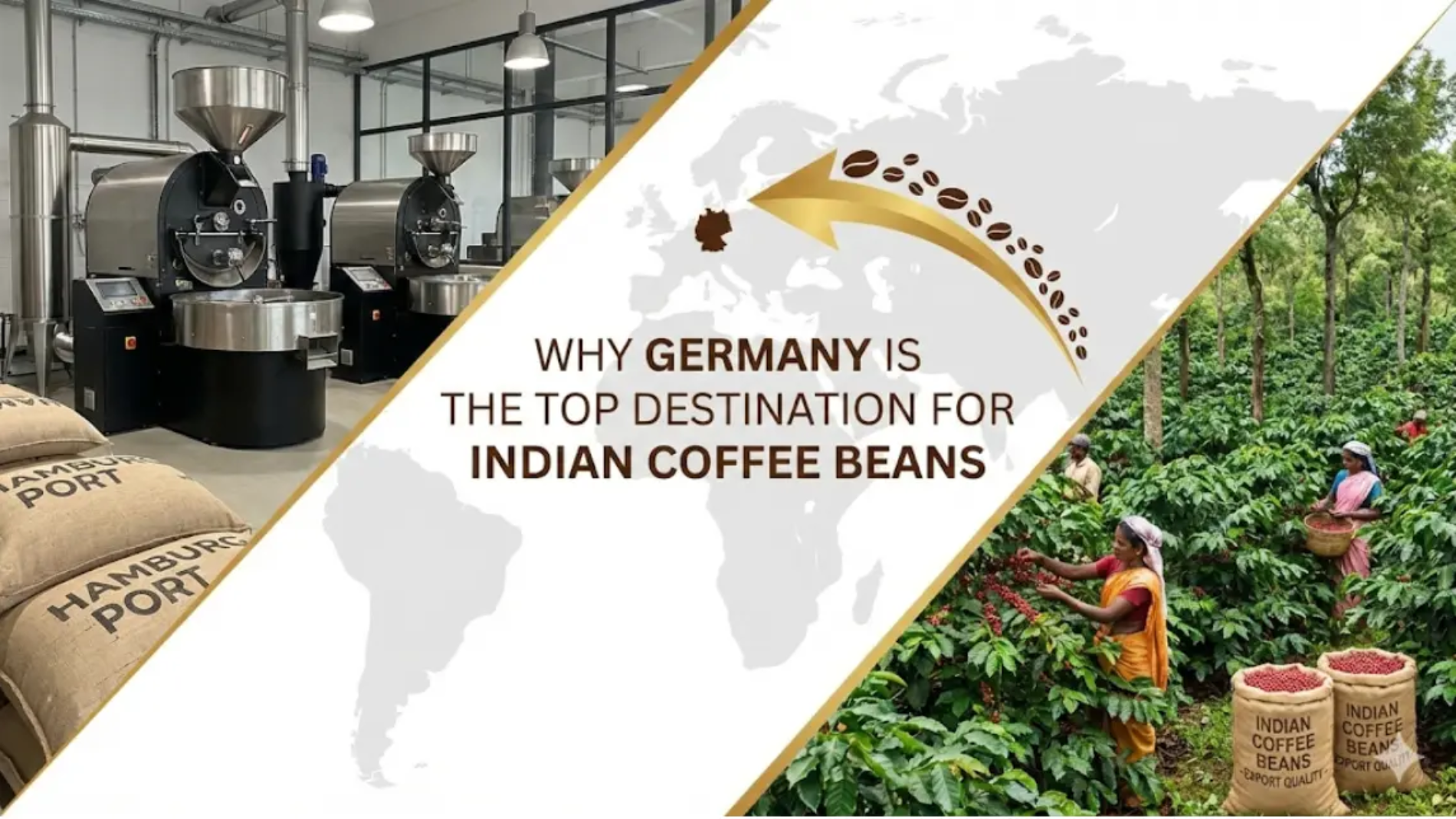
When it comes to the global coffee trade, Germany is a powerhouse. As Europe’s largest importer of green coffee, it serves as the central roasting and distribution hub for the entire continent. While Brazil and Vietnam contribute the bulk of the volume, a specific and highly valued segment of the market is dominated by Indian Coffee Beans.
For decades, Indian exporters have viewed Germany not just as a buyer, but as a strategic partner. The relationship is built on a perfect match between German consumer preferences and the unique characteristics of Indian coffee. From the low-acid profiles of shade-grown Arabica to the crema-rich qualities of premium Robusta, India offers exactly what German roasters need.
Here is an in-depth look at why Germany remains the top destination for Indian Coffee Beans and how this trade corridor continues to thrive.
1. The German Love for "Stomach-Friendly" Coffee
German coffee culture is distinct. Unlike the quick espresso shots of Italy or the sweet frappuccinos of the US, Germans consume large quantities of filter coffee and “Caffè Crema.” A key requirement for these long drinks is mildness.
This is where Indian Arabica shines. Nearly all coffee in India is shade-grown under natural canopies of spice and fruit trees. This slow maturation process results in beans that are naturally lower in acidity compared to their African or South American counterparts. German buyers actively seek out these low-acid coffee beans because they are marketed as “Magenfreundlich” (stomach-friendly), a major selling point in German supermarkets.
2. The Espresso Boom: Demand for Indian Robusta
While filter coffee is traditional, the modern German market has seen a massive surge in espresso-based drinks. To make a perfect espresso, you need a thick, golden crema and a bold body.
Indian Robusta, particularly the Kaapi Royale and Robusta Cherry AA grades, is globally renowned as the “Espresso Gold Standard.” Unlike the woody or rubbery taste of cheaper Robustas, Indian washed Robusta is clean, mellow, and soft. German roasters blend these premium beans with Arabica to add depth and that essential crema layer without introducing harsh bitterness. This makes India a critical supplier for Germany’s vast private-label espresso market.
3. Monsooned Malabar: A Niche Favorite
One specific variety has carved out a cult following in Germany: Monsooned Malabar.
This unique specialty coffee, which is exposed to the humid monsoon winds of the Malabar coast, undergoes a natural aging process that swells the bean and neutralizes its acidity. The result is a cup with heavy body, earthy notes, and virtually zero bite. Niche roasters in cities like Berlin, Hamburg, and Munich prize Monsooned Malabar for its distinct flavor profile, often selling it as a premium, single-origin experience to discerning customers.
Spice Up Your Business with Authentic Indian Flavors
Import and Export Excellence from India!
4. Hamburg: The Gateway to Europe
Logistics play a crucial role in trade. The Port of Hamburg is the primary entry point for coffee in Europe, handling millions of sacks annually.
Indian coffee exporters have established robust supply chains connecting Indian ports (like Mangalore, Cochin, and Chennai) directly to Hamburg and Bremen. This established infrastructure allows for efficient bulk coffee shipping and ensures that fresh green beans reach German warehouses on time. The reliability of Indian exporters in managing documentation, customs, and EUDR compliance (European Union Deforestation Regulation) further solidifies Germany’s preference for Indian origins.
5. Certified and Sustainable Sourcing
German consumers are among the most eco-conscious in the world. There is a high demand for Organic, Fair Trade, and Rainforest Alliance certified products.
India’s coffee plantations, many of which are tribal holdings or biodiversity-friendly estates, are well-positioned to meet these needs. The rise of certified Indian coffee aligns perfectly with German corporate responsibility goals. Roasters prefer sourcing from India because the “shade-grown” story is naturally sustainable, offering a marketing advantage that resonates with green-minded German buyers.
A Perfect Brew of Quality and Logistics
The dominance of Indian Coffee Beans in the German market is no accident. It is the result of a decades-long alignment between product quality and market need. Whether it is the smooth, mild Arabica for morning filter coffee or the bold, crema-rich Robusta for an afternoon espresso, India delivers.
For international traders and roasters, understanding this dynamic is key. Germany is not just a destination; it is the benchmark. And as long as quality and sustainability remain trends, the flow of premium beans from the Western Ghats to the warehouses of Hamburg will only grow stronger.
Frequently Asked Questions (FAQs)
1. Why do German roasters prefer Indian Robusta?
German roasters value Indian Robusta (like Kaapi Royale) because it is clean, smooth, and lacks the harsh, rubbery flavor of other Robustas. It is essential for creating the rich, golden crema in espresso blends.
2. What makes Indian coffee “stomach-friendly”?
Indian coffee is primarily shade-grown. This natural shading slows down the ripening of the coffee cherries, resulting in beans that have lower acidity. This makes the coffee gentler on the stomach, a quality highly prized by German consumers.
3. Which port is the main entry point for Indian coffee in Germany?
The Port of Hamburg is the primary hub for coffee imports in Germany and Europe. Most bulk shipments of Indian coffee beans land here before being distributed to roasters across the continent.
4. Is Monsooned Malabar popular in Germany?
Yes, Monsooned Malabar is a popular specialty coffee in Germany. Its unique, earthy flavor and extremely low acidity make it a favorite among niche specialty roasters and consumers who find regular coffee too acidic.
5. How does EUDR affect Indian coffee exports to Germany?
The EU Deforestation Regulation (EUDR) requires proof that coffee was not grown on deforested land. Indian exporters are increasingly adopting geolocation technology to provide this traceability, ensuring continued access to the German market.
6. Do Germans drink more Arabica or Robusta?
Germany traditionally consumes more Arabica (for filter coffee). However, the consumption of Robusta is rising steadily due to the growing popularity of espresso machines and Italian-style coffee blends.
7. Can I source Organic Indian coffee for the German market?
Yes. India has a growing number of certified Organic coffee estates, particularly in tribal regions like Araku Valley and parts of Kerala/Karnataka. These beans are in high demand in Germany’s organic food sector.
8. What is the typical transit time for coffee from India to Germany?
Shipping green coffee beans from Indian ports (Chennai/Cochin) to Hamburg typically takes 20 to 30 days via sea freight, depending on the shipping line and route.
About us
We bridge the gap between local producers and global markets, ensuring seamless trade facilitation with exceptional quality and reliability. We provide quick delivery services with customized packaging with all approval of International Certificates (Spices board India, MSME, IEC, fssai, FIEO, APEDA, EU certification, FDA and Many More)
Contact us
Shop No. 3, Ganesh Prestige Sr. No. 2/15, Near Laxmi Jewellers, Dhanakawadi, Pune – 411043, Maharashtra INDIA.
Call On
+91 9545205050
+91 9822422584
Leave A Comment