

types of onion Powder

Mesh Size Matters: How to Choose the Right Particle Size for Your Onion Powder

In the world of food manufacturing and industrial spice blending, precision is everything. A slight variation in the texture of an ingredient can alter the mouthfeel of a sauce, the visual appeal of a soup, or the flowability of a dry rub. While many buyers simply search for “onion powder,” experienced procurement managers know that this category is actually a spectrum. Understanding the different types of onion powder based on their particle size—or “mesh size”—is the secret to creating a consistent, high-quality product.

When sourcing bulk onion products from India, you aren’t just buying flavor; you are buying texture, rehydration capability, and visual impact. Whether you are formulating a ready-to-eat meal or a delicate seasoning blend, choosing the correct cut is critical.

This guide breaks down the technical differences between the five main dehydrated onion formats, helping you select the perfect ingredient for your production line.

The Potency Factor: Why Curcumin Content Matters for Skin

Before diving into the specific products, it is important to understand “Mesh.” In the food industry, mesh size refers to the number of openings in one linear inch of a screen.

  • Low Mesh Number (e.g., 5-10 Mesh): Indicates large openings, resulting in larger particles or flakes.

  • High Mesh Number (e.g., 80-100 Mesh): Indicates tiny openings, resulting in a fine, flour-like powder.

The mesh size determines how quickly the onion rehydrates, how potent the immediate flavor release is, and how the ingredient disperses within a mix.

1. Dehydrated White Onion Kibbled (The Largest Cut)

At the top of the size spectrum is Dehydrated White Onion Kibbled. These are not powders; they are recognizable flakes of onion. Typically ranging from 10 to 25 mm, kibbled onions are produced by slicing the fresh bulb and dehydrating it without heavy grinding.

  • Best Applications: This format is ideal for applications where visual appeal is just as important as flavor. It is the standard choice for instant noodle tastemakers, wet soups, and ready-to-cook curry kits.

  • Why Choose It: When rehydrated, kibbled onion regains the texture of chopped fresh onion, providing a “homestyle” feel to industrial food products.

Spice Up Your Business with Authentic Indian Flavors

Import and Export Excellence from India!
2. Dehydrated White Onion Chopped (The Versatile Chunk)

Slightly smaller than kibbled, Dehydrated White Onion Chopped offers a more uniform, square-cut appearance, usually ranging between 3 to 5 mm. This size is engineered for consistency.

  • Best Applications: This is a favorite for canned salsas, meat rubs, and burger patties. In processed meats, the chopped onion absorbs moisture during cooking, keeping the meat juicy while adding a distinct savory bite.

  • Why Choose It: It bridges the gap between a large flake and a small granule. It offers a definite “bite” without being overwhelming, making it perfect for chunky sauces and stews.

3. Dehydrated White Onion Minced (The Texture Enhancer)

Moving down the scale, we find Dehydrated White Onion Minced. Typically spanning 1 to 3 mm, minced onion looks like coarse sand or tiny chips. This is one of the most popular types of onion powder alternatives for dry mixes.

  • Best Applications: Minced onion is widely used in salad dressings, dips (like ranch), and bottled sauces. It is small enough to pass through dispensing nozzles but large enough to provide a pleasant textural contrast in creamy formulations.

  • Why Choose It: It rehydrates quickly compared to kibbled or chopped onions but retains enough structure to be visible to the consumer, adding perceived value to the product.

4. Dehydrated White Onion Granules (The Free-Flowing Champion)

Dehydrated White Onion Granules usually fall within the 40 to 60 mesh range. To the naked eye, this looks like a coarse, gritty powder (similar to cornmeal).

  • Best Applications: This is the king of dry seasoning blends and spice rubs.

  • Why Choose It: The primary advantage of granules over fine powder is flowability. Fine powders can clump in humid environments or clog industrial hoppers. Granules remain free-flowing and mix evenly with other coarse spices like cracked black pepper and kosher salt, ensuring a uniform distribution of flavor in every shake.

5. Dehydrated White Onion Powder (The Flavor Powerhouse)

Finally, we arrive at the product most people are familiar with: Dehydrated White Onion Powder. This is ground to a fine dust, typically between 80 to 100 mesh.

  • Best Applications: This format is essential for chips/snack coatings, smooth sauces, gravies, and marinades.

  • Why Choose It: When you need instant flavor dispersion without any texture, fine powder is the only choice. It dissolves almost immediately in liquid and adheres perfectly to snacks like popcorn or potato chips. It provides the highest surface area, meaning the flavor hit is immediate and potent.

Spice Up Your Business with Authentic Indian Flavors

Import and Export Excellence from India!

Choosing the Right Partner for Your Specifications

Navigating the different types of onion powder and dehydrated cuts can be complex. A generic supplier might simply sell you “onion,” but a strategic partner will ask about your mesh requirements.

Whether your formulation requires the visual chunkiness of Dehydrated White Onion Kibbled or the instant solubility of Dehydrated White Onion Powder, ensuring you get the exact particle size is crucial for your product’s consistency. By understanding these distinctions, you can optimize your manufacturing process, reduce waste, and deliver a superior food product to your customers.

Frequently Asked Questions (FAQs)

1. What is the difference between minced onion and onion granules?

The main difference is size and texture. Minced onion (1-3mm) creates visible specks and a chewy texture when rehydrated. Onion granules (40-60 mesh) are smaller, sand-like, and are used primarily for flavor distribution in dry rubs without adding significant texture.

2. Which onion powder type is best for spice blends?

Dehydrated White Onion Granules are generally preferred for spice blends. They flow better than fine powder and don’t clump as easily, ensuring a consistent mix in glass jars or shakers.

3. Does mesh size affect the flavor intensity?

Yes. Fine Dehydrated White Onion Powder has a larger surface area relative to its volume, which often results in a more immediate, intense burst of flavor compared to larger cuts like kibbled onion, which release flavor more slowly.

4. Can I substitute chopped onion for kibbled onion?

Yes, in most wet applications like soups or stews, they are interchangeable. However, Dehydrated White Onion Kibbled will provide larger, more rustic pieces, while chopped onion will be more uniform and smaller.

5. How do I prevent onion powder from clumping?

Clumping is caused by moisture absorption. Store your powder in a cool, dry place. For industrial use, consider using Dehydrated White Onion Granules instead of fine powder, as they are naturally more resistant to caking.

6. What is the standard shelf life of dehydrated onion products?

When stored correctly in air-tight, moisture-proof packaging, all types—from kibbled to powder—typically have a shelf life of 12 to 24 months.

7. Why is white onion preferred for dehydration over red onion?

White onions generally have a higher solid content and a sharper, more desirable pungency for processing. Dehydrated White Onion Powder also has a neutral color that doesn’t darken or discolor food products like red onion might.

8. Do all these types come from the same onion?

Yes. Whether it is kibbled, minced, or powdered, they all start from the same raw material (usually high-quality Indian white onions). The difference lies solely in the cutting, drying, and grinding processes.

About us

We bridge the gap between local producers and global markets, ensuring seamless trade facilitation with exceptional quality and reliability. We provide quick delivery services with customized packaging with all approval of International Certificates (Spices board India, MSME, IEC, fssai, FIEO, APEDA, EU certification, FDA and Many More)

Contact us

Shop No. 3, Ganesh Prestige Sr. No. 2/15, Near Laxmi Jewellers, Dhanakawadi, Pune – 411043, Maharashtra INDIA.

Call On

+91 9545205050

+91 9822422584

Email

sales@aquaconnectexim.com

aquaconnectexim@gmail.com

Alleppey Turmeric for Ayurvedic medicine

The Skin Healer: Why Alleppey Turmeric is Essential for Ayurvedic Dermatology

In the ancient science of Ayurveda, turmeric (Haridra) is revered not just as a spice, but as a “Varnya”—a herb that enhances complexion and radiance. However, any Ayurvedic practitioner will tell you that the efficacy of a treatment depends entirely on the potency of the herb used. This is where Alleppey Turmeric steps into the spotlight.

For nutraceutical manufacturers and Ayurvedic skincare brands, sourcing generic turmeric is no longer enough. To deliver real, visible results for skin conditions ranging from acne to psoriasis, the industry is shifting toward the “gold standard” of potency: Alleppey Turmeric for Ayurvedic medicine. With a natural curcumin content of 5-7% (compared to the 2-3% in standard varieties), it is the high-performance engine that powers effective dermatological formulations.

The Potency Factor: Why Curcumin Content Matters for Skin

At the heart of turmeric’s healing power is curcumin, the bioactive compound responsible for its anti-inflammatory, antioxidant, and antimicrobial properties. In dermatology, inflammation is the root cause of most skin issues, including acne, eczema, and premature aging.

Standard turmeric powders often lack the punch required to subdue chronic inflammation effectively. Alleppey turmeric, sourced from the mineral-rich soils of Kerala, naturally contains double or triple the curcumin of other varieties.

  • For Acne: High curcumin levels aggressively combat Propionibacterium acnes bacteria while reducing the redness and swelling of active breakouts.

  • For Anti-Aging: Its superior antioxidant profile neutralizes free radicals faster, protecting collagen and preventing fine lines.

  • For Healing: It accelerates wound healing by modulating the body’s inflammation response, a property known in Ayurveda as Vranaropana.

Spice Up Your Business with Authentic Indian Flavors

Import and Export Excellence from India!

Key Ayurvedic Formulations Using Alleppey Turmeric

To truly understand the value of this spice, we must look at how it supercharges traditional Ayurvedic formulations.

1. Haridra Khanda (For Skin Allergies & Hives)

Haridra Khanda is a famous classical formulation used to treat urticaria (hives), itching, and allergic skin rashes. It relies heavily on turmeric as the primary active ingredient. Using medicinal-grade Alleppey turmeric in this formulation ensures a potent antihistamine effect, providing faster relief from itching (Kandughna) and inflammation than standard grades could achieve.

2. Mukha Lepa (Therapeutic Face Packs)

In Ayurveda, a Mukha Lepa is a medicinal face paste used to treat local skin issues. When formulating a lepa for acne or hyperpigmentation, the “scraping” (Lekhana) action of turmeric is vital. Alleppey turmeric’s high essential oil content, combined with its curcumin, makes it more effective at penetrating the skin barrier to clear clogged pores and lighten dark spots (Vyanga).

3. Nishamalaki (For Metabolic Skin Issues)

While primarily for diabetes, Nishamalaki (a combination of turmeric and Amla) is crucial for treating skin infections like boils and carbuncles that plague those with high blood sugar. The high curcumin content helps purify the blood (Raktashodaka) and fight systemic infection from the inside out.

Why "Varnya" Herbs Need High Quality Sourcing

In the Charaka Samhita, turmeric is classified as a Varnya herb—one that restores the skin’s natural glow and health. However, this effect is diluted if the turmeric is old, adulterated, or low in volatile oils.

Alleppey finger turmeric is prized not just for curcumin, but for its rich oleoresin content (the natural oils). These oils are vital for maintaining skin moisture and elasticity. When brands use low-grade, dry turmeric powder, they lose this “unctuous” quality that is essential for preventing dry, flaky skin conditions like psoriasis.

Sourcing for Efficacy: A B2B Perspective

For manufacturers of Ayurvedic medicines and skincare products, the choice of raw material is a direct determinant of brand reputation.

  • Traceability: Authentic Alleppey turmeric has a specific deep orange-yellow hue. Sourcing from certified exporters ensures you aren’t getting “Madras” turmeric dyed to look like Alleppey.

  • Consistency: Medical formulations require precise dosing. Using a standardized high-curcumin variety ensures that every batch of your Ayurvedic skincare cream or capsule delivers consistent therapeutic results.

  • Clean Label: With the rise of “clean beauty,” consumers demand purity. Alleppey turmeric’s premium status often comes with better quality control, ensuring low heavy metal and pesticide residues—critical for products applied to the skin or ingested for health.

Spice Up Your Business with Authentic Indian Flavors

Import and Export Excellence from India!

In the world of Ayurvedic dermatology, turmeric is the “Skin Healer.” But to unlock its full potential—to truly heal, brighten, and protect—one must use a tool that is sharp and potent. Alleppey turmeric is that tool. For brands and practitioners serious about efficacy, it is not just an option; it is an essential ingredient for delivering the true promise of Ayurveda.

Frequently Asked Questions (FAQs)

1. Why is Alleppey turmeric considered better for skin than regular kitchen turmeric?

Regular kitchen turmeric typically has a curcumin content of 2-3%. Alleppey turmeric boasts 5-7% curcumin. This higher concentration makes it significantly more potent at fighting inflammation, bacteria, and oxidative stress on the skin.

2. Can Alleppey turmeric stain the skin more than other varieties?

Yes, due to its high curcumin content and deep orange colour, it can leave a stronger stain. However, this is a sign of its potency. The stain is temporary and can be removed with a simple oil cleanser or toner.

3. Is Alleppey turmeric safe for sensitive skin?

Generally, yes. Its anti-inflammatory properties can actually soothe sensitive skin. However, because it is potent, it should always be patch-tested and ideally mixed with a soothing base like yogurt, honey, or aloe vera.

4. What is “Haridra” in Ayurveda?

“Haridra” is the Sanskrit name for turmeric. In Ayurvedic texts, it is described as a key herb for blood purification (Raktashodaka) and skin health (Kusthaghna).

5. Can I use Alleppey turmeric powder for DIY face masks?

Absolutely. A pinch of Alleppey turmeric mixed with chickpea flour (besan) and yogurt makes for a powerful, spa-grade face mask that rivals expensive treatments for brightening and acne control.

6. Does Alleppey turmeric help with eczema?

Yes. Its strong anti-inflammatory and anti-itch (Kandughna) properties make it excellent for soothing the redness and irritation associated with eczema and atopic dermatitis.

7. How do I know if I am buying genuine Alleppey turmeric?

Look for a deep, rich orange-yellow colour (not bright lemon yellow). For bulk buyers, always request a Certificate of Analysis (COA) verifying the curcumin content is above 5%.

8. Is this turmeric suitable for internal consumption for skin health?

Yes. In Ayurveda, skin health often starts from within. Consuming Alleppey turmeric (e.g., in Golden Milk or capsules) purifies the blood and reduces systemic inflammation, which reflects as clear, glowing skin.

About us

We bridge the gap between local producers and global markets, ensuring seamless trade facilitation with exceptional quality and reliability. We provide quick delivery services with customized packaging with all approval of International Certificates (Spices board India, MSME, IEC, fssai, FIEO, APEDA, EU certification, FDA and Many More)

Contact us

Shop No. 3, Ganesh Prestige Sr. No. 2/15, Near Laxmi Jewellers, Dhanakawadi, Pune – 411043, Maharashtra INDIA.

Call On

+91 9545205050

+91 9822422584
Email

sales@aquaconnectexim.com

aquaconnectexim@gmail.com

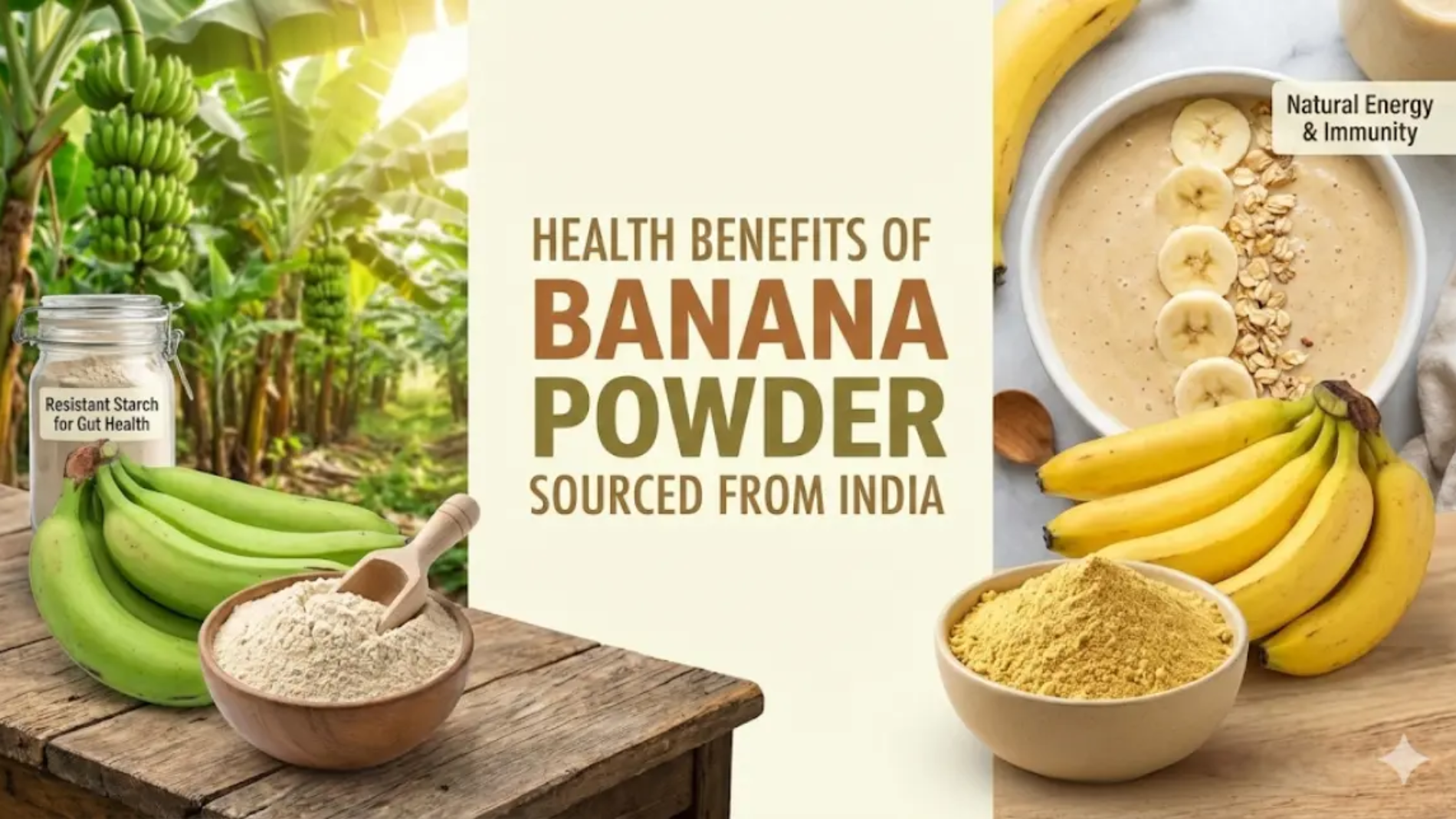
sourcing ripe banana powder

Sourcing Ripe Banana Powder from India: A Buyer’s Strategic Advantage

In the competitive landscape of global food manufacturing, the origin of your ingredients often dictates the success of your final product. For brands looking to incorporate natural sweetness and authentic flavor into their formulations, Ripe Banana Powder has emerged as a must-have ingredient. However, the savvy buyer knows that where you source it is just as important as what you source.

Increasingly, global importers and food technologists are turning their eyes to one specific region: India. Sourcing ripe banana powder from India is no longer just a cost-saving measure; it is a strategic move that offers unparalleled advantages in quality, consistency, and scalability. From the fertile orchards of Maharashtra to state-of-the-art processing facilities, here is why India has become the premier destination for this golden powder.

1. The "Banana Basket" of the World: Unmatched Raw Material Access

India is the world’s largest producer of bananas. This isn’t just a statistic; it’s a massive supply chain advantage for buyers. Unlike other regions where banana production might be seasonal or limited to specific varieties, India’s diverse agro-climatic zones allow for year-round cultivation.

For a buyer sourcing ripe banana powder, this means:

  • Supply Security: There is a significantly lower risk of raw material shortages affecting your production lines.

  • Freshness: The sheer volume of local production means processors have access to fruit at the peak of ripeness, which is critical for maximizing the natural sugar (Brix) content and flavor profile of the final powder.

  • Variety: India cultivates numerous banana varieties, allowing manufacturers to select specific types that yield the best flavor and texture for processing.

2. Cost-Effectiveness Without Compromising Quality

Price volatility is a major concern for any procurement manager. Because the raw material is abundantly available locally, Indian manufacturers are insulated from the high import costs that processors in non-tropical countries face.

When sourcing ripe banana powder from India, you benefit from a cost structure that is optimized at the source. You aren’t paying for the expensive logistics of shipping heavy, fresh fruit to a processing plant halfway around the world. Instead, the fruit is processed near the farm, and you only pay for the transport of the high-value, lightweight finished product. This efficiency translates into a competitive price point that protects your bottom line.

Spice Up Your Business with Authentic Indian Flavors

Import and Export Excellence from India!

3. Advanced Processing Technology and Global Standards

The perception of Indian manufacturing has shifted dramatically. The modern Indian banana powder industry has embraced cutting-edge technology to meet international standards. Leading suppliers, particularly those focused on export markets, utilize advanced spray-drying and drum-drying technologies that preserve the delicate nutrients and flavor compounds of the ripe fruit.

Furthermore, reputable Indian exporters adhere to stringent global quality norms. It is now standard practice to find suppliers who are:

  • HACCP and ISO 22000 Certified for food safety management.

  • Halal and Kosher Certified to meet diverse market needs.

  • FDA Registered for exports to the USA.

When you are sourcing ripe banana powder from a top-tier Indian partner, you are getting a product that is fully compliant with the rigorous safety standards of Western markets.

4. The Flavor Advantage: Naturally Sweeter and Richer

Not all bananas taste the same. Indian bananas, ripened under the tropical sun, are renowned for their high sugar content and intense aroma. This natural characteristic is a boon for the “Clean Label” movement.

A powder derived from these naturally sweeter bananas allows food formulators to:

  • Reduce Added Sugars: The inherent sweetness of the powder acts as a natural sugar replacer in baby foods, cereals, and bakery mixes.

  • Enhance Flavor: It provides a robust, authentic banana taste that eliminates the need for artificial flavorings.

  • Improve Texture: High-quality Indian powder offers excellent solubility and mouthfeel, crucial for beverages and smoothie mixes.

5. Strategic Logistics and Connectivity

India’s strategic geographic location and robust port infrastructure make it an ideal export hub. With major ports like Nhava Sheva (Mumbai) handling vast volumes of agricultural exports, shipping times to the Middle East, Europe, and Southeast Asia are highly competitive.

For a buyer sourcing ripe banana powder, this connectivity ensures that lead times are manageable and predictable. Whether you are a startup in Dubai needing a pallet or a multinational in Germany needing a container load, Indian exporters have the logistical capability to deliver on time.

In conclusion, the decision to source from India is a strategic alignment with quality, reliability, and value. It allows your brand to leverage the best of nature’s bounty, processed with modern precision, to deliver a superior product to your consumers.

Spice Up Your Business with Authentic Indian Flavors

Import and Export Excellence from India!

Frequently Asked Questions (FAQs)

1. What is the difference between sourcing ripe vs. raw banana powder?

Sourcing ripe banana powder gives you a product that is sweet, yellow, and used for flavor and sugar replacement. Sourcing raw (green) banana powder gives you a starchy, non-sweet flour used for gluten-free baking and gut health (resistant starch).

2. Can I get organic ripe banana powder from India?

Yes. India has a large organic farming sector. Many suppliers offer NPOP (National Programme for Organic Production) certified products, which are often equivalent to EU and USDA organic standards.

3. How do I verify the quality of Indian banana powder?

Always ask for a Certificate of Analysis (COA) before shipping. This document verifies the moisture content, particle size (mesh), purity, and microbiological safety of the specific batch you are buying.

4. What is the typical shelf life of Indian ripe banana powder?

When processed correctly (usually spray-dried) and packed in moisture-proof packaging, it typically has a shelf life of 12 to 18 months.

5. Is Indian banana powder suitable for baby food?

Yes, provided you source from a supplier who adheres to strict food safety standards and can guarantee low microbiological counts. Its natural sweetness and digestibility make it a top choice for infant nutrition.

6. What is the minimum order quantity (MOQ) when sourcing from India?

MOQs vary by supplier but are generally flexible. Small exporters may offer MOQs as low as 100-500 kg, while larger manufacturers may require full container loads (FCL).

7. Why is spray-dried powder often preferred over drum-dried?

Spray-dried powder usually has a finer particle size and better solubility, making it superior for beverages and smooth mixes. Drum-dried powder can be slightly coarser but is excellent for bakery applications.

8. How does sourcing from India compare to sourcing from Latin America?

While Latin America is a major banana producer, India often offers a price advantage due to lower production costs and a massive domestic supply chain that buffers against global price fluctuations.

About us

We bridge the gap between local producers and global markets, ensuring seamless trade facilitation with exceptional quality and reliability. We provide quick delivery services with customized packaging with all approval of International Certificates (Spices board India, MSME, IEC, fssai, FIEO, APEDA, EU certification, FDA and Many More)

Contact us

Shop No. 3, Ganesh Prestige Sr. No. 2/15, Near Laxmi Jewellers, Dhanakawadi, Pune – 411043, Maharashtra INDIA.

Call On

+91 9545205050

+91 9822422584

Email

sales@aquaconnectexim.com

aquaconnectexim@gmail.com

Indian Flavored Jaggery Powder

5 Creative Ways to Use Indian Flavored Jaggery Powder in Modern Baking

The world of modern baking is undergoing a delicious revolution. Home bakers and professional pastry chefs alike are moving away from the one-dimensional sweetness of refined white sugar and exploring natural alternatives that offer depth, aroma, and better nutrition. Leading this charge is a traditional ingredient with a gourmet twist: Indian Flavored Jaggery Powder.

While jaggery has been the soul of Indian sweets for centuries, its flavoured avatars—infused with natural spices like cardamom, ginger, and fennel—are now finding their way into cookies, cakes, and artisanal breads. This ingredient doesn’t just sweeten; it transforms. It brings the rich, molasses-like warmth of unrefined cane sugar combined with the aromatic zest of pure spices.

If you are looking to create baked goods that are cleaner, tastier, and uniquely aromatic, here are five creative ways to incorporate Indian Flavored Jaggery Powder into your modern baking repertoire.

1. Spiced Cookies and Shortbreads with a Twist

The easiest way to introduce this ingredient into your kitchen is through cookies. Traditional recipes for ginger snaps, molasses cookies, or even simple butter shortbreads can be elevated instantly.

Instead of using brown sugar and measuring out separate spices, simply swap the sugar for Ginger-infused Indian Flavored Jaggery Powder. The powder provides a caramel-like chewiness to the cookie texture that white sugar cannot replicate. The infused ginger offers a warmth that permeates the dough evenly, ensuring every bite has a consistent zesty kick.

For a fusion treat, try making Cardamom Shortbreads. The floral notes of the cardamom-infused jaggery pair beautifully with the rich butter, creating a sophisticated tea-time treat that requires fewer ingredients but delivers a complex flavor profile.

2. Moist and Aromatic Tea Cakes and Muffins

One of the best chemical properties of jaggery is that it is hygroscopic—meaning it attracts and holds moisture. This makes Indian Flavored Jaggery Powder a secret weapon for baking cakes and muffins that stay moist for days.

Imagine a Banana Walnut Muffin sweetened entirely with Cardamom Indian Flavored Jaggery Powder. The cardamom cuts through the density of the banana, adding a layer of aromatic elegance that usually requires a skilled hand with spice blends. Similarly, carrot cakes or pumpkin spiced lattes cupcakes can benefit from Masala-flavored jaggery, which typically contains a blend of ginger, pepper, and cardamom. It acts as an instant “spice mix” while acting as the primary sweetener, simplifying your baking process while enhancing the taste.

Spice Up Your Business with Authentic Indian Flavors

Import and Export Excellence from India!

3. Gourmet Glazes and Drizzles

Modern baking isn’t just about the sponge; it’s about the finish. While powdered white sugar is the standard for glazes, it often results in a cloyingly sweet topping. A glaze made from Indian Flavored Jaggery Powder offers a sophisticated alternative with a beautiful golden-amber hue.

To make a glaze, simply dissolve the flavored powder in a small amount of warm milk or cream. A Ginger Jaggery glaze is exceptional when drizzled over lemon pound cake or cinnamon rolls. The slight heat from the ginger balances the tartness of the lemon, while the earthy sweetness of the jaggery rounds out the flavors. This technique creates a “clean label” topping that looks rustic and artisan, appealing to health-conscious consumers who avoid white icing.

4. Reinventing Pie Fillings and Fruit Tarts

Fruit desserts require a sweetener that complements the fruit rather than masking it. Indian Flavored Jaggery Powder pairs exceptionally well with baked fruits, particularly apples, pears, and peaches.

When making an apple pie or a pear tart, toss the fruit slices in Cinnamon or Cardamom Flavored Jaggery Powder instead of white sugar. As the fruit bakes, the jaggery melts into a rich, spiced syrup that coats the fruit, creating a filling that is jammy, golden, and deeply flavorful. The inherent mineral content of the jaggery adds a subtle salinity that enhances the natural sweetness of the fruit, creating a dessert that tastes far more complex than a standard sugar-sweetened pie.

5. Artisan Breads and Sweet Doughs

Yeast loves sugar, but it thrives on the complex minerals found in jaggery. Using Indian Flavored Jaggery Powder in yeast-leavened breads is a fantastic way to boost fermentation while adding a unique flavor note to the crumb.

Consider a brioche or a sweet braided bread. By using a Fennel (Saunf) Flavored Jaggery Powder, you can create a bread with a subtle aniseed aroma that pairs wonderfully with savory spreads or mild cheeses. The jaggery gives the crust a darker, richer color due to caramelization and keeps the interior soft and tender. For sourdough bakers, adding a small amount of this powder to the dough can balance the acidity of the starter with an earthy, spiced sweetness.

Spice Up Your Business with Authentic Indian Flavors

Import and Export Excellence from India!

The Sweet Spot of Health and Flavor

Switching to Indian Flavored Jaggery Powder is more than a health decision; it is a culinary upgrade. It allows bakers to reduce their reliance on refined ingredients while simultaneously adding layers of flavor that would typically require a pantry full of spices.

Whether you are a home baker looking to make healthier treats for your family, or a professional looking for a unique selling proposition for your bakery, this versatile ingredient opens up a world of possibilities. It is the perfect bridge between the wholesome goodness of tradition and the creativity of modern baking.

Frequently Asked Questions (FAQs)

1. Can I substitute white sugar with Indian Flavored Jaggery Powder 1:1?

Yes, in most recipes like cakes and cookies, you can substitute it 1:1. However, because jaggery adds moisture, you might want to slightly reduce the liquid content (milk or water) in the recipe by a tablespoon.

2. Will flavored jaggery powder change the texture of my cake?

Jaggery is a natural humectant, meaning it retains moisture. This usually results in cakes and muffins that are softer, denser, and moister compared to those made with white sugar, which is often a desirable trait.

3. Does the flavor of the spices (cardamom/ginger) come through strongly after baking?

The flavors in Indian Flavored Jaggery Powder are infused and potent. While baking mellows them slightly, the aroma and taste remain distinct, often eliminating the need to add extra ground spices to the batter.

4. Is Indian Flavored Jaggery Powder suitable for making meringues or light sponges?

Jaggery is heavier than white sugar. While it is excellent for butter cakes, cookies, and breads, it may weigh down very light, airy mixtures like meringues or angel food cakes.

5. How should I store flavored jaggery powder to prevent clumping?

Jaggery attracts moisture from the air. Always store your powder in an airtight container in a cool, dry place. If you are buying in bulk, ensure the packaging has a moisture barrier liner.

6. Is this powder suitable for vegan baking?

Absolutely. Indian Flavored Jaggery Powder is a plant-based, cruelty-free sweetener, making it an excellent choice for vegan desserts where honey or bone-char processed sugar is avoided.

7. Can I use this powder for frostings?

Yes, but it will have a golden color. For buttercream, ensure the powder is very fine or dissolve it in a tiny amount of cream first to avoid a gritty texture. It makes for a delicious caramel-spiced frosting.

8. Does flavored jaggery powder have a lower glycemic index than sugar?

Jaggery is a complex carbohydrate and generally has a slightly lower glycemic index than refined sugar, meaning it releases energy more slowly. However, it is still a sweetener and should be used in moderation.

About us

We bridge the gap between local producers and global markets, ensuring seamless trade facilitation with exceptional quality and reliability. We provide quick delivery services with customized packaging with all approval of International Certificates (Spices board India, MSME, IEC, fssai, FIEO, APEDA, EU certification, FDA and Many More)

Contact us

Shop No. 3, Ganesh Prestige Sr. No. 2/15, Near Laxmi Jewellers, Dhanakawadi, Pune – 411043, Maharashtra INDIA.

Call On

+91 9545205050

+91 9822422584

Email

sales@aquaconnectexim.com

aquaconnectexim@gmail.com

Green Tea

Green Tea for Health: 5 Benefits You’ll Only Get from a High-Grade Powder

For centuries, green tea has been celebrated as one of the world’s healthiest beverages. It’s praised by wellness experts for its high antioxidant content and its role in supporting a healthy metabolism and a calm mind. Consumers drink it daily in the pursuit of these well-documented green tea benefits.

But here is a fact that may surprise you: if you are simply brewing and discarding the leaves, you are throwing away a vast majority of the plant’s most powerful nutrients.

Brewing a cup of green tea is an inefficient infusion. Many of the most potent compounds, including the famous antioxidants and amino acids, are not fully water-soluble. They remain trapped in the leaf, which ends up in your compost bin.

To unlock 100% of the plant’s nutritional power, you must consume the entire leaf. This is where green tea powder comes in. By stone-grinding the whole, high-quality leaf into a fine powder, you get all the benefits in their most potent and bioavailable form.

Here are the five key health benefits you’ll only get from a high-grade powder.

1. You Consume 100% of the Antioxidants (EGCG)

Brewed green tea is famous for its catechins, a group of powerful antioxidants. The most famous of these is EGCG (Epigallocatechin Gallate), the compound linked to most of green tea’s profound health benefits.

The problem? EGCG is not highly soluble in water. When you brew a cup of tea, you might only get 20-30% of the available EGCG. The rest—the most potent part—remains locked in the leaf.

By consuming a high-grade powder, you are ingesting the entire leaf—which means you are getting 100% of the available EGCG and other catechins. One serving of powder can have the antioxidant equivalent of 10-15 cups of brewed tea, making it an exponentially more powerful way to fight free-radical damage and support cellular health.

Spice Up Your Business with Authentic Indian Flavors

Import and Export Excellence from India!

2. You Get the Full, Undiluted Dose of L-Theanine

One of the most unique green tea benefits is its “calm-alertness” effect. This is thanks to a rare amino acid called L-Theanine, which promotes relaxation and focus by increasing alpha waves in the brain. It’s the reason green tea feels energizing, not jittery.

Like EGCG, L-Theanine is also partially trapped in the leaf structure. While a brewed cup provides a small amount, a serving of green tea powder delivers the full, undiluted dose. This is why it has become a key ingredient for nutraceutical brands and in functional beverages designed to enhance focus, reduce stress, and provide a clean, sustained energy boost without the crash associated with coffee.

3. You Receive 100% of the Insoluble Dietary Fiber

This is a benefit that is completely absent in brewed tea. Tea leaves themselves are a plant, and like all plants, they contain dietary fiber. When you brew tea, you get zero fiber.

By consuming the whole-leaf powder, you are getting a significant boost of insoluble fiber. This fiber is essential for good digestion, as it helps to add bulk to your stool and promote regularity. It also acts as a prebiotic, feeding the healthy bacteria in your gut. For any consumer focused on gut health, the fiber-dense powder is the only logical choice.

4. You Gain True Culinary Versatility (for Lattes, Smoothies & More)

The health benefits of an ingredient are useless if you can’t easily incorporate it into your diet. This is where powder truly excels and why it is so valuable for food and beverage manufacturers.

You cannot make a creamy green tea latte, a nutrient-dense smoothie, or a batch of healthy baked goods with a tea bag. The powder format unlocks a world of culinary versatility, allowing you to add the full health benefits of green tea to other foods. This makes it an ideal clean label ingredient for:

  • Cafes: For high-margin lattes, frappes, and specialty drinks.

  • Food Manufacturers: For energy bars, bakery mixes, ice cream, and more.

  • Nutraceutical Brands: As the potent base for supplement blends.

5. You Can Instantly Verify the Quality

The quality of loose-leaf tea can be hidden. Low-grade, brownish “dust” is often packed into tea bags, and it’s hard to tell what you’re really getting.

With a high-grade powder, quality is visible.

  • Color: Premium Indian green tea powder, like our Signature Green Tea Powder, will have a vibrant, fresh, and bright green color. This indicates the leaves were young, properly shaded (if applicable), and processed with care, preserving the chlorophyll and antioxidants.

  • Texture: It should be stone-ground to an ultra-fine, silky-smooth mesh.

A dull, yellowish, or brownish powder is a red flag, indicating oxidation and a loss of potency. A high-grade powder guarantees you are getting the fresh, potent product you’re paying for.

Spice Up Your Business with Authentic Indian Flavors

Import and Export Excellence from India!

Stop Sipping a Shadow, Start Consuming the Source

Brewed green tea is a healthy beverage, but it’s only a pale shadow of the plant’s true potential. To get the full spectrum of antioxidants, the complete dose of L-Theanine, and the added benefit of dietary fiber, you must consume the entire leaf.

For consumers, this means more benefits in every serving. For food and beverage brands, it means a more potent, versatile, and marketable ingredient.

Frequently Asked Questions (FAQs)

1. Is green tea powder the same as matcha?

Not exactly, though they are similar. “Matcha” is a specific type of green tea powder, traditionally from Japan, where the leaves are shaded for weeks before harvest to increase chlorophyll and L-Theanine. Green tea powder is a broader term for any green tea that is ground, such as a high-quality Indian green tea powder. Both provide the benefit of consuming the whole leaf.

2. Does green tea powder have more caffeine than brewed tea?

Yes. Because you are consuming the entire leaf, you are ingesting all of its caffeine. A typical serving of powder may have 35-70mg of caffeine, similar to a strong cup of brewed tea or a small cup of coffee. However, the high dose of L-Theanine helps to mellow the effect and prevent jitters.

3. What is EGCG?

EGCG (Epigallocatechin Gallate) is a type of catechin, which is a powerful plant-based antioxidant. It is the most abundant and most active antioxidant in green tea and is the subject of most of the scientific research into its health benefits.

4. Will green tea powder taste bitter?

A high-grade powder should not be bitter. It should taste fresh, vegetal (or “green”), and have a slightly sweet, savory (umami) finish. Bitterness is usually a sign of low-quality leaves or using water that is too hot.

5. What is L-Theanine, and what does it do?

L-Theanine is an amino acid found almost exclusively in tea leaves. It is known to promote a state of “calm alertness” by increasing alpha brain waves, which are associated with relaxation and focus.

6. What’s the best way to use green tea powder?

The most popular ways are in a green tea latte (whisked with hot milk), blended into a fruit smoothie, or whisked with hot water as a traditional tea. It’s also a fantastic ingredient for baking.

7. Why is the bright green color so important?

The vibrant green color is from chlorophyll. It’s a visual indicator of freshness and quality. When green tea leaves are exposed to oxygen or sunlight for too long, they oxidize (like an apple turning brown), the chlorophyll degrades, and the color turns a dull, brownish-yellow. This oxidation also destroys the delicate antioxidants and ruins the flavor.

8. Is Indian green tea powder a good choice?

Yes, India’s premier tea-growing regions, like Darjeeling and Assam, produce exceptional green teas that are processed into high-quality powders. An Indian green tea powder from a reputable supplier offers a robust and flavourful profile, making it a perfect, high-quality ingredient for the global market.

About us

We bridge the gap between local producers and global markets, ensuring seamless trade facilitation with exceptional quality and reliability. We provide quick delivery services with customized packaging with all approval of International Certificates (Spices board India, MSME, IEC, fssai, FIEO, APEDA, EU certification, FDA and Many More)

Contact us

Shop No. 3, Ganesh Prestige Sr. No. 2/15, Near Laxmi Jewellers, Dhanakawadi, Pune – 411043, Maharashtra INDIA.

Call On

+91 9545205050

+91 9822422584

Email

sales@aquaconnectexim.com

aquaconnectexim@gmail.com

Indian CTC Black Tea Powder

Why Tea Bag Companies Exclusively Rely on CTC Black Tea Powder

The humble tea bag is a marvel of modern convenience. Billions are used daily across the globe, each one carrying a simple promise: a fast, satisfying, and consistent cup of tea. For the global tea bag companies and manufacturers who produce these items by the million, meeting this promise is a complex logistical and technical challenge.

To succeed, they cannot use just any tea. They rely almost exclusively on one specific type of product: Indian CTC Black Tea Powder.

While the world of artisanal tea is dominated by whole-leaf “orthodox” teas, the mass-market tea bag industry is built on the robust, efficient, and powerful foundation of CTC. As a leading finest black tea powder supplier based in India, we understand why this isn’t just a preference—it’s an engineering necessity. Here’s a deep dive into why CTC tea is the undisputed king of the tea bag.

1. The Need for Speed: Rapid and Powerful Infusion

The modern tea drinker is not patient. A tea bag is expected to deliver a rich, dark cup of tea in 2-3 minutes, not the 5-7 minutes required for a loose-leaf pot. This is where CTC’s primary function shines.

CTC stands for Crush, Tear, Curl, a highly mechanized production method where fresh tea leaves are passed through a series of rollers that macerate and form them into small, hard, dense granules. These tiny pellets have an incredibly high surface-area-to-volume ratio.

When they hit hot water, they release their flavour, colour, and compounds almost instantly. This quick infusion process floods the water with a strong liquor and deep color, satisfying the consumer’s need for a fast and effective brew. A whole-leaf orthodox tea, by contrast, needs time to unfurl and slowly release its essence, making it completely unsuitable for a standard tea bag.

2. Consistency is King: The Power of Mechanization

A global tea brand must ensure that its English Breakfast tea tastes the same in London, New York, and Sydney. This level of consistency is impossible to achieve with artisanal, hand-processed teas. The Indian CTC Black Tea Powder process is a marvel of industrial precision.

The mechanized system of crushing, tearing, and curling ensures a 100% uniform product. The particle size, density, and oxidation level are meticulously controlled, batch after batch. This means that every single tea bag in a production run of millions will brew a cup of tea with the exact same strength, colour, and taste profile. For a brand’s reputation, this consistency is non-negotiable.

Spice Up Your Business with Authentic Indian Flavors

Import and Export Excellence from India!

3. A Perfect Fit: Why CTC Grades (Fannings & Dust) are Ideal

Tea bag manufacturing is a precise science. The bags are small and made of porous paper, and they need to be filled quickly by high-speed machinery. The output of the CTC process is not one single powder, but a range of tea grades sorted by particle size.

The two smallest grades are the lifeblood of the tea bag industry:

  • Fannings (OF – Orange Fannings): Small particles that are larger than Dust. They form the base of many blends, providing a great balance of brisk flavour and rich colour.

  • Dust (D/PD – Dust/Pekoe Dust): The finest particles. Dust infuses extremely quickly to produce the strongest, darkest liquor. It is a vital component for blends that need a powerful colour kick.

These grades are small enough to fit perfectly into a tea bag and infuse rapidly, but large enough that they don’t seep through the paper’s pores like a fine flour would. This allows blenders to create a precise “recipe” (e.g., 70% Fannings, 30% Dust) to craft their signature, replicable brew.

4. A Flavor Foundation Built for Milk and Sugar

The vast majority of black tea bags sold globally are not consumed black. They are taken with milk, sugar, or both. This requires a tea with a flavour profile that is strong enough to “cut through” the creaminess and sweetness without becoming weak or watery.

This is the superpower of Assam CTC tea. The Camellia sinensis assamica variety, grown in the Brahmaputra Valley, is famed for its bold, brisk, and malty flavour. This inherent strength is a feature, not a bug. A delicate, floral Darjeeling would be completely lost in a mug of milk. The robust character of Indian CTC Black Tea Powder is specifically prized because it provides the powerful, satisfying foundation that a breakfast tea requires.

5. The B2B Advantage: Supply Chain and Cost-Effectiveness

Finally, the realities of mass-market production demand an ingredient that is both cost-effective and available in massive quantities. India is the largest producer of CTC tea in the world.

  • Scale: Sourcing bulk black tea from an Indian tea supplier guarantees a stable, high-volume supply chain that can meet the colossal demands of multinational corporations.

  • Cost: The CTC process is highly efficient, fast, and high-yield. This efficiency makes it a more affordable and commercially viable raw material than the labor-intensive, time-consuming process of creating orthodox whole-leaf teas.

For tea bag companies, Indian CTC Black Tea Powder isn’t just one option among many. It is the perfect, engineered solution that meets their precise needs for speed, strength, consistency, and scale.

Spice Up Your Business with Authentic Indian Flavors

Import and Export Excellence from India!

Frequently Asked Questions (FAQs)

1. What do the CTC tea grades like BOP, OF, and PD mean?

These are size classifications. BOP (Broken Orange Pekoe) is a larger granule, often sold as a “strong” loose-leaf tea. OF (Orange Fannings) and PD (Pekoe Dust) are the smaller grades, which are ideal for tea bags due to their quick infusion.

2. Is CTC tea lower quality than whole-leaf (orthodox) tea?

It’s not lower quality; it’s different. It is engineered for a different purpose. Orthodox tea is prized for its subtle, complex, and delicate flavors (like wine). CTC tea is prized for its bold, strong, and consistent flavor, designed to stand up to milk and sugar.

3. Can you use orthodox (whole-leaf) tea in tea bags?

While some premium “pyramid” tea bags do use whole leaves, they are much more expensive and require a longer steeping time (4-5+ minutes). They are not suitable for the standard 2-minute brew that the mass market demands.

4. Why is Assam, India so famous for CTC tea?

The Assam region of India is the birthplace of the Camellia sinensis assamica tea plant, which has a naturally bold, robust, and malty flavour. This strong character is the perfect raw material for the CTC process, creating a final product that is renowned for its strength.

5. How is CTC black tea powder different from “instant tea”?

CTC Black Tea Powder (Fannings/Dust) consists of tiny, dried granules of the actual tea leaf that must be infused in hot water. “Instant tea” is a dehydrated crystal of already-brewed tea that dissolves completely in water (like instant coffee).

6. Does CTC tea have fewer health benefits?

No. CTC tea is still packed with the same antioxidants (flavonoids) and caffeine as orthodox tea. The primary difference is the flavor profile and infusion speed, not the core health benefits.

7. What is the best grade of CTC tea for a very strong “builder’s tea”?

A blend with a high percentage of Dust (PD) grade will produce the strongest, darkest, and quickest brew, which is often sought after for a classic “builder’s tea” or a strong breakfast blend.

8. How do I choose a good Indian tea supplier for my business?

Look for an experienced Indian tea supplier who understands the different tea grades and can provide a detailed Certificate of Analysis (COA) for each batch. They should be able to provide consistent blends that match your precise specifications for flavor, strength, and particle size.

About us

We bridge the gap between local producers and global markets, ensuring seamless trade facilitation with exceptional quality and reliability. We provide quick delivery services with customized packaging with all approval of International Certificates (Spices board India, MSME, IEC, fssai, FIEO, APEDA, EU certification, FDA and Many More)

Contact us

Shop No. 3, Ganesh Prestige Sr. No. 2/15, Near Laxmi Jewellers, Dhanakawadi, Pune – 411043, Maharashtra INDIA.

Call On

+91 9545205050

+91 9822422584

Email

sales@aquaconnectexim.com

aquaconnectexim@gmail.com

cumin spice

Why the Best Spice Blends Start with Whole Cumin Spice, Not Powder

In the world of food manufacturing, no product is more fundamental to flavor than the spice blend. A signature curry powder, a taco seasoning, or a complex ras el hanout is the heart of a brand, and its consistency is its bond of trust with the consumer. To create these premium blends, R&D teams and professional spice blenders must make a critical choice: do they use pre-ground cumin powder or start with whole cumin seeds?

While pre-ground powder offers convenience, the world’s best food manufacturers and spice artisans know a non-negotiable secret: the most vibrant, potent, and stable spice blends always start with the whole cumin spice.

As a leading cumin exporter in India, we understand the technical and sensory advantages behind this decision. Here is the B2B case for why sourcing whole cumin seeds is the superior choice for your product line.

1. The Flavor Lock: Protecting Volatile Oils

The “flavor” of any spice is a direct result of its volatile oils. These delicate aromatic compounds are the very essence of the spice. A whole cumin seed is a perfect, natural, airtight container, designed by nature to protect these oils from oxidation and evaporation.

The moment a cumin seed is ground into ground cumin or jeera powder, its surface area increases exponentially. This exposes those precious oils to air and light, and they immediately begin to degrade. A pre-ground powder that has been processed, packaged, shipped, and stored for months will have lost a significant portion of its aromatic potency.

For a spice blender, this is the most important factor. Grinding whole seeds in-house, just before blending, shatters the seed and releases a “burst” of potent, fresh flavor that pre-ground powder simply cannot match. This results in a final product that is far more fragrant and impactful.

2. The Shelf-Life Advantage: A Smarter Investment

For an importer or food manufacturer, inventory is an investment. Shelf life is profit.

  • Whole Cumin Seeds: When stored correctly in a cool, dark place, whole seeds can retain their peak quality and volatile oil content for several years. They are robust, stable, and a low-risk inventory item.

  • Cumin Powder: Pre-ground powder’s shelf life is measured in months, not years. Its flavor and aroma degrade rapidly.

By sourcing whole cumin seeds, a manufacturer is making a more stable financial investment. They reduce the risk of product spoilage, ensure their inventory remains potent for longer, and guarantee that the last bag of their spice blend tastes just as fresh as the first.

Spice Up Your Business with Authentic Indian Flavors

Import and Export Excellence from India!

3. Absolute Control Over Purity and Adulteration

Purity is a non-negotiable in the B2B food world. The pre-ground powder market is notoriously susceptible to adulteration—the practice of adding “fillers” like rice flour, starches, or even sawdust to bulk up the product and cut costs.

It is extremely difficult to detect these fillers in a fine powder without laboratory testing.

Whole Indian cumin seed, on the other hand, is transparent. A buyer can visually inspect the seeds for quality, consistency, and the absence of foreign matter. By sourcing whole seeds from a trusted supplier in a major hub like the Unjha market, a manufacturer can:

  • Visually confirm the quality of the raw material.

  • Guarantee 100% purity in their product.

  • Protect their brand from the disastrous consequences of adulteration.

4. Total Control Over Texture and Formulation

A spice blend is not just about flavor; it’s also about texture. Different products require different grinds.

  • A fine, silky jeera powder is perfect for a smooth curry paste or sauce.

  • A medium, rustic grind is ideal for a steak rub or a “rustic” seasoning blend.

  • A coarse-cracked seed is used for pickling spices or as a “topper.”

When a manufacturer buys pre-ground powder, they are locked into one particle size. By sourcing whole cumin seeds, the R&D team and food formulators have complete control. They can customize the grind to perfectly match the specific textural and sensory requirements of their new product, giving them a level of precision that is essential for innovation.

Why "Whole" is the Professional's Choice

While cumin powder has its place, it is a product of convenience. For businesses where quality, potency, and consistency are the cornerstones of their brand, the choice is clear.

The best spice blends start with whole cumin spice because it provides unparalleled flavor, a vastly superior shelf life, a guarantee of purity, and complete control over the final product. The foundation of any great blend is a high-quality, high-purity raw material. To ensure your products start with the best, you need a reliable partner who can deliver that quality, every single time.

Frequently Asked Questions (FAQs)

1. What is the real flavor difference between fresh-ground and pre-ground cumin?

Freshly ground cumin has a much stronger, brighter, and more complex aromatic flavor. Pre-ground cumin, especially if old, will taste flatter, dustier, and more muted, as its most fragrant volatile oils have evaporated.

2. Is it more cost-effective to buy whole cumin seeds?

While the initial purchase price may be similar, it is often more cost-effective in the long run. You get a more potent product (so you may be able to use less), you have zero waste from spoilage due to its long shelf life, and you are protected from the financial risk of adulteration.

3. What is “jeera powder”?

“Jeera” is the Hindi name for cumin. “Jeera powder” is the exact same thing as ground cumin or cumin powder.

4. How can I tell if whole cumin seeds are high-quality?

Look for seeds that are uniform in color (a light brownish-yellow), plump, and relatively free of sticks, stems, and broken seeds. The most important test is the aroma: crush a few seeds between your fingers. They should release a strong, warm, and pungent fragrance.

5. What is the difference between brown cumin and black cumin?

This is a critical distinction. Brown cumin (Cuminum cyminum) is the common “jeera” this article discusses. Black Cumin (Nigella sativa, or Kalonji) is a completely different spice with a pungent, peppery, and slightly bitter taste. They are not interchangeable.

6. Why is Indian cumin seed considered a global benchmark?

Indian cumin seed, particularly from the Unjha market in Gujarat, is the global benchmark for quality and trade. India is the world’s largest producer, offering a consistent, aromatic product with a high volatile oil content that is prized by spice blenders worldwide.

7. What is the best way to grind whole cumin seeds?

For commercial production, a water-cooled or cryogenic spice grinder is used to prevent heat from destroying the volatile oils. For smaller test batches, a burr grinder is ideal.

8. What’s the best way to store bulk cumin seeds?

Store them in a cool, dark, and dry place in airtight, food-grade containers. Keep them away from heat, light, and moisture to protect the volatile oils and ensure a multi-year shelf life.

About us

We bridge the gap between local producers and global markets, ensuring seamless trade facilitation with exceptional quality and reliability. We provide quick delivery services with customized packaging with all approval of International Certificates (Spices board India, MSME, IEC, fssai, FIEO, APEDA, EU certification, FDA and Many More)

Contact us

Shop No. 3, Ganesh Prestige Sr. No. 2/15, Near Laxmi Jewellers, Dhanakawadi, Pune – 411043, Maharashtra INDIA.

Call On

+91 9545205050

+91 9822422584
Email

sales@aquaconnectexim.com

aquaconnectexim@gmail.com

Export Processed Food

Why the Global Demand to Export Processed Food from India is Booming

The global pantry is changing. In decades past, India was known primarily as an exporter of raw commodities—rice, spices, and tea. Today, a powerful transformation is underway. A new wave of global demand is surging, and it’s focused on exporting processed food directly from India. From ready-to-eat meals in New York to dehydrated ingredients in Dubai, importers and distributors are turning to Indian food exporters as partners for growth.

This isn’t an accident. It’s a boom driven by a convergence of powerful market forces. As an expert export-import partner, we see these drivers every day. Here’s a look at why the demand for processed food from India is not just growing, but booming.

1. The "Clean Label" and Health-Conscious Revolution

Modern consumers are no longer just shoppers; they are detectives. They are reading labels, rejecting unpronounceable chemicals, and actively seeking out “clean label” products. This is where India’s natural agricultural base becomes a massive advantage.

There is a soaring global demand for natural and plant-based foods, and India is perfectly positioned to supply them. The export of processed food is increasingly focused on items that are inherently healthy. Think of:

  • Natural Sweeteners: Like premium jaggery powder, a pure, unrefined sugar.

  • Functional Ingredients: Such as high-curcumin turmeric powder or high-fiber green banana flour.

  • Plant-Based Staples: A vast array of pulses, millets, and vegetable-based products.

Importers are realizing that food ingredient sourcing from India provides them with a direct line to the “clean” and “natural” ingredients that modern consumers demand.

2. The Rise of "Ready-to-Eat" (RTE) Convenience

The global pace of life has accelerated, and with it, the demand for high-quality, convenient meals. The RTE food export sector from India is a direct response to this. Consumers worldwide want authentic, flavourful food without spending hours in the kitchen.

Indian manufacturers have mastered the technology—like retort packaging—to create shelf-stable, delicious, and authentic meals. This includes:

  • Authentic curries and biryanis

  • Ready-to-cook sauces and pastes

  • Instant meal mixes

For an importer, these products offer high-margin potential and cater directly to the convenience-driven lifestyle of consumers in the US, Europe, and the Middle East.

Spice Up Your Business with Authentic Indian Flavors

Import and Export Excellence from India!

3. World-Class Quality and Global Certifications

The outdated perception of Indian manufacturing has been replaced by a new reality of high-tech, certified quality. Modern Indian food exporters operate from facilities that are not just compliant, but world-class.

  • Global Certifications: Top-tier suppliers hold certifications like HACCP, ISO 22000, and are often registered with the US FDA.

  • Advanced Technology: From advanced dehydration techniques to state-of-the-art cold chains, the infrastructure has matured.

  • Government Support: Bodies like APEDA (Agricultural and Processed Food Products Export Development Authority) have been instrumental in helping exporters meet and exceed global quality and testing standards.

This commitment to quality means an importer can source processed food from India with the same confidence in safety and consistency as they would from any other major global supplier.

4. Unmatched Cost-Effectiveness and Value

India’s unique position as one of the world’s largest producers of raw agricultural goods (milk, spices, fruits, vegetables) provides a significant competitive advantage. This abundant raw material base, combined with efficient and cost-effective manufacturing practices, allows Indian food exporters to offer an unparalleled value proposition.

Importers can source high-quality, value-added products at a price point that is often more competitive than sourcing from other regions. This allows for better profit margins, greater market penetration, and a superior product for the end consumer.

5. The "Private Label" and Customization Opportunity

Perhaps the most significant B2B driver is the flexibility of Indian manufacturing. Importers are no longer limited to just distributing existing brands. The real opportunity lies in private label food.

Indian manufacturers are famously agile and excel at customization. An importer in the UAE or USA can partner with an exporter like Aquaconnect Exim to:

  • Develop a unique sauce or spice blend.

  • Create a proprietary line of RTE meals.

  • Design custom packaging for their target market.

This allows an importer to build their own brand and capture long-term market share, transforming them from a simple distributor into a brand owner.

This combination of quality, convenience, cost, and customization is why the global demand for processed food from India is not just a trend—it’s the new standard for smart sourcing.

Spice Up Your Business with Authentic Indian Flavors

Import and Export Excellence from India!

Frequently Asked Questions (FAQs)

1. What is considered “processed food” for export from India?

This is a very broad category that includes any food that has been altered from its natural state. It includes Ready-to-Eat (RTE) meals, frozen foods, dehydrated products (like onion or banana powder), fruit pulps and concentrates, pickles, sauces, and dairy products.

2. What are the most popular RTE food export items right now?

The most popular RTE food export items are authentic Indian meals such as packaged curries (like Paneer Tikka Masala, Dal Makhani), biryanis, and various ready-to-cook sauces and pastes that provide a quick base for a home-cooked meal.

3. How can I be sure of the quality when sourcing from India?

Always partner with a reputable exporter who is transparent about their operations. Ask for their quality certifications (e.g., HACCP, ISO 22000, US FDA Registration) and request a Certificate of Analysis (COA) for the specific product you are importing.

4. What is “clean label” food ingredient sourcing?

“Clean label” refers to sourcing ingredients that are simple, natural, and easily recognizable. This means avoiding artificial flavours, colours, preservatives, and chemical-sounding names. Sourcing a product like “Organic Turmeric Powder” instead of a synthetic yellow dye is a perfect example.

5. Is it profitable to create a private label food brand using Indian manufacturers?

Yes, it can be highly profitable. The competitive manufacturing costs in India allow you to create a high-quality product with strong profit margins. It gives you control over branding and pricing, which you don’t have when distributing other brands.

6. What are the key export destinations for processed food from India?

The top destinations are a mix of countries with a large Indian diaspora and markets with a high demand for global foods. Key importers include the USA, UAE, UK, Saudi Arabia, Australia, and Germany.

7. How has the Indian government supported the export of processed food?

The Indian government, through bodies like APEDA and the Ministry of Food Processing Industries (MoFPI), has actively supported the sector. They provide financial assistance, help in upgrading infrastructure (like Mega Food Parks), and assist exporters in meeting international quality standards and participating in global trade fairs.

8. Why is the large Indian diaspora a factor in this boom?

The Indian diaspora (people of Indian origin living abroad) acts as a powerful “beachhead” market. They create an initial, stable demand for authentic Indian products. This allows brands to gain a foothold in major retail chains, which then introduces these flavours to the broader, non-Indian population.

About us

We bridge the gap between local producers and global markets, ensuring seamless trade facilitation with exceptional quality and reliability. We provide quick delivery services with customized packaging with all approval of International Certificates (Spices board India, MSME, IEC, fssai, FIEO, APEDA, EU certification, FDA and Many More)

Contact us

Shop No. 3, Ganesh Prestige Sr. No. 2/15, Near Laxmi Jewellers, Dhanakawadi, Pune – 411043, Maharashtra INDIA.

Call On

+91 9545205050

+91 9822422584

Email

sales@aquaconnectexim.com

aquaconnectexim@gmail.com

bulk Guntur Sannam Chili Powder

Guntur Sannam Chili Powder: The Workhorse of the Global Spice Industry

In the vast and colorful world of Indian spices, some varieties are specialists. Kashmiri is prized for its stunning color, and Teja is sought for its scorching heat. But in the demanding, high-volume world of global food manufacturing, specialists aren’t always what’s needed for the daily grind. What’s needed is a reliable, versatile, and consistent all-star.

That all-star is Guntur Sannam Chili Powder.

This unassuming variety, also known as S4, is the true workhorse of the spice industry. It’s the ingredient that forms the backbone of countless food products on shelves around the world. For importers and brands looking to source bulk chili powder, understanding the Guntur Sannam is not just important—it’s fundamental. As a leading chili powder supplier with deep roots in India’s spice trade, we’ll break down exactly why this variety is an essential component for any food business.

The "Goldilocks" Profile: A Perfect Balance of Heat, Color, and Flavor

The primary reason for Guntur Sannam’s global dominance is its perfectly balanced profile. It’s the “Goldilocks” of chilies—everything is just right for large-scale applications.

  • Consistent, Medium Heat: Guntur Sannam chili typically measures between 35,000 and 45,000 Scoville Heat Units (SHU). This is the ideal medium-hot range. It provides a noticeable, satisfying kick that consumers expect from a “spicy” product, but it’s not so overwhelmingly hot that it masks other flavors.

  • Good, Reliable Color: While not as vibrant as Byadgi or Kashmiri, it imparts a beautiful, natural red-orange hue (around 50-80 ASTA) that is perfect for spice blends and sauces.

  • Robust Flavor: It delivers a clean, robust, and classic chili flavor that provides a solid, savory foundation for any recipe.

This balance means formulators don’t have to choose between heat and color; they get a reliable measure of both in one single, consistent ingredient.

Spice Up Your Business with Authentic Indian Flavors

Import and Export Excellence from India!

The Ultimate Base for Spice Blends and Food Manufacturing

Because of its balanced profile, Guntur Sannam Chili Powder is the most versatile chili on the market. It is the number one choice for commercial spice blends and a staple in nearly every category of food production.

  • In Spice Blends: It is the foundational ingredient for thousands of curry powder, tandoori masala, and garam masala blends sold worldwide.

  • In Sauces and Marinades: It provides the base heat and color for everything from BBQ sauces and marinades to ketchup and pizza toppings.

  • In Snack Seasonings: It’s the go-to for adding a consistent, spicy kick to the seasonings for chips, extruded snacks, and nuts.

  • In Ready-to-Eat (RTE) Meals: It delivers predictable, authentic heat to packaged curries, soups, and other prepared meals.

Its role is to be the consistent, reliable canvas that allows other, more delicate flavors to shine, or to be the solid base upon which a formulator can build more heat if needed.

The Guntur Advantage: A Reliable, High-Volume Supply Chain

For an importer or a manufacturer, a great product is useless if you can’t get it in the volumes you need. This is where sourcing chili from Andhra Pradesh becomes a major strategic advantage.

The Guntur district is the “Chili Capital of India,” one of the largest and most established chili-growing and trading hubs in the world. Sourcing bulk Guntur Sannam Chili Powder from this region provides:

  • Massive Scale & Scalability: The sheer volume produced ensures a stable, consistent supply that can meet the demands of the world’s largest food brands.

  • Supply Chain Security: Unlike niche varieties that can see wild price and availability swings, the Guntur market is a mature, reliable ecosystem.

  • Expertise: This region is home to generations of farmers, processors, and exporters who live and breathe chilies. They understand the nuances of drying, processing, and grading for export.

Sourcing for Success: What to Specify

When sourcing bulk Guntur Sannam Chili Powder, a professional buyer needs to be specific. A trustworthy chili powder supplier will be able to guarantee the following:

  • Stemless Powder: The highest quality powder is made from stemless chilies, which ensures purity and a better, less fibrous texture.

  • Verifiable Specs: You must receive a Certificate of Analysis (COA) with every shipment. This is your proof that the powder meets your specifications for SHU, ASTA (color), and moisture content.

  • Guaranteed Purity: The COA should also confirm the product is a pure red chili powder, free from adulterants and meeting all microbiological safety standards for your country.

In conclusion, Guntur Sannam Chili Powder may not be the flashiest chili, but it is the most important. It is the consistent, reliable, and versatile engine that powers the global spice industry.

Spice Up Your Business with Authentic Indian Flavors

Import and Export Excellence from India!

Frequently Asked Questions (FAQs)

1. What is Guntur Sannam Chili?

It’s a specific cultivar of chili pepper (Capsicum annuum) grown primarily in the Guntur district of Andhra Pradesh, India. It’s famous for its balanced medium heat and good red color.

2. How hot is Guntur Sannam (S4)?

It is a medium-hot chili, typically ranging from 35,000 to 45,000 on the Scoville Heat Units (SHU) scale.

3. What is the difference between Guntur Sannam and Teja Chili?

The main difference is heat. Guntur Sannam is medium-hot, while Teja (S17) is a high-heat chili (70,000-100,000 SHU) prized by the hot sauce and extraction industries for its intense fire.

4. What is the difference between Guntur Sannam and Kashmiri Chili?

They are opposites. Guntur Sannam is used for its medium heat and good color. Kashmiri Chili is used for its vibrant red color (high ASTA) but has almost no heat (very low SHU).

5. What does the “S4” in Sannam S4 stand for?

“S4” is the official cultivar name for this specific variety. It is a government-designated name used in the agricultural and trade industries to ensure consistency.

6. Why is Guntur so famous for chilies?

The Guntur district in Andhra Pradesh has the perfect climate and soil for growing high-quality chilies. It is home to Asia’s largest chili market, making it the central trading hub for the entire industry.

7. Is Guntur Sannam good for making curry powder?

It is the perfect chili for making a curry powder ingredient. Its balanced heat provides the classic warmth that consumers expect, without overpowering the other spices like turmeric, coriander, and cumin.

8. What should I look for on a Certificate of Analysis (COA) for bulk Guntur Sannam?

You should verify the SHU (Scoville) level, the ASTA (color) value, the moisture content (to ensure shelf life), and a microbiological report confirming it is safe for consumption and free from contaminants.

About us

We bridge the gap between local producers and global markets, ensuring seamless trade facilitation with exceptional quality and reliability. We provide quick delivery services with customized packaging with all approval of International Certificates (Spices board India, MSME, IEC, fssai, FIEO, APEDA, EU certification, FDA and Many More)

Contact us

Shop No. 3, Ganesh Prestige Sr. No. 2/15, Near Laxmi Jewellers, Dhanakawadi, Pune – 411043, Maharashtra INDIA.

Call On

+91 9545205050

+91 9822422584

Email

sales@aquaconnectexim.com

aquaconnectexim@gmail.com