

The espresso machine is the ultimate lie detector. Unlike pour-over or French press brewing, which can be forgiving of minor inconsistencies, the high-pressure extraction of espresso magnifies every flaw in the bean. For commercial roasters and importers, this means sourcing Espresso Coffee Beans is the most technically demanding part of procurement.
You aren’t just buying coffee; you are buying the potential for crema, body, and balance. A lot that looks good on paper might crumble—literally and figuratively—under 9 bars of pressure.
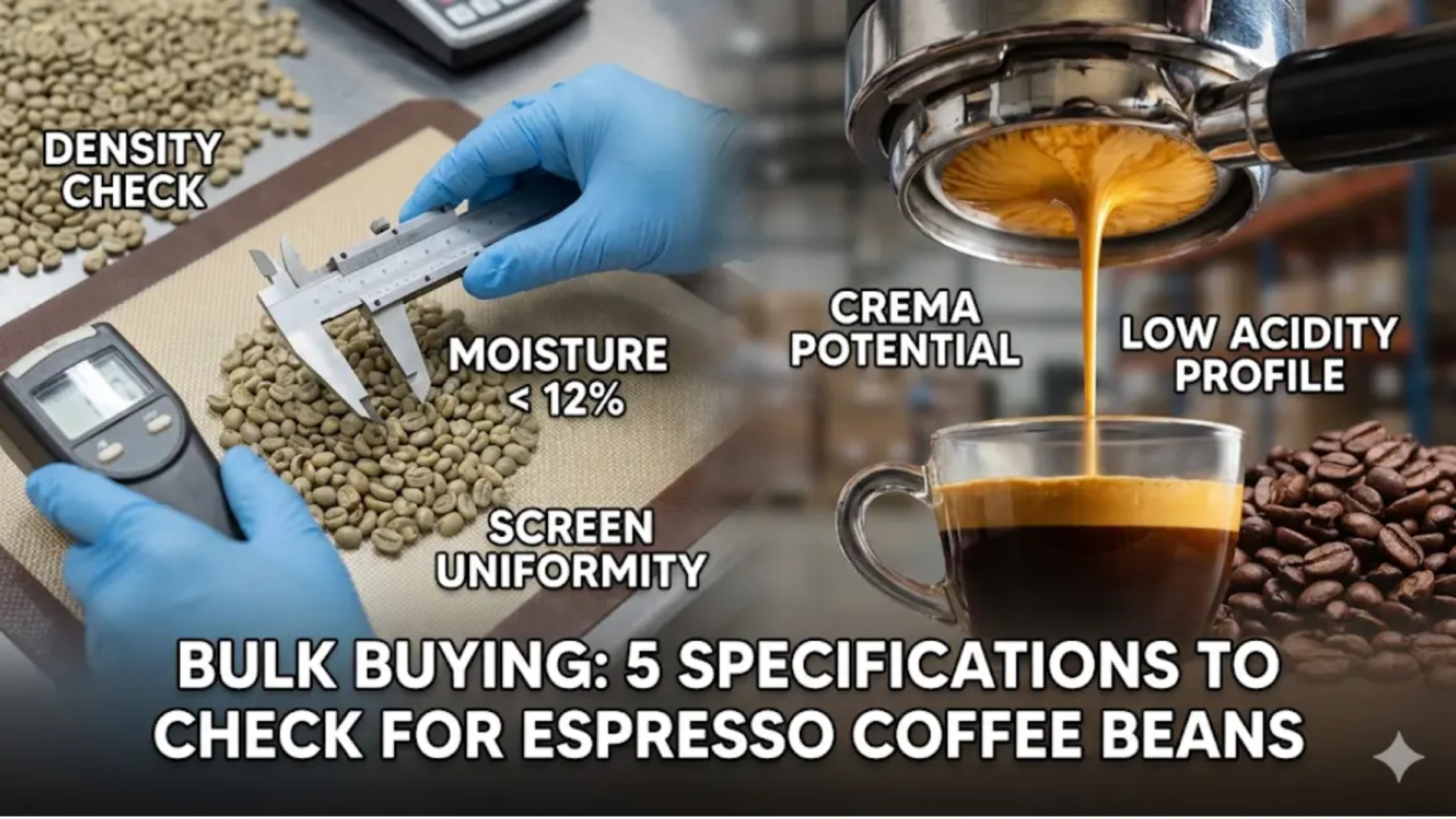
Whether you are crafting a classic Italian blend or a modern third-wave single origin, the secret lies in the raw material. Indian coffee, with its unique shade-grown attributes and “Fine Robusta” varieties, has become a staple in top-tier espresso blends globally. However, before you sign that contract for a container load, here are the 5 critical specifications you must verify to ensure your bulk Espresso Coffee Beans perform in the hopper.
1. Bean Density and Hardness Structure
Espresso roasting is intense. To develop the deep, caramelized notes required for a latte or cappuccino without turning the bean into charcoal, the green coffee must be dense.
Why it matters: Hard, high-density beans (often grown at higher altitudes or shade-grown like in India) can withstand higher charge temperatures and longer development times.
Soft Beans: If you use low-density beans for Espresso Coffee Beans, they will scorch before the center is cooked, leading to an ashy, hollow taste.
The Check: Ask your supplier for the density metric. For premium espresso, you want beans that feel heavy in the hand and have a tight cell structure. Indian “Plantation A” Arabica is renowned for this structural integrity.
2. The "Crema Potential" (Robusta Content)
Let’s address the elephant in the room: Crema. That golden-brown layer of foam is the holy grail of espresso. While Arabica provides the aroma, it often produces thin, rapidly dissipating crema.
This is where Indian Robusta becomes non-negotiable for Espresso Coffee Beans.
The Science: Robusta beans contain nearly double the soluble solids and significantly less oil than Arabica. This chemical makeup creates a thick, stable, and tiger-striped crema that defines a true espresso shot.
The Spec: If you are sourcing for a commercial blend, check if the supplier offers “Polished” or “Washed” Robusta (like Kaapi Royale). These grades offer the crema benefits without the rubbery funk of lower-grade beans, making them essential for a balanced wholesale espresso blend.
Spice Up Your Business with Authentic Indian Flavors
Import and Export Excellence from India!
3. Moisture Content Consistency
In bulk buying, moisture is money. But for Espresso Coffee Beans, moisture is also about roasting control.
The international standard for export-grade green coffee is 10% to 12%.
Too Wet (>12%): The beans will require extra energy to dry out in the roaster drum, delaying the “First Crack.” This often results in a baked, bready flavor profile that kills the vibrancy of an espresso.
Too Dry (<10%): The beans may snap or chip during the roast. Worse, they will age rapidly, losing the volatile oils responsible for that fresh espresso aroma.
The Check: Always demand a moisture reading from the specific lot being shipped, not just a generic lab report.
4. Screen Size Uniformity (Grading)
In an espresso blend, consistency is king. You cannot afford to have a mix of small and large beans in the same batch.
If you roast a blend of Screen 15 and Screen 18 beans together:
The small beans will burn (over-extract and taste bitter).
The large beans will remain under-developed (sour and grassy).
When buying bulk Espresso Coffee Beans, insist on strict grading.
Premium Choice: Look for Plantation AA (Screen 18) or Peaberry grades.
Why Peaberry? Indian Peaberry beans are naturally round and roast incredibly evenly, making them a secret weapon for high-end, single-origin espresso offerings.
5. Low Acidity Profile (The "Stomach Friendly" Factor)
The modern consumer loves coffee, but they hate the heartburn. Espresso concentrates acidity. A bean that tastes fruity in a drip brew can taste like battery acid when pulled as a shot.
This is the primary reason roasters are switching to Indian Espresso Coffee Beans.
Shade-Grown Advantage: Because Indian coffee grows under shade, it matures slowly and develops lower concentrations of chlorogenic acid.
Monsooned Malabar: For the ultimate low-acid experience, check for Monsooned Malabar beans. This unique processing method neutralizes acidity almost entirely, producing a heavy, syrupy body and mellow taste that is perfect for espresso bases.
Spice Up Your Business with Authentic Indian Flavors
Import and Export Excellence from India!
The Perfect Shot Starts with Sourcing
Great espresso is an engineering feat, and your green beans are the raw material. By rigorously checking density, crema potential, moisture, size, and acidity, you protect your margins and your brand’s reputation.
Sourcing Espresso Coffee Beans from India offers a strategic advantage: a portfolio of beans that are naturally low in acid, high in body, and engineered by nature for the high-pressure environment of the espresso machine.
Frequently Asked Questions (FAQs)
1. What is the best bean ratio for an espresso blend?
A classic Italian espresso blend typically uses a ratio of 70% Arabica and 30% Robusta. This combines the aroma and sweetness of Arabica with the body, caffeine, and thick crema of Robusta.
2. Why are Indian beans good for Espresso Coffee?
Indian beans are shade-grown, which gives them a naturally lower acidity and heavier body. These are two of the most desired traits for espresso, preventing the sourness often found in high-altitude Latin American coffees.
3. Can I use single-origin Arabica for espresso?
Yes, but it requires skilled roasting. Single-origin Arabica Espresso Coffee Beans can be bright and floral but may lack the thick mouthfeel. Using Indian Plantation AA helps maintain body even in a 100% Arabica shot.
4. What is the role of Robusta in espresso?
Robusta is the “crema builder.” It produces more stable foam and adds a punchy “kick” that cuts through milk in lattes and cappuccinos. High-quality Washed Robusta is essential for commercial espresso blends.
5. How does moisture content affect espresso roasting?
If Espresso Coffee Beans have high moisture (>12%), they steam inside the roaster rather than roast, leading to flat, flavorless espresso. Precise moisture control (10-11%) ensures a vibrant and aromatic cup.
6. What is “Monsooned” coffee and is it good for espresso?
Monsooned Malabar is a specialty Indian coffee exposed to monsoon winds. It has very low acidity and a thick, syrupy body. It is arguably one of the best bases for a mellow, chocolatey espresso.
7. Should I buy Peaberry beans for espresso?
Peaberry beans are excellent for espresso because their round shape allows for uniform heat transfer during roasting. This consistency creates a balanced, sweet espresso shot without charred notes.
8. How do I store bulk green espresso beans?
Store them in a cool, dark warehouse away from moisture. Using GrainPro or hermetic bags is highly recommended to preserve the freshness and organic oils of the Espresso Coffee Beans for up to 12-18 months.
About us
We bridge the gap between local producers and global markets, ensuring seamless trade facilitation with exceptional quality and reliability. We provide quick delivery services with customized packaging with all approval of International Certificates (Spices board India, MSME, IEC, fssai, FIEO, APEDA, EU certification, FDA and Many More)
Contact us
Shop No. 3, Ganesh Prestige Sr. No. 2/15, Near Laxmi Jewellers, Dhanakawadi, Pune – 411043, Maharashtra INDIA.
Call On
+91 9545205050
+91 9822422584
Leave A Comment