

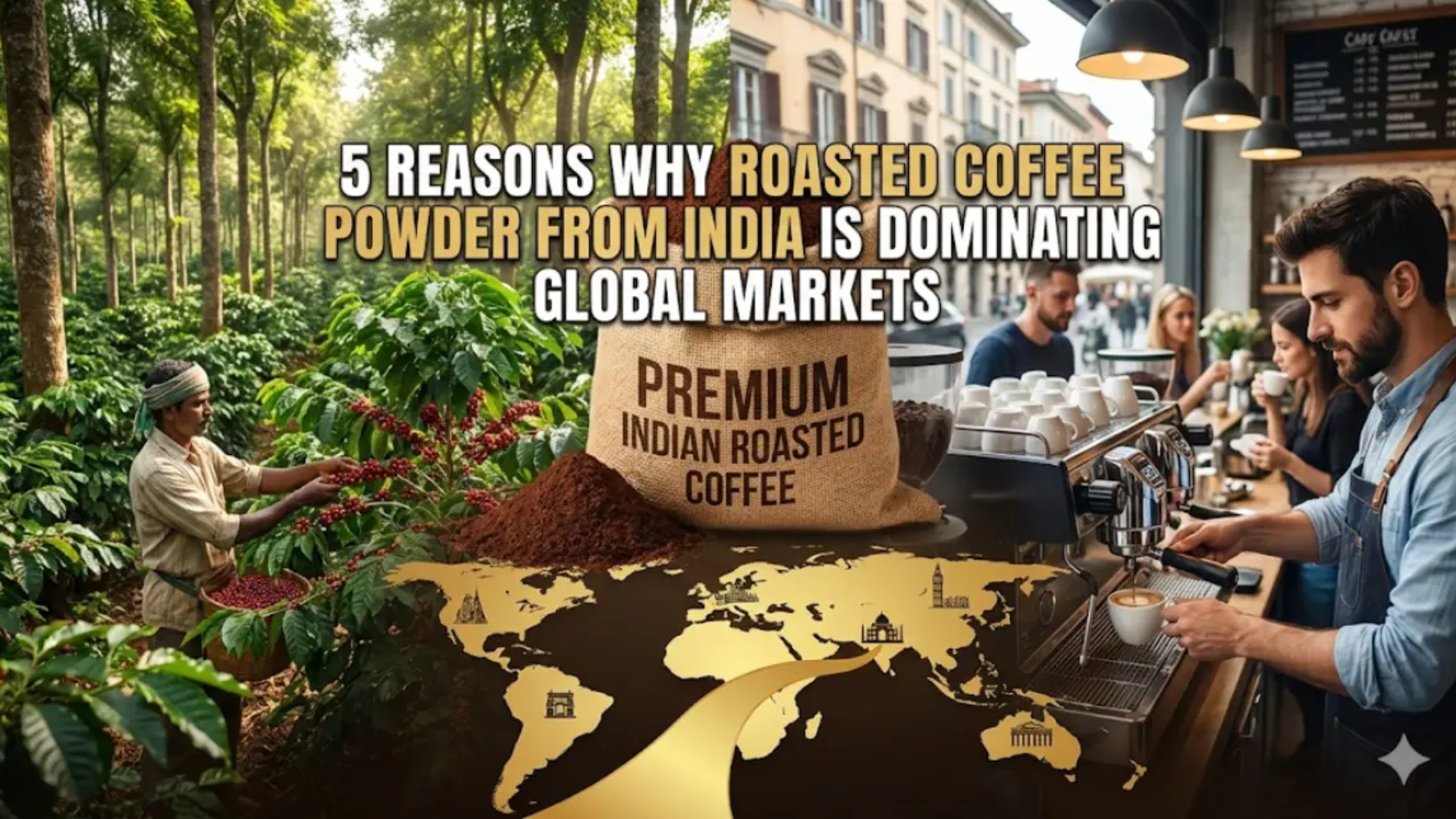
The global coffee landscape is undergoing a massive transformation in 2026. While traditional giants like Brazil and Vietnam have long held the crown for volume, the conversation has shifted toward value, sustainability, and unique flavor profiles. At the center of this shift is India. As of the current fiscal year, Indian coffee exports are projected to exceed $2 billion, a testament to the surging demand for high-quality Roasted Coffee Powder from India.
From the historic hills of Baba Budan Giri to the misty estates of Coorg, Indian coffee is no longer just a blending filler for European roasters. It has become a standalone premium product. Here are the five definitive reasons why Roasted Coffee Powder from India is dominating international markets today.
1. The Shade-Grown Flavor Advantage
Unlike many global coffee-producing regions that utilize intensive sun-grown monocultures, India is unique because nearly all its coffee is shade-grown. Cultivated under a two-tier canopy of evergreen and leguminous trees, Indian coffee cherries ripen slowly. This slow maturation process allows for the development of complex sugars and lipids, resulting in a cup that is naturally sweet, full-bodied, and exceptionally smooth.
For importers, this translates into premium coffee beans with significantly lower acidity than their Central American counterparts. The natural biodiversity of Indian estates—where coffee coexists with pepper, cardamom, and citrus—imparts subtle spicy and chocolatey notes that are highly prized in the specialty coffee circuit.
2. Global Leadership in "Fine Robusta"
Historically, Robusta was seen as the inferior sibling to Arabica. However, 2026 has seen a global “Robusta Renaissance,” and India is leading the charge. Indian Robusta parchment and cherry grades are world-renowned for their “clean” taste, lacking the rubbery or harsh aftertaste common in other origins.
In the espresso-loving markets of Italy and Germany, Roasted Coffee Powder from India made from high-grade Robusta is a secret weapon. It provides the thick, stable crema and intense body required for a perfect espresso without sacrificing flavor. With Indian Robusta often commanding a significant premium over London futures, its dominance in premium espresso blends is indisputable.
3. Unmatched Sustainability and EUDR Compliance
In 2026, sustainability is no longer optional; it is a regulatory requirement. The European Union Deforestation Regulation (EUDR) has tightened the noose on origins that contribute to forest loss. Because Indian coffee is grown in traditional agroforestry systems (forest-like environments), it is inherently “deforestation-free.”
Sustainable coffee farming is the backbone of the Indian industry. These plantations act as carbon sinks and biodiversity hotspots, hosting hundreds of bird and insect species. For global brands, sourcing Roasted Coffee Powder from India is a strategic move to ensure supply chain transparency and meet the “Clean Label” demands of modern eco-conscious consumers.
4. Advanced Roasting and Value-Added Processing
The Indian coffee industry has successfully moved up the value chain. While India was once primarily an exporter of green beans, the focus has shifted to value-added exports. Today, about 38% of India’s coffee exports consist of soluble, roasted, and ground coffee.
Indian exporters have invested heavily in state-of-the-art coffee roasting technology, including precision drum roasters and nitrogen-flushing packaging lines. This infrastructure allows suppliers to offer “Roast-to-Order” services, ensuring that the Roasted Coffee Powder from India reaches international ports with its volatile aromatics perfectly preserved. This technical capability has made India a preferred hub for private-label brands across the Middle East and Asia.
5. The Cultural Appeal of "South Indian Filter Coffee"
One cannot ignore the “soft power” of Indian brewing traditions. The iconic South Indian Filter Coffee, traditionally a blend of dark-roasted coffee and chicory, has gained cult status globally. From trendy cafes in London to boutique roasteries in Dubai, the bold, frothy, and milky profile of this traditional brew is attracting a new generation of drinkers.
This cultural export has driven a niche but highly profitable demand for specific blends of Roasted Coffee Powder from India. Whether it is 100% Arabica plantation powder or a traditional 80/20 coffee-chicory mix, the distinct “Indian Profile” is now a recognized category on global menus, alongside the Flat White and the Cortado.
Frequently Asked Questions (FAQs)
1. Is Roasted Coffee Powder from India suitable for espresso machines?
Absolutely. Indian coffee, particularly the high-grade Robusta and Monsooned Malabar varieties, is famous for producing a heavy body and rich crema, making it an ideal base for espresso.
2. Why is Indian coffee called “shade-grown”?
In India, coffee is grown under a two-tier canopy of trees like Silver Oak and Jackfruit. This protects the plants from direct sunlight, preserves soil moisture, and enhances the flavor of the bean.
3. What is the difference between Arabica and Robusta from India?
Indian Arabica is known for its mild, aromatic, and slightly sweet flavor with notes of chocolate. Indian Robusta is bolder, higher in caffeine, and provides a much thicker crema, often lacking the bitterness found in other Robustas.
4. Does Roasted Coffee Powder from India contain chicory?
It depends on the blend. Traditional South Indian Filter Coffee usually contains 20-30% chicory to add body and color. However, India also exports 100% pure roasted coffee powder for international markets.
5. How long does the freshness last in exported roasted powder?
When packed using nitrogen flushing and one-way degassing valves, Roasted Coffee Powder from India can maintain its peak flavor and aroma for up to 12 months.
6. What makes India’s coffee exports sustainable?
Indian plantations support biodiversity and are often certified as “Bird-Friendly.” They comply easily with global anti-deforestation laws (like EUDR) because they are grown within existing forest-like ecosystems.
7. Which countries are the biggest importers of Indian coffee?
Italy is the largest importer, followed by Germany, Belgium, the Russian Federation, and the UAE. Europe especially favors the strong, clean Robusta blends from India.
8. Can I get a custom roast profile for my private label brand?
Yes. Most leading Indian exporters offer custom roasting (Light, Medium, or Dark) and specific grind sizes to suit your target market’s brewing preferences.
About us
We bridge the gap between local producers and global markets, ensuring seamless trade facilitation with exceptional quality and reliability. We provide quick delivery services with customized packaging with all approval of International Certificates (Spices board India, MSME, IEC, fssai, FIEO, APEDA, EU certification, FDA and Many More)
Contact us
Shop No. 3, Ganesh Prestige Sr. No. 2/15, Near Laxmi Jewellers, Dhanakawadi, Pune – 411043, Maharashtra INDIA.
Call On
+91 9545205050
+91 9822422584
Leave A Comment